


This shift follows the discontinuation of the Mitsubishi Mirage and Nissan Versa, the two models that previously occupied the low-cost end of the new car market. For American buyers still looking for a brand-new vehicle with a full warranty, and not just a used car compromise, the entry-level Hyundai is now the benchmark.
Introduced globally in 2019, the Venue is currently finishing its first generation in North America. It shares its platform with the now-defunct Hyundai Accent sedan and is designed to sit beneath the Kona, Tucson, Santa Fe, and Palisade in Hyundai’s SUV lineup. Sold worldwide in countries such as India, China, Ukraine, and across Oceania, the Venue takes different forms depending on the market, but in the U.S., its role is clear: it’s the budget crossover for buyers needing a small, dependable, and affordable vehicle.
Compact Form, Practical Execution
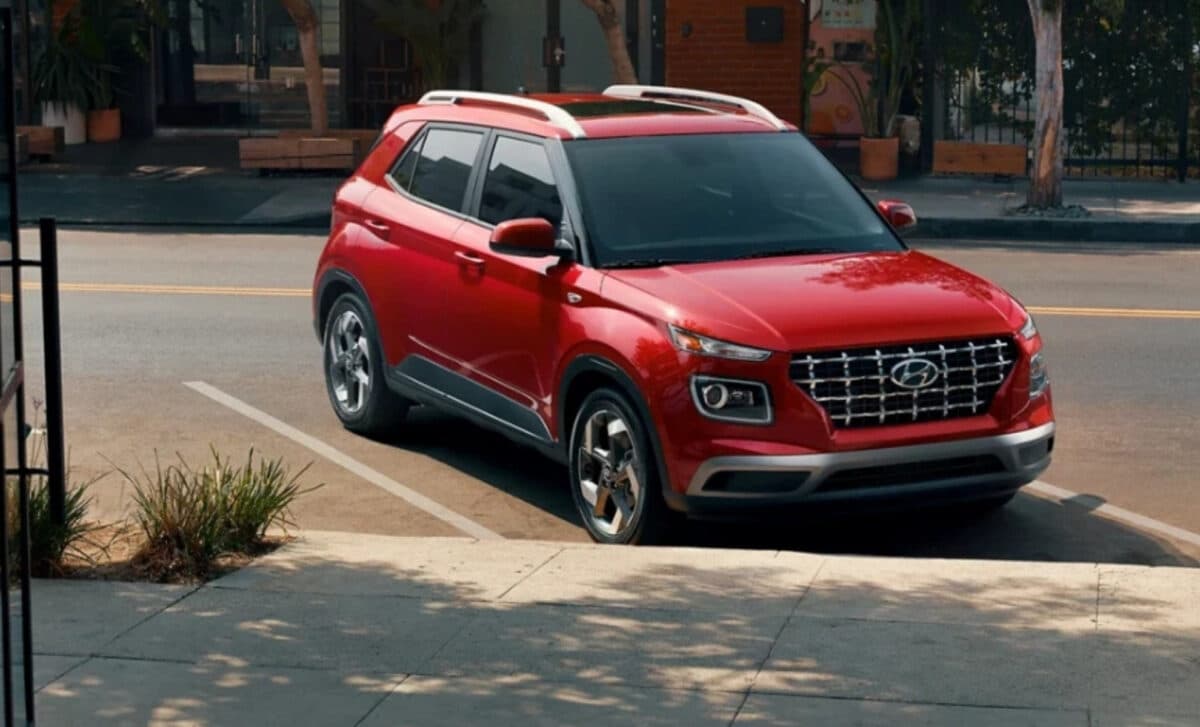
In terms of size, the 2026 Venue is 159.1 inches long and 69.7 inches wide, dimensions that make it exceptionally compact, but also relatively tall for its footprint. That height gives it a more upright driving position and improved interior space for a vehicle this short. It offers 41 inches of legroom in the front, 34 inches in the back, and 19 cubic feet of cargo space behind the rear seats. Fold those seats down in a 60/40 split, and cargo capacity rises to 32 cubic feet.
Visually, the Venue has aged more gracefully than expected. Its design hasn’t followed Hyundai’s newer, more aggressive styling language. While it retains halogen headlights on the base trim, it doesn’t look “stupid cheap”. Its appearance is subdued but functional, making it less polarizing than some of Hyundai’s latest redesigns.
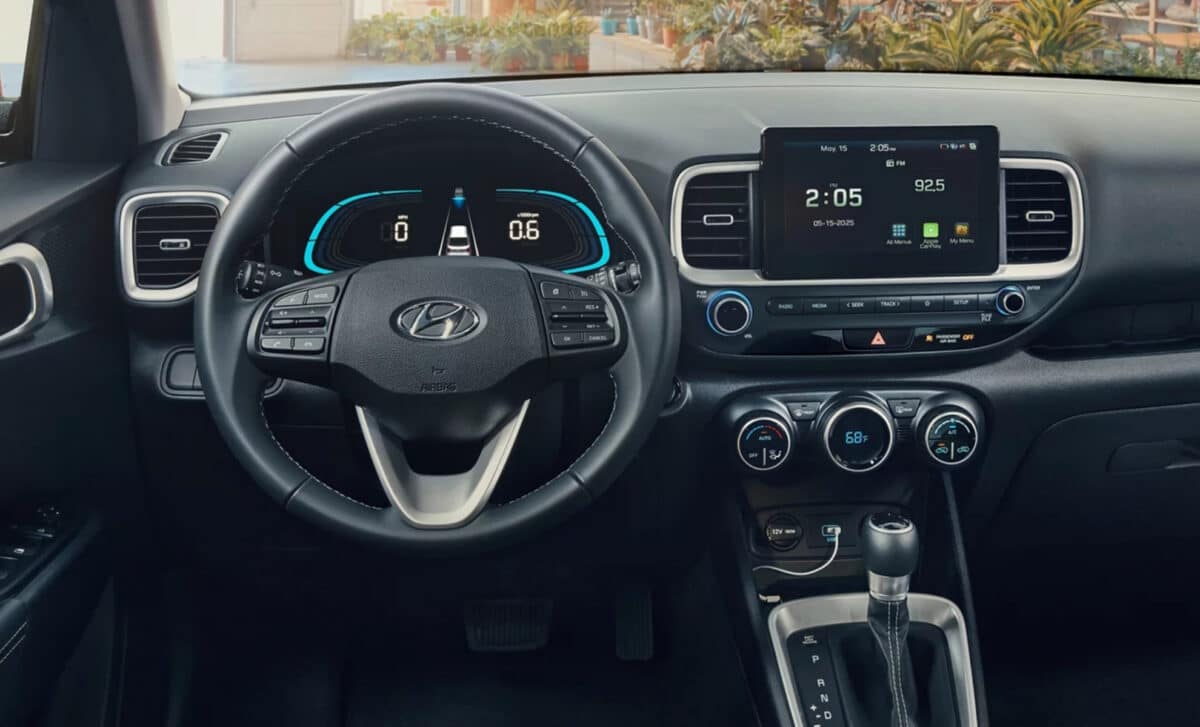
Inside, the Venue sticks to the basics. Entry-level trims offer medium-grade materials, with cloth upholstery standard and leatherette available in higher trims. The center touchscreen measures eight inches, and there’s no option to upgrade the six-speaker stereo system. Features like adaptive cruise control are absent, but controls such as the climate and radio knobs are large and easy to grip, even with gloves on.
Despite the minimalism, the Venue does include useful features like forward collision mitigation, lane-keep assist, and Apple CarPlay/Android Auto compatibility. Wireless smartphone integration is standard, a feature no longer guaranteed even in more expensive cars.
Efficiency Over Excitement
Under the hood, all Venue trims use a 1.6-liter direct-injected four-cylinder engine from Hyundai’s Smartstream family. This engine produces 121 horsepower and 113 lb-ft of torque, and it’s also found in models like the Hyundai Elantra and Kia K3 sold in Latin America. The engine is paired with Hyundai’s Intelligent Variable Transmission (IVT)—a proprietary, next-generation version of the CVT.
The powertrain only drives the front wheels, but Hyundai includes drive modes for snow, mud, and sand, giving some flexibility in light off-road or adverse weather situations. Acceleration is modest, with a 0–60 time in the ballpark of nine seconds, making it feel like a throwback to 2005 in terms of performance.
Fuel economy, however, is where the Venue shines. An average of 31 MPG combined, with 29 MPG in the city and 32 on the highway. These figures make it a practical option for drivers prioritizing efficiency without stepping into a hybrid or EV.
As for safety, the Venue has received a four-star rating from the NHTSA. While that’s not class-leading, it’s still a safer option than smaller, older subcompacts like the Mirage.
Clear Pricing And No-nonsense Packaging
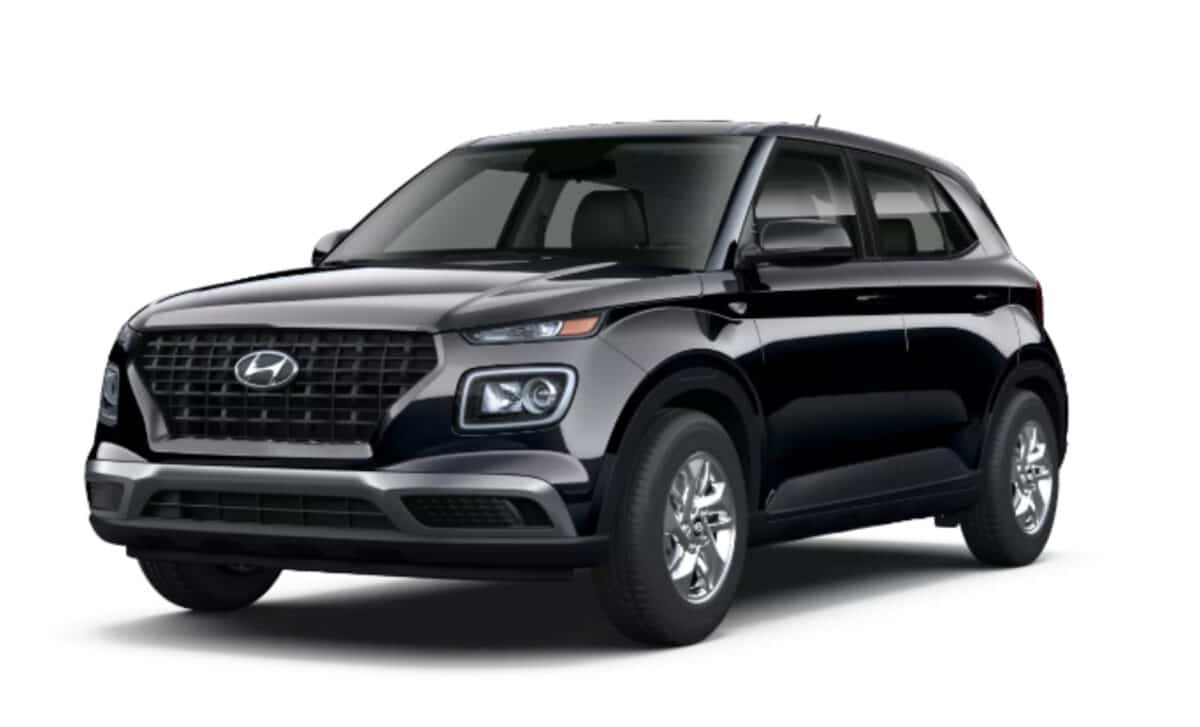
The 2026 Hyundai Venue’s base SE trim starts at $20,550 and comes in seven different exterior colors, with 15-inch alloy wheels and the standard suite of safety tech. Moving up, the SEL trim costs $22,825 and adds options like heated front seats, gray leatherette, 17-inch wheels, second-row USB ports, a wireless phone charging pad, and a power tilt-and-slide sunroof.
For those interested in exterior personalization, Hyundai also offers a two-tone SEL variant for $22,600, available in three unique color combinations.
What further boosts the Venue’s value proposition is Hyundai’s warranty coverage: a five-year/60,000-mile bumper-to-bumper warranty, and a 10-year/100,000-mile powertrain warranty, both of which are among the best offered on the market today.
While the Venue may not match the absolute bargain-basement cost of the Mirage or Versa during their lifetimes, it remains accessible enough that many families can manage its payments without making severe financial sacrifices. It strikes a middle ground: more functional and refined than the cheapest cars of the past, but still within reach for those watching their budgets.

New Generation On The Horizon
Though the current Venue is nearing the end of its production cycle in North America, Hyundai is already preparing its successor. A second-generation Venue has been revealed in India, previewing what’s to come in 2027 for the U.S. and Korean markets.
The new Indian model adopts Hyundai’s revised design language and offers a different engine lineup, including a 1.0-liter three-cylinder, a 1.2-liter four-cylinder, and a 1.5-liter diesel, though the diesel will not be offered stateside. Inside, it features a larger infotainment screen, a digital gauge cluster, and improved cabin technology. The CVT has been dropped in favor of a six-speed dual-clutch transmission (DCT), and in some trims, a six-speed manual is available, though, it’s highly unlikely that the manual will make it to North America.
For now, though, the 2026 Venue offers one of the last chances to buy a brand-new car under $21,000, warranty included.