
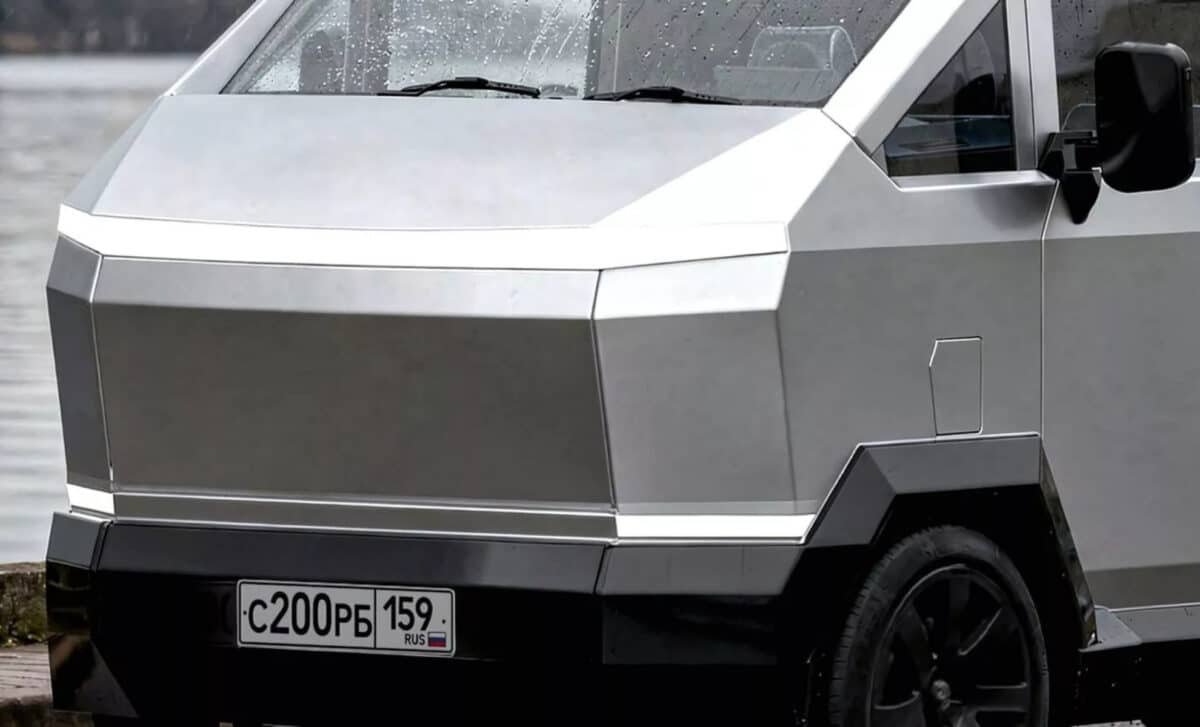
In Perm, a mid-sized Russian city nestled in the foothills of the Urals, a curious electric van is turning heads, not for its performance stats, but for its unmistakable silhouette. Stainless steel panels, squared-off arches, a blunt snout, and a brushed-metal finish. It doesn’t take much to spot the resemblance: the Tesla Cybertruck, reimagined for the Russian winter.
Yet this vehicle isn’t a Tesla, nor is it a truck. It’s called the F200, a large utility van built by an almost unknown Russian startup claiming lineage from a historic name: Russo-Balt. And in a twist both bold and faintly ironic, this machine comes with a century-long promise, a 100-year warranty on its stainless-steel bodywork.
An Idea Born from Absence
Tesla’s angular Cybertruck, launched with fanfare in the U.S. in 2023, has had a troubled journey. Delayed, polarizing, and struggling with quality issues, its commercial impact has been modest, especially outside North America. The vehicle hasn’t received the necessary approvals to be sold in Europe, due in part to unresolved safety compliance and design constraints.
That vacuum has created space for imitators. As reported by L’Automobile Magazine, Russo-Balt’s F200 is openly inspired by the Cybertruck’s aesthetics and manufacturing principles. Stainless steel panels, hand-welded and unpainted, form its exterior. LED light strips echo the American model’s signature, and even the tailgate mimics Tesla’s tonneau cover setup.
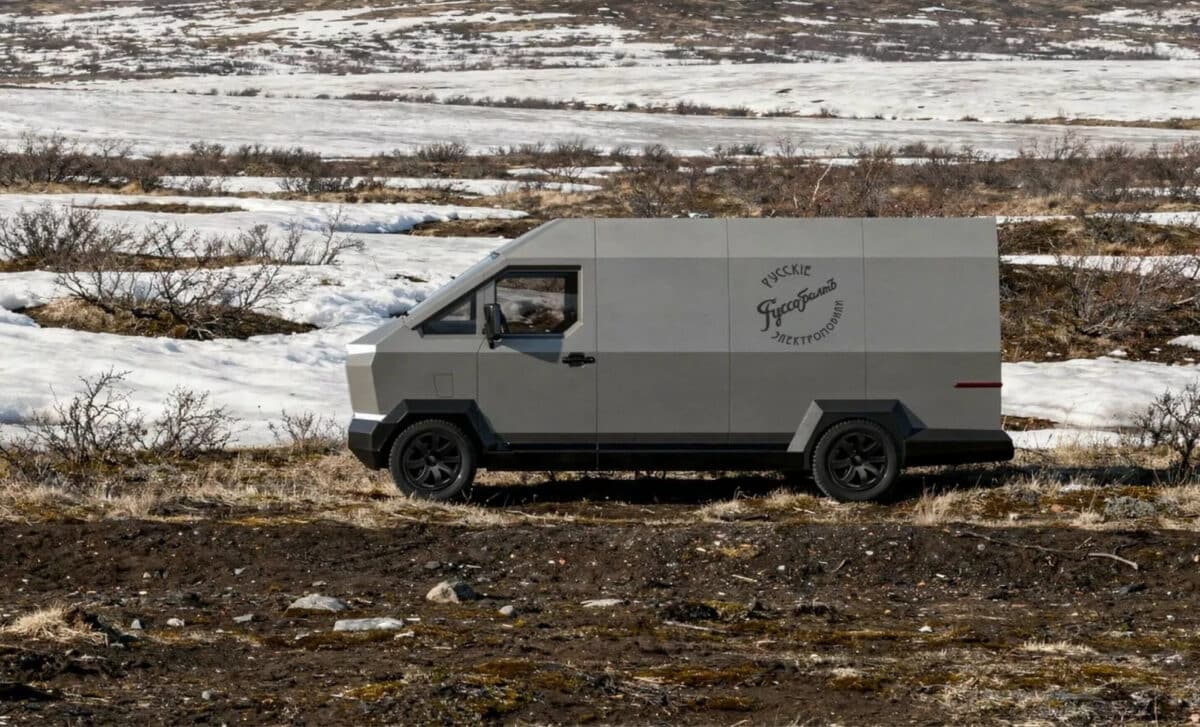
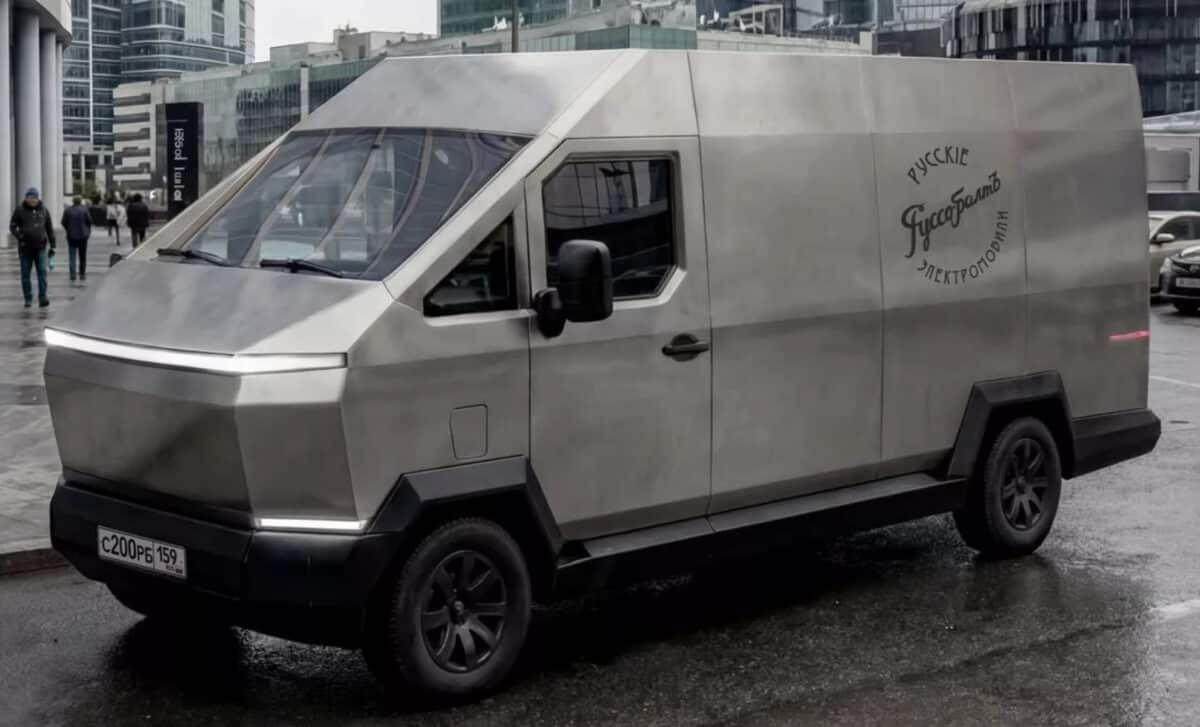
From certain angles, especially the front, the link is evident. From the side, the F200 looks more like a boxy delivery van than a futuristic pickup, and that’s not necessarily a bad thing in a market more concerned with utility than design.
From Imperial Russia to Postmodern EV
The Russo-Balt name may sound vaguely familiar to history buffs. Originally established in 1869, the company built everything from railway carriages to early automobiles before disappearing during the Russian Revolution. The revived brand, which appears to be a marketing creation for now, is positioning itself as a bespoke EV builder, starting with the F200, also dubbed the “Cybervan of Perm.”
Details about the startup remain scarce. There’s no factory tour, no known investor list, and little evidence of large-scale industrial capacity. Still, they’ve released photos of a prototype and provided technical specs, suggesting at least one functional unit exists.
What’s Under the Brushed Steel Skin?
Technically, the F200 is no slouch on paper. It uses a monocoque chassis, uncommon for large vans, and claims a payload capacity of one metric ton. It stretches nearly six meters in length and allows adult passengers to stand upright inside, a useful feature in harsh climates.
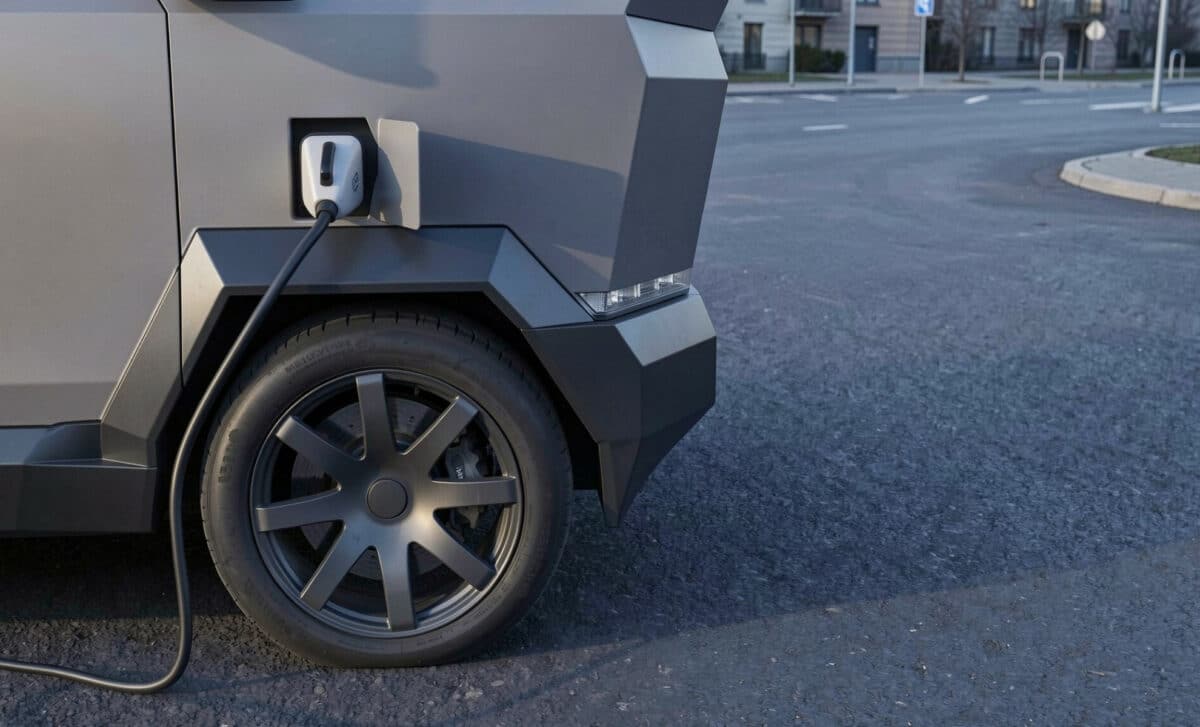
The electric drivetrain includes a front-mounted motor rated at 200 horsepower, fed by a 115 kWh battery. Claimed range is up to 400 km, and the vehicle supports fast charging via a port on the front fender. Heating systems are built into seats, mirrors, windshield wipers, and even the steering wheel, all seemingly tailored for the brutal Russian winters.
Perhaps the most headline-grabbing claim, however, is the 100-year warranty on the bodywork. Stainless steel doesn’t rust easily, but still, such a warranty suggests a mix of confidence and marketing bravado. The use of unpainted steel in the Cybertruck, as well as wear and tear from real-world use, particularly in cold and salty environments, may still pose problems.
Industrial Ambition or Vaporware?
Pricing starts at 6.5 million rubles, or about €71,000, with reservations open for a deposit of just €120. Russo-Balt also teased a follow-up project: a hybrid 4×4 dubbed F400, boasting both gasoline and electric motors with a combined output of 400 horsepower.
Still, there’s reason for skepticism. The company hasn’t disclosed production timelines, homologation plans, or supplier networks. At this stage, the F200 feels more like a proof of concept or a passion project than a viable commercial product. And given the widespread uncertainty in Russia’s automotive sector, partly driven by sanctions, supply chain shifts, and volatile demand, scaling up won’t be easy.