
Electric vehicle charging technology in the United States has evolved rapidly over the past few years. Not long ago, chargers capable of delivering more than 300 kilowatts were considered among the fastest available. Now, several companies are unveiling systems designed for much higher outputs, including chargers that can deliver power levels measured in megawatts.
The shift comes as charging infrastructure companies attempt to address one of the long-standing obstacles to EV adoption: charging speed and convenience. Even as EV sales growth has slowed in some markets, infrastructure providers are continuing to invest in hardware capable of supporting future generations of electric vehicles and commercial fleets.
Charging Companies Are Introducing 600 KW and Megawatt-Level Hardware
Several manufacturers announced new high-powered charging systems over the past few months. According to InsideEVs, ChargePoint introduced a 600-kW charger in April, describing it as “the world’s fastest standalone EV charger.” The unit does not require a separate power cabinet.
During the same month, Swiss company ABB revealed plans to launch 1.2-megawatt chargers. Kempower also presented a new charger equipped with a Megawatt Charging System connector capable of delivering 1.2 megawatts, alongside a CCS connector supporting up to 560 kW.
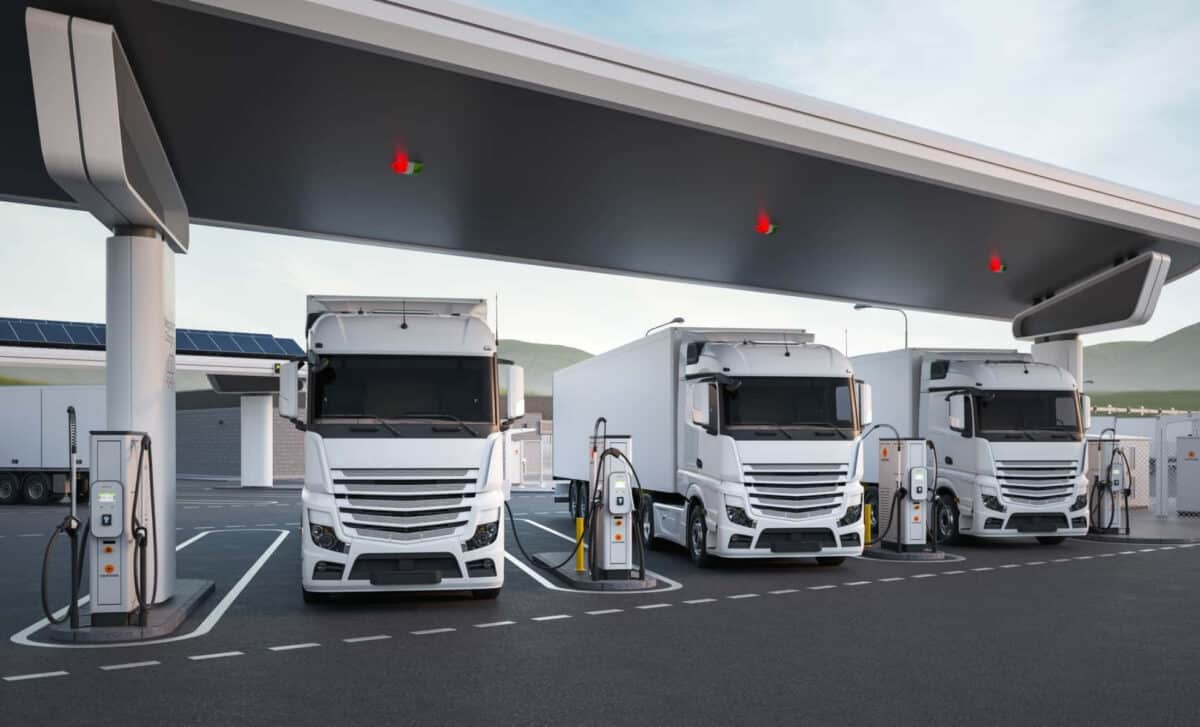
Italian charging manufacturer Alpitronic recently unveiled chargers capable of supplying up to 1,000 kW for electric semi trucks and up to 600 kW for passenger EVs. A company spokesperson told InsideEVs that these systems are expected to begin rolling out in the United States early next year.
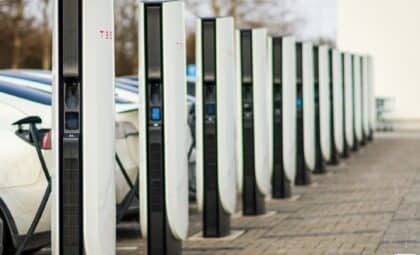
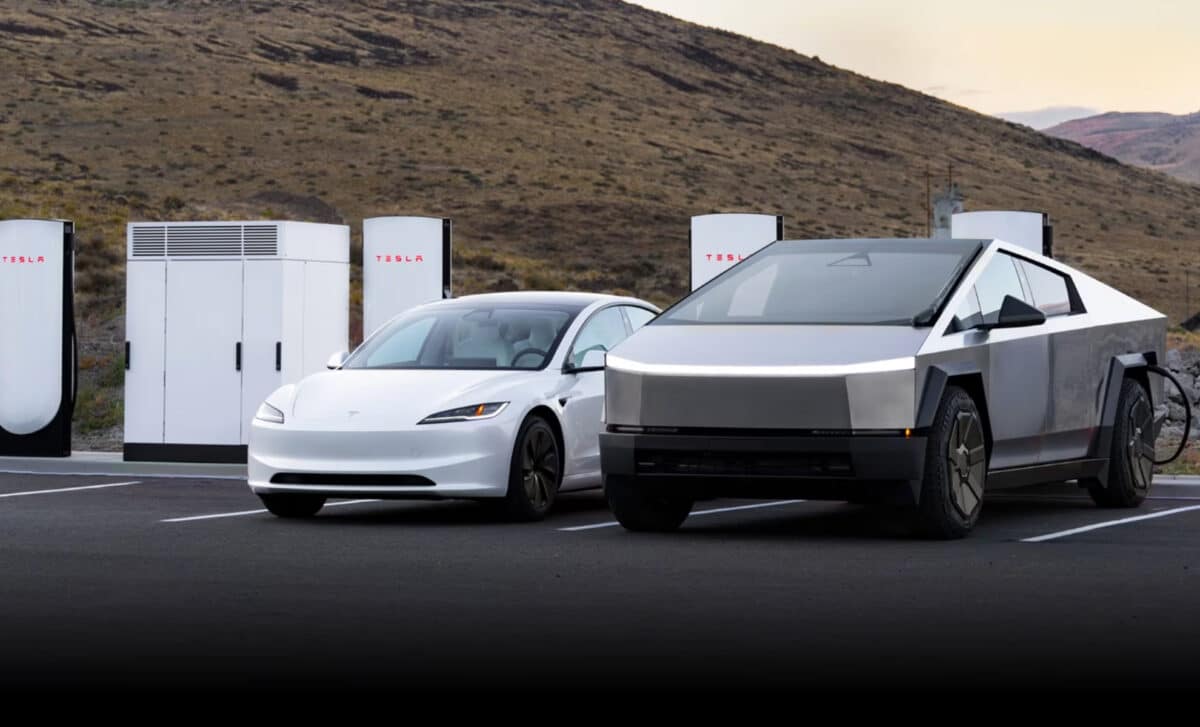
Tesla, which historically capped Supercharger speeds at 250 kW or 325 kW, is also gradually deploying 500-kW V4 Supercharger stations across its network.
Dynamic Power Distribution Is Becoming a Central Feature
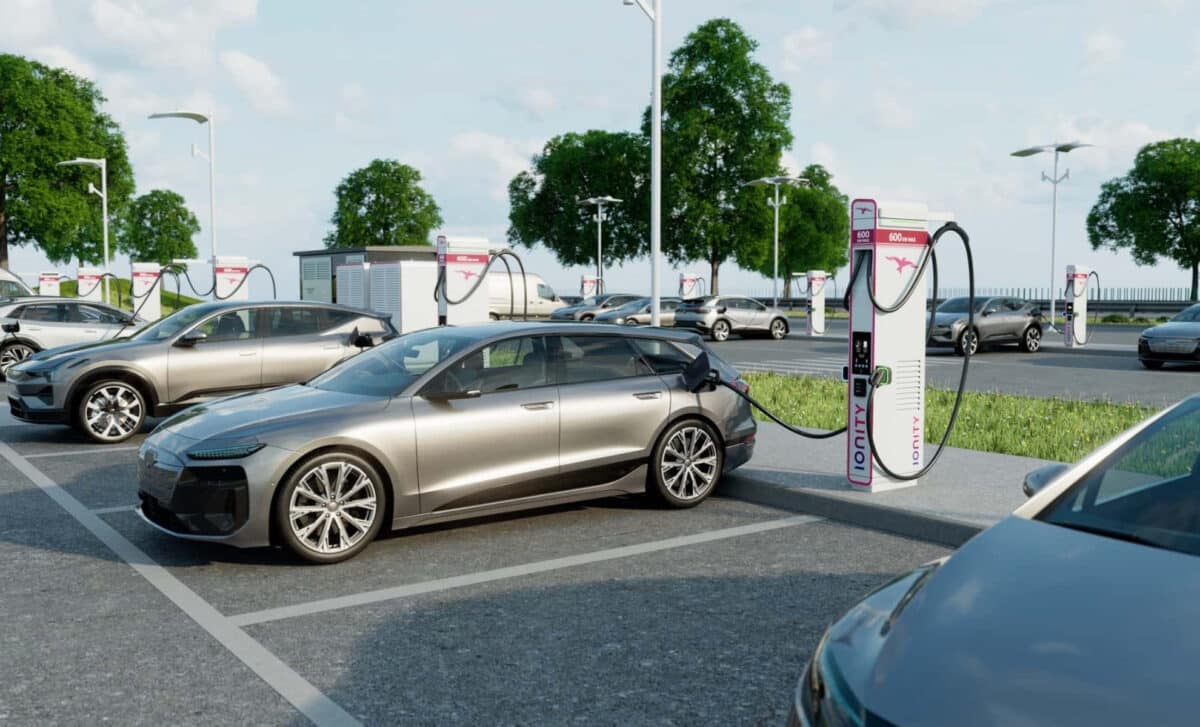
The latest charging systems are not only designed for higher peak speeds. They are also intended to improve how charging stations manage electricity when several vehicles are plugged in simultaneously.
According to Loren McDonald, CEO and chief analyst at Chargeonomics, the idea is to distribute power dynamically depending on each vehicle’s charging capability and immediate demand. He told InsideEVs: “The idea is to be able to distribute load across the individual chargers based on EVs’ power draw capacity and current need.”
For example, a Chevrolet Bolt and a Lucid Gravity could charge simultaneously at the same station. The Bolt would receive the 55 kW it can accept, while the Lucid Gravity could continue charging at 400 kW without unnecessary power limitations.
Charging networks have used forms of dynamic load balancing for years. What is changing now is the ability to maintain very high charging outputs across multiple stalls at the same time while also supporting megawatt charging at a single port.
Most American Passenger EVs Still Cannot Exceed 500 KW
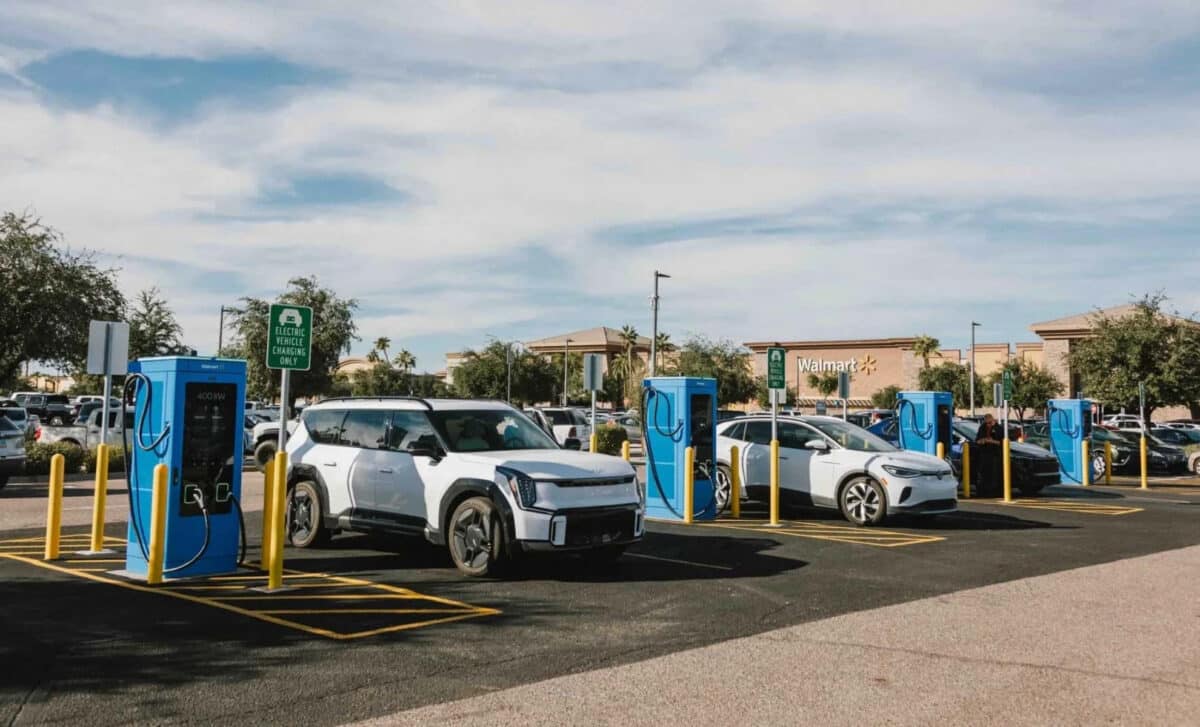
Despite the arrival of ultra-fast chargers, there are currently no passenger EVs sold in the United States officially capable of accepting more than 500 kW of charging power.
The Tesla Cybertruck has been observed pulling 500 kW at V4 Superchargers, even though Tesla’s official specifications still list a maximum charging rate of 325 kW. Other upcoming or current models mentioned in the report, including the Lucid Gravity, Porsche Cayenne Electric, and BMW iX3, have charging limits around 400 kW.
Charging companies are nevertheless continuing to expand higher-capacity infrastructure in anticipation of future demand. McDonald told InsideEVs that “some of the high-power Chinese cars may find their way to the U.S. in the next five years,” adding that these chargers help “future-proof” charging networks.
Ionna, a charging network backed by several automakers, currently deploys 400-kW charging stations. Its CEO, Seth Cutler, said during an interview on the Plugged-In Podcast that the company is already evaluating higher-power systems. “I think it’s just a question of timing—when does it make sense to go make those changes—and at which sites in which parts of the country,” he said.
China and Europe are already deploying some of the most advanced charging systems available, including BYD’s 1.5-megawatt “Flash” charging stations. In North America, charging operators are continuing to build infrastructure while waiting for vehicles capable of using those higher charging speeds to arrive. As Cutler told InsideEVs: “We can put in whatever high-power charger we want. The vehicles have to be there to accept it.”