
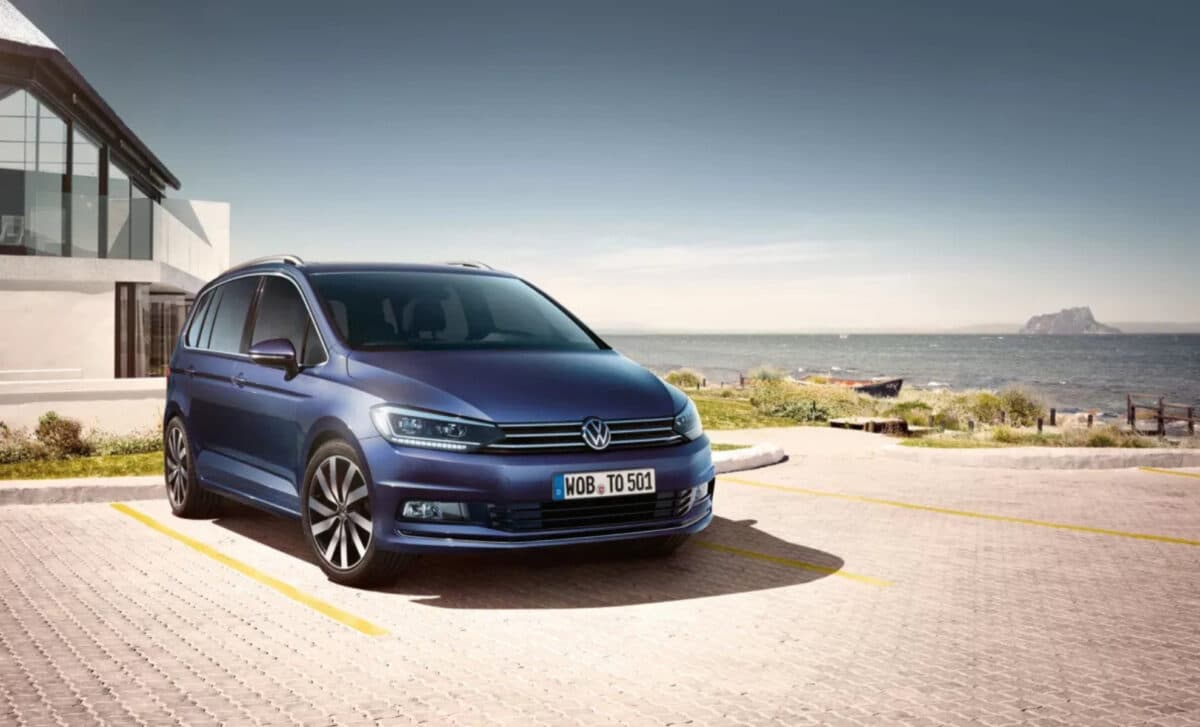
The second-generation Touran had been on sale for just over 11 years, making it the oldest passenger vehicle still sold by Volkswagen locally. Its departure also leaves the German automaker without a minivan in its current range.
The production stop comes ahead of new safety regulations scheduled to take effect this summer. Volkswagen said the Touran does not comply with the UN “General Safety Regulation II, Stage C,” which becomes mandatory on July 6, 2026. Without an exemption, the vehicle can no longer receive new registrations.
Over its lifetime, the Touran became one of Volkswagen’s most recognizable family vehicles in Germany. Between December 2002 and December 2025, 1,070,558 units were newly registered in the country. The model reached its strongest sales year in 2004 with 95,408 registrations.
More Than 2.3 Million Tourans Were Produced
Volkswagen built around 2.3 million Tourans during the model’s production run. In recent years, annual production had fallen to roughly 20,000 units, though the vehicle continued to attract buyers. More than 14,000 Tourans were newly registered in Germany last year, compared with over 52,000 during its peak years.
The second-generation Touran entered production in Wolfsburg in late May 2015. Volkswagen increased the vehicle’s dimensions compared with the previous generation. The model measured 178.3 inches long, making it approximately 5.1 inches longer and 1.2 inches wider than before.
The redesign focused heavily on interior flexibility. The second row included three individual seats, while a third row was available as an option. Cargo capacity reached 26.2 cubic feet in the five-seat version and increased to 69.9 cubic feet with the rear seats folded flat.
In the seven-seat configuration, luggage space behind the raised third row stood at 4.8 cubic feet. Folding the third row expanded capacity to 22.4 cubic feet, while lowering both rear rows increased total cargo space to 65.6 cubic feet.
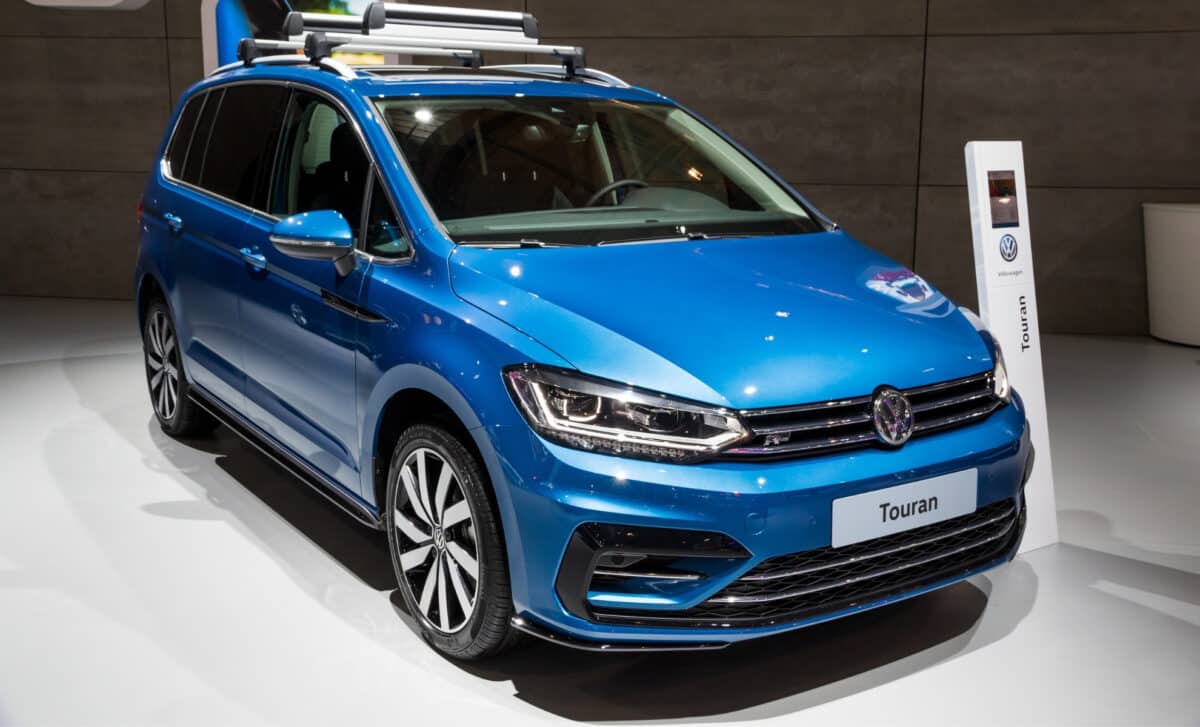
The Touran Was Central to Volkswagen’s Auto 5000 Project
The Touran was closely connected to one of Volkswagen’s most distinctive manufacturing programs of the early 2000s. At the time, the company wanted to build the compact minivan in Germany while keeping production costs competitive.
According to Motor1, Volkswagen launched the Auto 5000 GmbH initiative under the slogan “5000 times 5000.” The project introduced flatter management structures, flexible labor agreements, and team-oriented production methods centered around the Touran.
Beginning in late 2002, the model was assembled exclusively in Auto 5000 facilities in Wolfsburg. Many employees hired for the project came from unemployment programs and received specialized training for Touran production.
The minivan shared its platform with the Golf V, though its more complex interior layout and broader range of configurations made it a significant test case for new manufacturing techniques. Volkswagen later expanded the Auto 5000 portfolio with the launch of the Tiguan in 2007, though the Touran remained the best-known vehicle associated with the initiative.
Peter Hartz served as Volkswagen’s labor chief during that period and later became known for the “Hartz IV” labor market reforms in Germany.
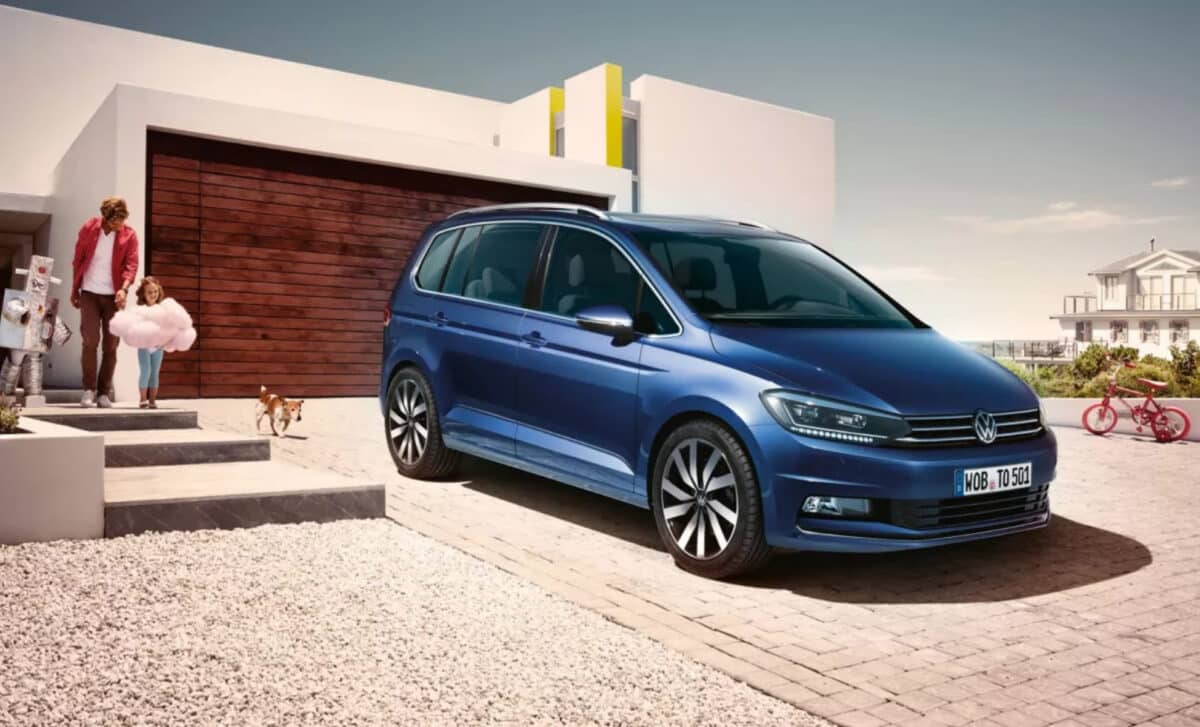
SUVs Have Gradually Replaced the Role Once Held by Minivans
In its final years, the Touran lineup was reduced to a limited selection of powertrains. Since 2024, buyers could choose between a 1.5 TSI gasoline engine producing 150 horsepower and two versions of the 2.0 TDI diesel engine delivering either 122 hp or 150 hp.
Volkswagen has not announced a direct replacement for the Touran. The Tiguan occupies a similar position in terms of dimensions, while buyers seeking seven seats must move to the larger Tayron.
The shift reflects a broader trend across the automotive industry, where SUVs have gradually replaced minivans in many family-oriented segments.