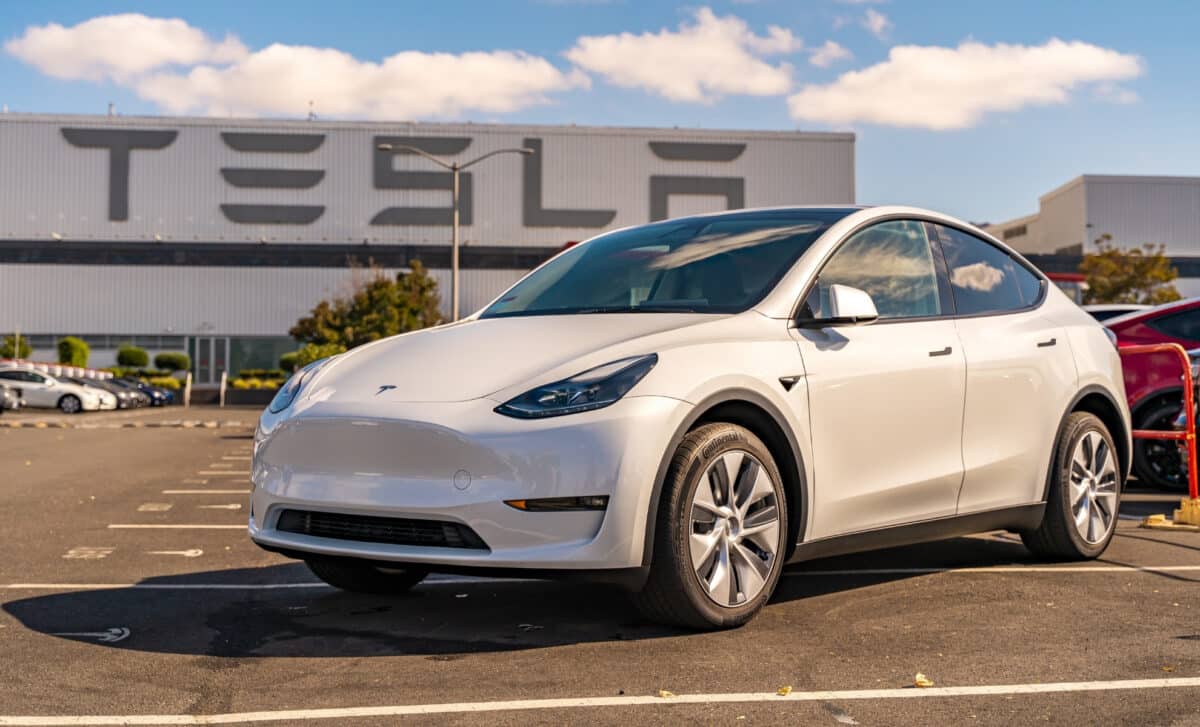
According to Cox Automotive, the company is projected to sell around 577,000 vehicles in the U.S. this year—down from approximately 634,000 in 2024, marking an 8.9% drop year-over-year.
This decline places Tesla below the market average for sales growth, and signals a broader slowdown in the electric vehicle (EV) sector. Once seen as resilient to market shocks and shifting consumer trends, Tesla is now facing headwinds that are proving difficult to overcome. In the face of an aging model lineup and increasing political backlash among some buyers, the brand enters 2025 at a disadvantage.
The impact of this shift isn’t limited to annual figures. Quarter-over-quarter results show a rapid deterioration in sales momentum, suggesting that Tesla’s challenges are structural—not seasonal. Efforts to reverse the trend through pricing changes and model adjustments have so far fallen short.
Steep Quarterly Decline Reveals Momentum Loss
Tesla’s U.S. sales in Q4 2025 are down 29.8% compared to Q3. When measured against Q4 2024, the drop stands at 22.4%. These numbers highlight a sharp fall in consumer demand following the expiration of the federal EV tax credit.
Cox Automotive noted that the EV market as a whole “stepped on the gas” in Q3 2025, as buyers rushed to purchase vehicles before the tax incentives ran out. But once that window closed, demand collapsed. This crash is evident not only in Tesla’s figures but across the broader EV inventory landscape.
To address the downturn, Tesla introduced lower-priced versions of its Model 3 and Model Y earlier in the year. These models were meant to attract budget-conscious consumers, but as Cox reported, the simplified versions did not meet sales expectations.
EV Inventory Surges As Demand Fades
Cox Automotive data shows a dramatic spike in EV inventory following the end of Q3. At the close of that quarter, electric vehicles had a market supply of just 40 days. By November, that figure had jumped to 149 days—an increase of more than 42% year-over-year.
One of the biggest contributors to this oversupply is pricing. Cox points out that most EVs continue to occupy the premium segment. Currently, there are only nine EV models in the U.S. priced under $40,000, compared to 56 internal combustion engine (ICE) vehicles in the same range.
The disparity translates directly to sales patterns. Since October, only 3.7% of EV sales in the U.S. were for vehicles priced below $40,000. In contrast, 38.7% of all vehicle sales—regardless of powertrain—fell into that category. Cox describes this as a “fundamental affordability gap” that limits the ability of EVs to compete with traditional cars.
Political Tension And Outdated Lineup Strain Tesla’s Image
Tesla is also contending with shifting consumer perceptions. Some buyers now feel “politically betrayed,” which is contributing to reduced enthusiasm for the brand. While Tesla has often relied on its strong identity and loyal customer base, political polarization around the company’s image may now be driving some away.
At the same time, Tesla’s product lineup is aging. While competitors continue to release refreshed models and new technology, Tesla has not introduced significant updates to its core vehicles. The brand’s strategy of software improvements and incremental hardware changes appears to be losing its appeal.
Despite these challenges, Tesla has publicly downplayed concerns about regulatory threats, such as the potential for a sales ban in California. Still, the drop in numbers tells its own story. As incentives disappear and economic conditions shift, the company’s longstanding dominance in the EV space is being tested in ways it hasn’t faced before.