

The current market reflects a major shift in priorities for buyers. Affordable EVs are no longer strictly urban commuter cars with limited practicality. Several models now exceed 300 miles of estimated range, while others adopt Tesla’s NACS charging standard to improve access to public fast-charging networks across the United States.
At the same time, compromises remain visible in some lower-priced models, including slower charging speeds, reduced performance, or simplified interiors. The result is a market where buyers can choose between affordability, efficiency, technology, or driving dynamics depending on their needs.
Chevrolet, Nissan, and Fiat Lead The Low-Cost Ev Market
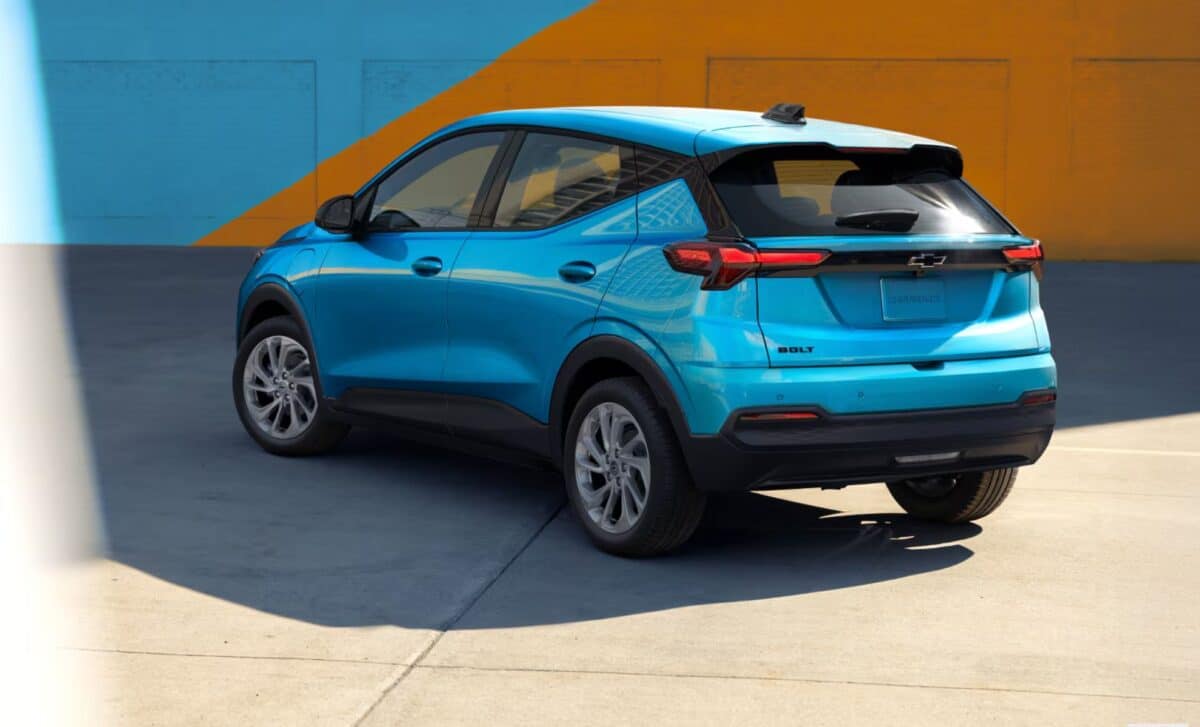
Chevrolet currently offers the least expensive EV on the market with the 2027 Bolt, priced at $28,995 for the LT trim. According to MotorTrend, the front-wheel-drive Bolt delivers up to 262 miles of range from a single-motor setup, although concerns remains about ride quality and front-seat comfort during testing. The model will only remain available for one model year.
Nissan follows closely with the redesigned Leaf, starting at $31,485 for the S+ version, though the launch has been delayed and the base price is expected to fall to roughly $27,500. The third-generation Leaf adopts a more crossover-like design and introduces both a Tesla-style NACS charging port for DC fast charging and a J1772 connector for home charging.
The standard Leaf S produces 174 horsepower and offers approximately 200 miles of range through a 52-kWh battery, while higher trims equipped with a 75-kWh pack can reach an estimated 303 miles.
Fiat’s 500e remains one of the smallest and most city-focused EVs in the segment at $32,495. Its single motor produces 117 horsepower and enables a 0–60 mph sprint in 7.9 seconds. The 42-kWh battery provides an EPA-estimated range of 149 miles, with charging from 5% to 80% possible in 27 minutes on a DC fast charger.
Hyundai, Toyota, And Subaru Focus On Range And Charging Improvements
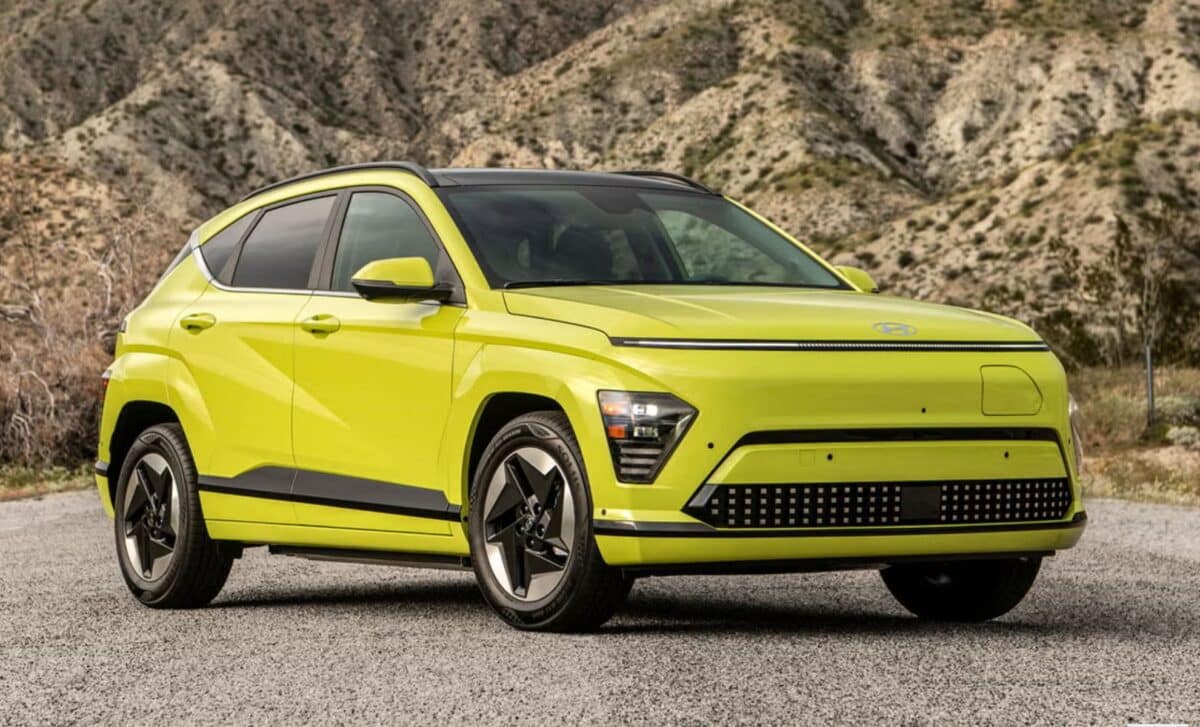
Hyundai continues to expand its EV lineup with both the Kona Electric and the Ioniq family positioned aggressively on price. The Kona Electric starts at $34,470 and offers up to 261 miles of range in Long Range form. Standard models receive a 48.6-kWh battery and 133 horsepower, while Long Range versions increase output to 201 horsepower using a 64.8-kWh battery.
The refreshed Hyundai Ioniq 5, priced from $36,600, introduces increased battery capacity and compatibility with Tesla’s Supercharger network. The rear-wheel-drive standard-range model delivers 245 miles of EPA-rated range, while larger battery variants exceed 300 miles. Hyundai also maintains one of the fastest charging systems in the segment thanks to its 800-volt architecture, allowing 10% to 80% charging in about 20 minutes under optimal conditions.
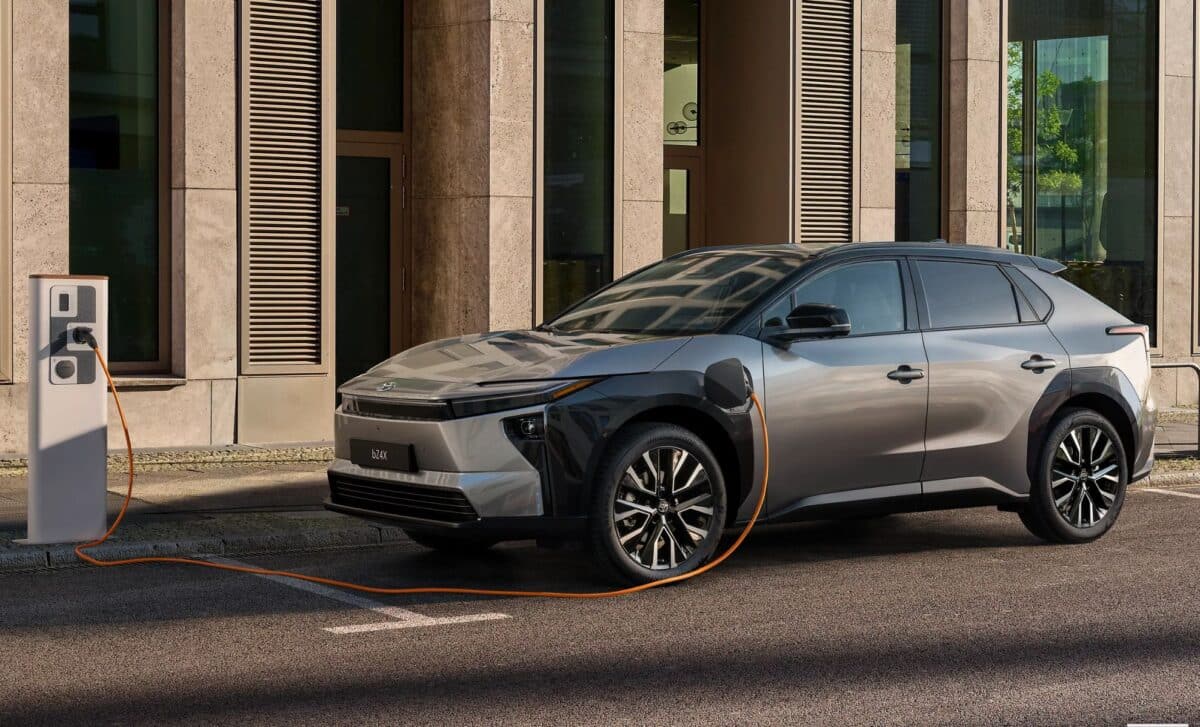
Toyota’s renamed bZ SUV starts at $36,350 after the company abandoned the bZ4X designation. The revised model now offers up to 314 miles of range with its larger 74.7-kWh battery and includes a standard NACS charging port alongside J1772 and CCS adapters. Charging speeds rise to 150 kW, an increase over the previous model’s 100-kW capability.
Subaru appears twice on the list with the Uncharted and Solterra. The Uncharted shares much of its engineering with Toyota’s C-HR EV and can reach up to 300 miles of range in front-wheel-drive form using a 74.7-kWh battery pack. The Solterra, starting at $39,945, gains a redesigned battery pack, preconditioning system, upgraded all-wheel-drive system, and an EPA-rated range of 288 miles.
Tesla, Ford, Kia, and Chevrolet Compete Beyond Entry-level Pricing
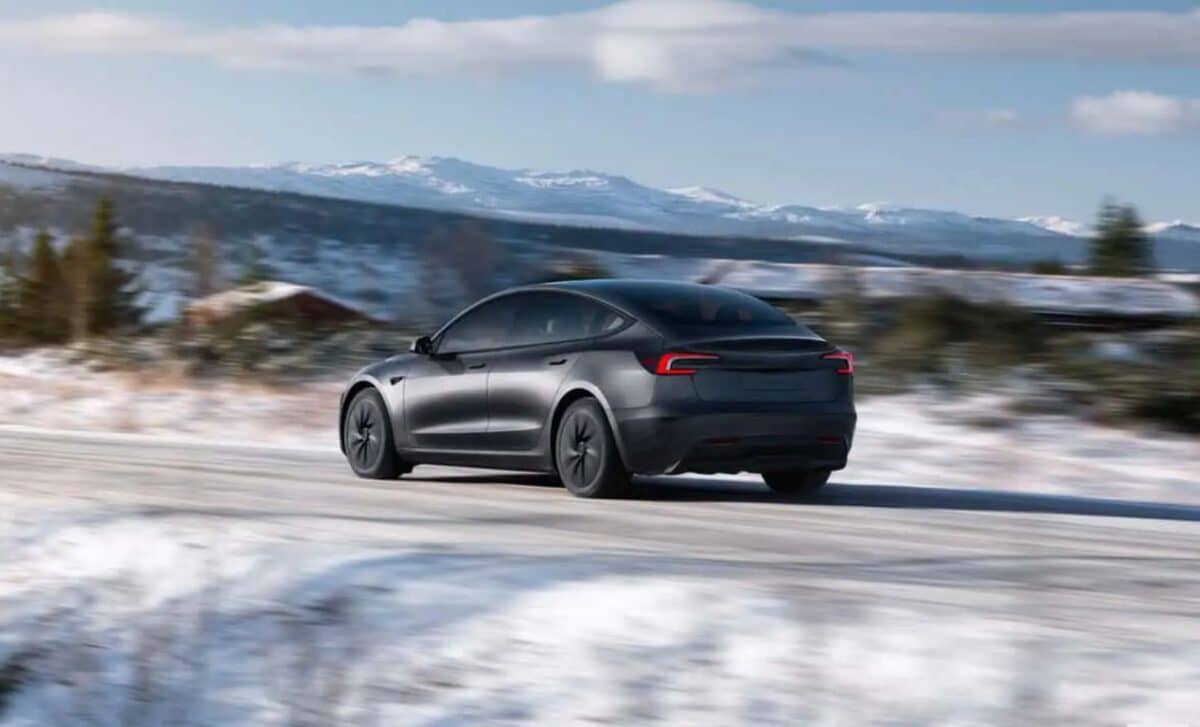
Tesla’s Model 3 remains the company’s least expensive vehicle in the United States at $38,380. The rear-wheel-drive version delivers a claimed 321 miles of range and accelerates from 0 to 60 mph in 5.8 seconds. The model also continues to stand out for its software ecosystem and autonomous-driving capabilities.
The updated Tesla Model Y follows at $41,380 with revised styling, new seats, improved materials, and suspension updates introduced through the “Juniper” refresh. The Long Range rear-wheel-drive version produces 304 horsepower and offers an EPA-estimated 337 miles of range using a 75-kWh battery.
Ford’s Mustang Mach-E begins at $39,990 and remains one of the publication’s top-rated electric compact SUVs. Standard-range rear-wheel-drive versions generate 264 horsepower and provide 260 miles of range, while extended-range configurations reach up to 320 miles.
Kia maintains two entries in the ranking with the Niro EV and EV6. The Niro EV starts at $41,045 and offers up to 253 miles of range, though its 85-kW charging speed is among the slowest in the segment. The EV6, beginning at $44,395, stands out for its 800-volt charging system and sporty driving dynamics. Rear-wheel-drive versions equipped with the larger battery produce 225 horsepower and can recharge in approximately 20 minutes on a compatible DC fast charger.
Chevrolet closes the list with the Blazer EV at $46,095. The Blazer EV RS AWD earned recognition for its styling, interior quality, and road manners. Chevrolet has since expanded the available configurations and introduced a new NACS Level 2 charging adapter for owners.