

C
California is considering a regulatory framework that would establish performance standards for aftermarket tires based on rolling resistance. According to the California Energy Commission, the objective is to reduce fuel consumption and address what the agency describes as roughly $1 billion in additional fuel costs incurred by drivers.
The proposal remains under discussion and would not take effect before January 1, 2028. If adopted in its current form, tires that do not meet the specified performance requirements would no longer be eligible for sale in California.
A Broader Investment in Advanced Driving Technology
The proposed rules focus on rolling resistance, a measure of how much force is required to keep a tire moving. Lower rolling resistance generally improves fuel economy and can also increase energy efficiency in electric vehicles.
According to the California Energy Commission, rolling resistance is measured using the ISO 28580:2018 standard and expressed as a coefficient in newtons per kilonewton (N/kN). The value represents the force needed to overcome every 1,000 newtons of vehicle weight.
The proposal would require tires to meet or exceed the performance levels of original equipment (OE) tires, which are fitted to vehicles when they leave the factory. The framework also includes an efficiency rating system with a maximum rolling-resistance threshold of 10.5 N/kN. The most efficient tires are reported to achieve values near 6 N/kN.
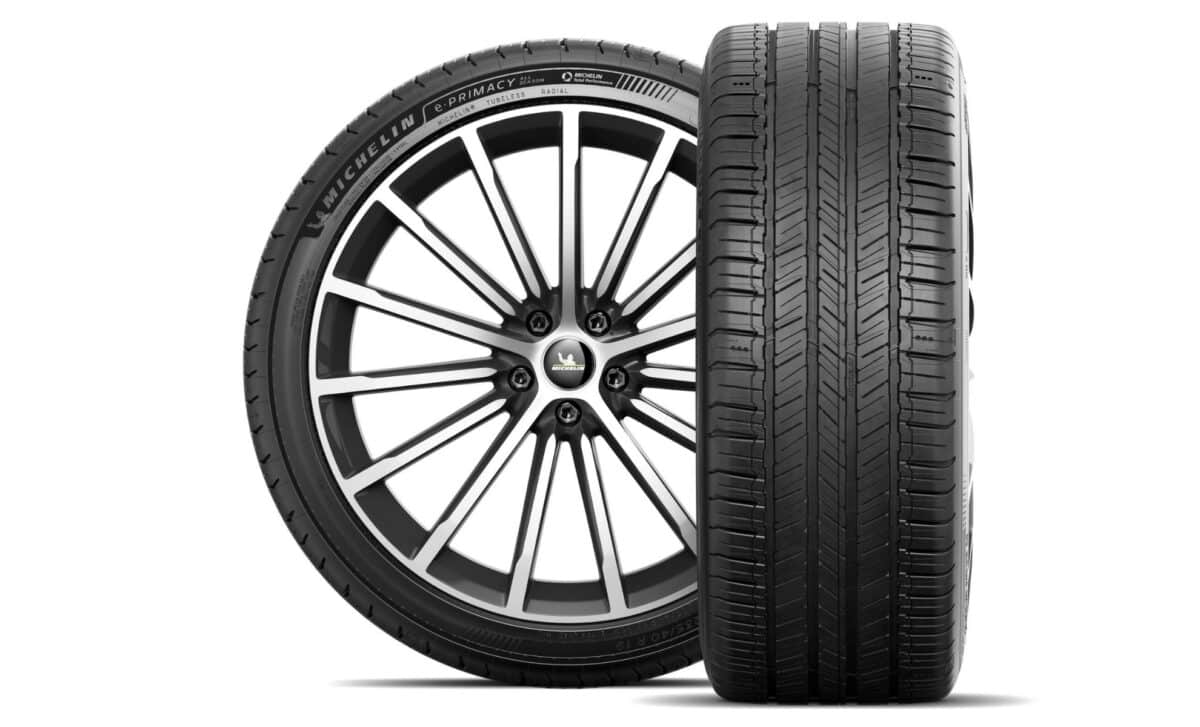
As reported by Motor1, the Michelin Pilot Sport 4S, an ultra-high-performance summer tire with a 300 treadwear rating, records a rolling-resistance value of approximately 9.8 N/kN. By comparison, track-focused tires such as the Bridgestone Potenza RE-71RZ, Yokohama A052, and Maxxis VR2 are said to fall in the mid-teens, above the proposed limit.

Exemptions Could Preserve Access to Some Niche Tire Categories
Under the proposal, tires that fail to satisfy the performance standard would not be eligible for sale in California. The draft framework nevertheless includes several exemptions.
Exemptions would apply to tire models selling fewer than 15,000 units annually, as well as ultra-high-treadwear tires rated at 1,000 UTQG or higher. Motorcycle tires, snow tires, and temporary space-saver spare tires would also be excluded from the requirements.
The 15,000-unit threshold could prove significant for some track-oriented tire models, although the source notes that certain products may exceed that sales volume. Most summer tires used by enthusiasts are expected to remain within the proposed standards, even if they rank among the less efficient options available on the market.
The rules remain proposals and may still be modified or rejected during the legislative process.
Supporters cite fuel savings, while questions remain about tire longevity
The California Energy Commission’s initiative is intended to improve fuel efficiency and reduce emissions associated with tire particulates. The source notes that there are currently no federal standards governing tire rolling resistance in the United States.
At the same time, questions have been raised regarding the overall benefits for consumers. According to Tyre Reviews, the average tire in Europe lasts around 27,000 miles, compared with approximately 60,000 miles for a typical tire sold in the United States.
Shorter tire lifespans could result in higher tire consumption and increased manufacturing activity, which carries environmental and financial implications for consumers.
For now, the proposal remains under review. According to the reported timeline, any final regulation would not take effect before January 1, 2028, leaving time for further debate and potential revisions before a final decision is reached.