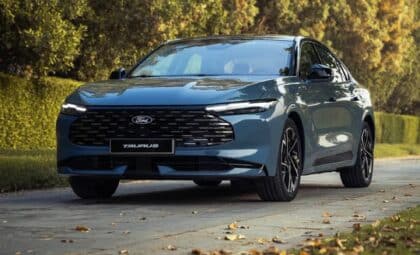


The request places Ford among a group of automakers navigating regulations designed to address national security concerns related to connected vehicle technology. The rules, adopted in January 2025 and maintained by the Trump administration, are expected to affect several manufacturers with production or ownership ties to China.
Ford’s situation also illustrates how deeply integrated China remains in the automotive industry’s global supply chains. As the software restrictions approach, manufacturers are working to determine whether exemptions or authorizations will be required to keep certain models on sale in the U.S. market.
Ford Needs Government Authorization for the Lincoln Nautilus
Ford confirmed that it has applied for authorization to continue importing the Lincoln Nautilus, which is manufactured in China. The vehicle uses software developed in the United States, though that software is installed in the vehicle in China.
Because of that production process, Ford requires approval from the Commerce Department to continue selling the midsize crossover in the United States once the new regulations take effect.
According to Reuters, imports of 2027 model year Nautilus vehicles are expected to begin in January. That timeline gives Ford several months to secure the necessary authorization.
The Nautilus is one of a limited number of Chinese-built vehicles that were already being sold in the U.S. before the restrictions were introduced.

GM, Polestar and Volvo Are Also Linked to the New Rules
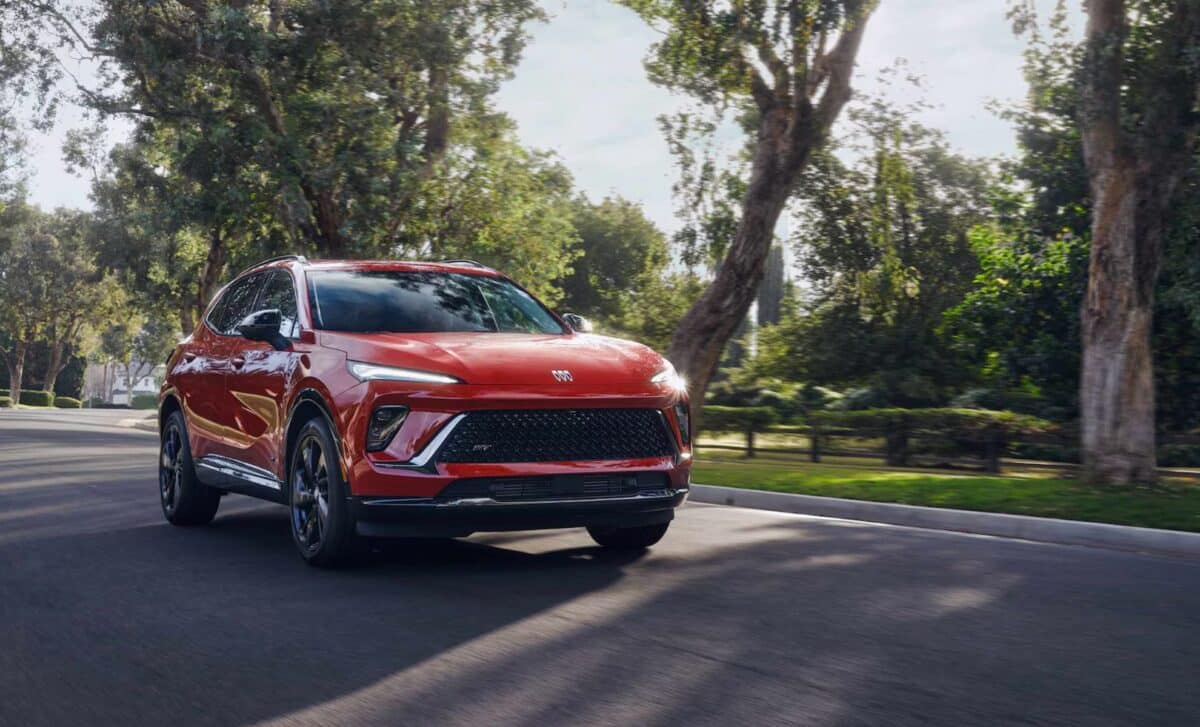
Other automakers may face similar regulatory questions. General Motors currently builds the Buick Envision in China, a model that is also directly affected by the restrictions. Earlier this year, GM announced plans to transfer production of the compact crossover to a plant in Kansas starting in 2028.
Polestar could also be impacted. Although the company no longer sells China-made vehicles in the United States, it remains majority-owned by Geely, a Chinese automotive group.
It remains unclear how many manufacturers have sought authorizations similar to Ford’s. GM and Polestar declined to disclose whether they had submitted applications, while the Commerce Department does not make authorization requests or decisions public.
The regulations extend beyond vehicle assembly and software development. They also apply to companies with significant Chinese ownership. In late May, Volvo Cars received U.S. approval to continue selling connected vehicles in the country.
A Broader Hardware Ban Is Scheduled for 2030
The software restrictions represent only the first phase of the regulatory framework. More extensive hardware-related rules are scheduled to take effect beginning with the 2030 model year.
The future restrictions are intended to reduce reliance on China within the U.S. automotive hardware supply chain. According to a study by the Rhodium Group cited by Reuters, complying with the hardware requirements is expected to be more complicated and may require additional time for automakers to adjust.
Suppliers are also preparing for the impact. Pirelli warned that one of its tire products risked being banned because the company has a large Chinese shareholder. In May, the Italian tire manufacturer announced plans to produce that tire at a U.S. plant.
The licensing process now facing Ford and other automakers underscores how closely connected the U.S. automotive industry remains to Chinese manufacturing and supply networks, even as new restrictions reshape the regulatory landscape.