
The changes for 2027 are not sweeping, but they are meaningful. Charging access improves for the electric Charger, personalization expands across the lineup, and the Durango moves further into V-8-only territory for now. Dodge is also looking beyond the Charger and Durango with two familiar names that could shape the brand’s next phase: Copperhead and GLH.
Both remain future-product stories rather than confirmed additions to the 2027 showroom, but they point to where Dodge may be trying to go after years of major powertrain change.The current lineup is built around a narrow set of vehicles with a clear identity. It is small, yes, but still loud in the way Dodge tends to be: muscle-car design, high-output engines, appearance packages, and a steady focus on customization.
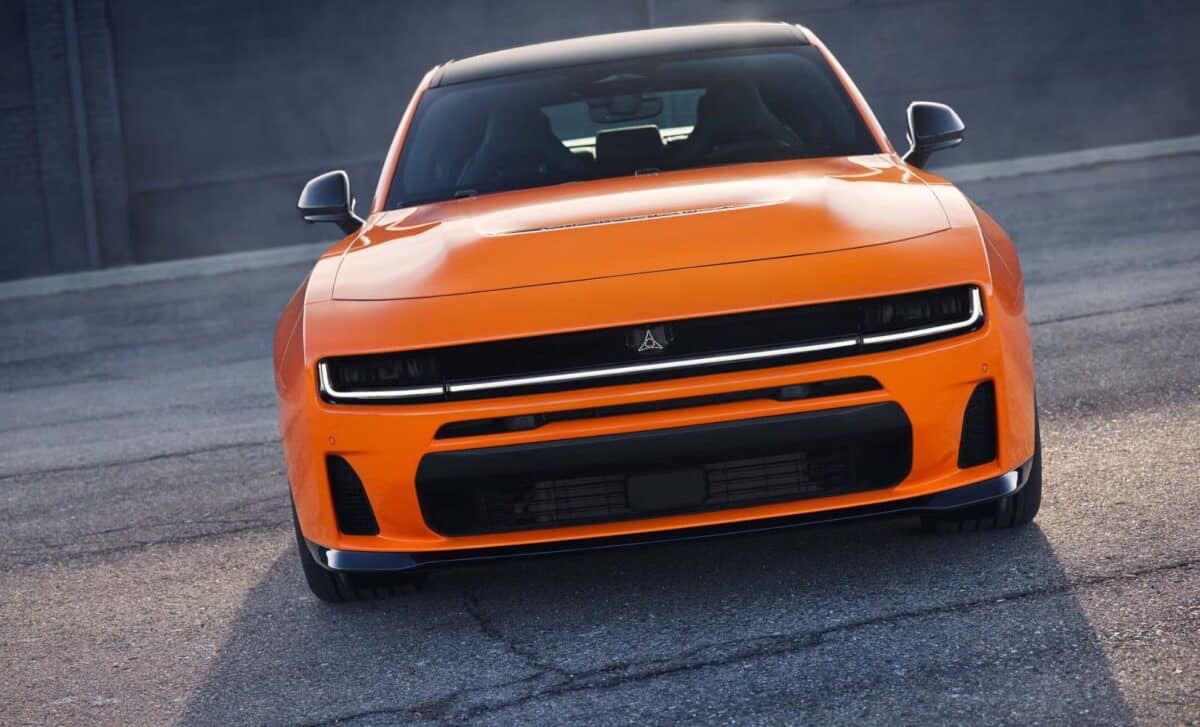
The 2027 Charger Adds Better Charging Access And More Personalization
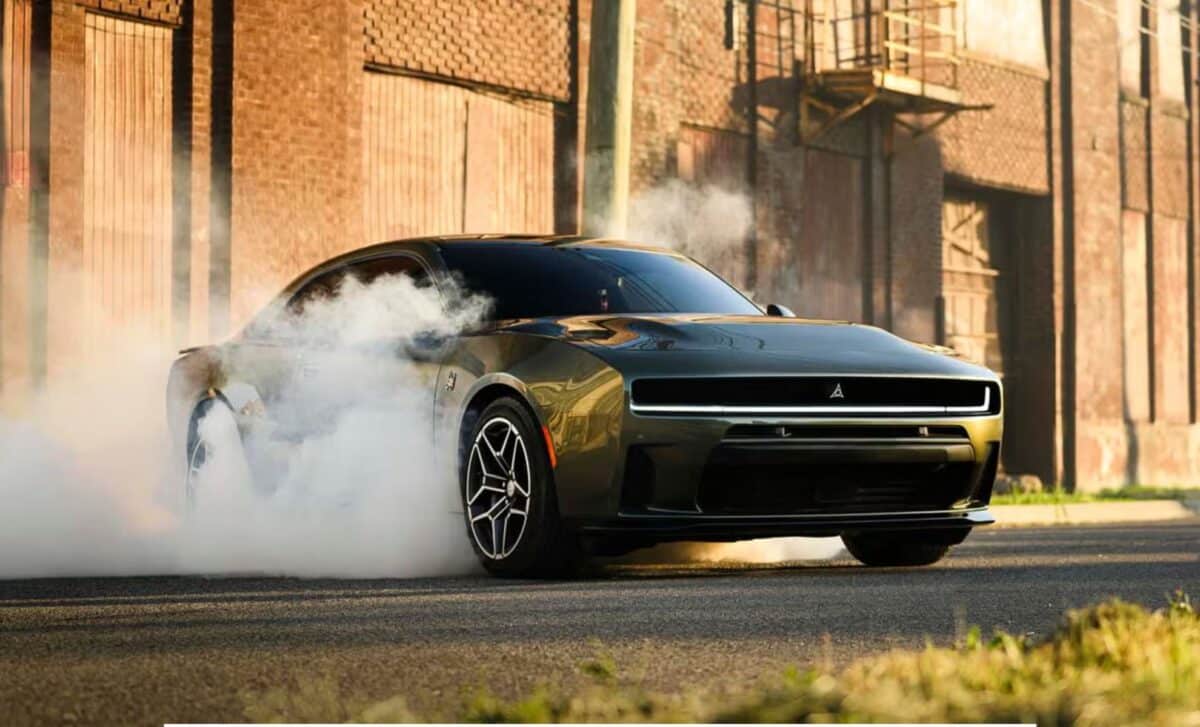
For 2027, the electric Dodge Charger Daytona receives a standard North American Charging System port. That gives owners access to Tesla Supercharger stations, a notable change for the electric version of Dodge’s modern muscle car.
Dodge also includes a J1772-to-NACS adapter for Level 2 charging. Apart from that charging update, the two-door and four-door Charger Daytona models carry over unchanged.
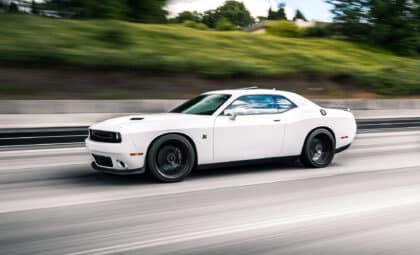
The gas-powered Charger Sixpack lineup had already been announced for the 2026 model year, so the 2027 model year is more of a continuation than a full reset. The R/T and Scat Pack remain the main internal-combustion versions, both powered by Dodge’s 3.0-liter twin-turbo inline-six.
A revived SRT model or a Hemi-powered Charger is still not confirmed for 2027. A higher-output halo Charger is described as a later possibility rather than a sure thing for this model year.
The broader Charger lineup does get a stronger personalization push. Dodge is adding more than 25 factory customization options, including new Mopar graphics, Petrol Blue leather upholstery, Demonic Red seat belts, added Brembo brake caliper colors, and a Satin Black hood option for Sixpack models.
MotorTrend ranked the 2026 Dodge Charger No. 2 among best muscle cars. For 2027, the Charger’s core story is not a dramatic redesign, but a mix of electric charging practicality, gas-powered continuity, and more factory-backed customization.
The 2027 Durango Drops The V-6 And Keeps The Hemi V-8
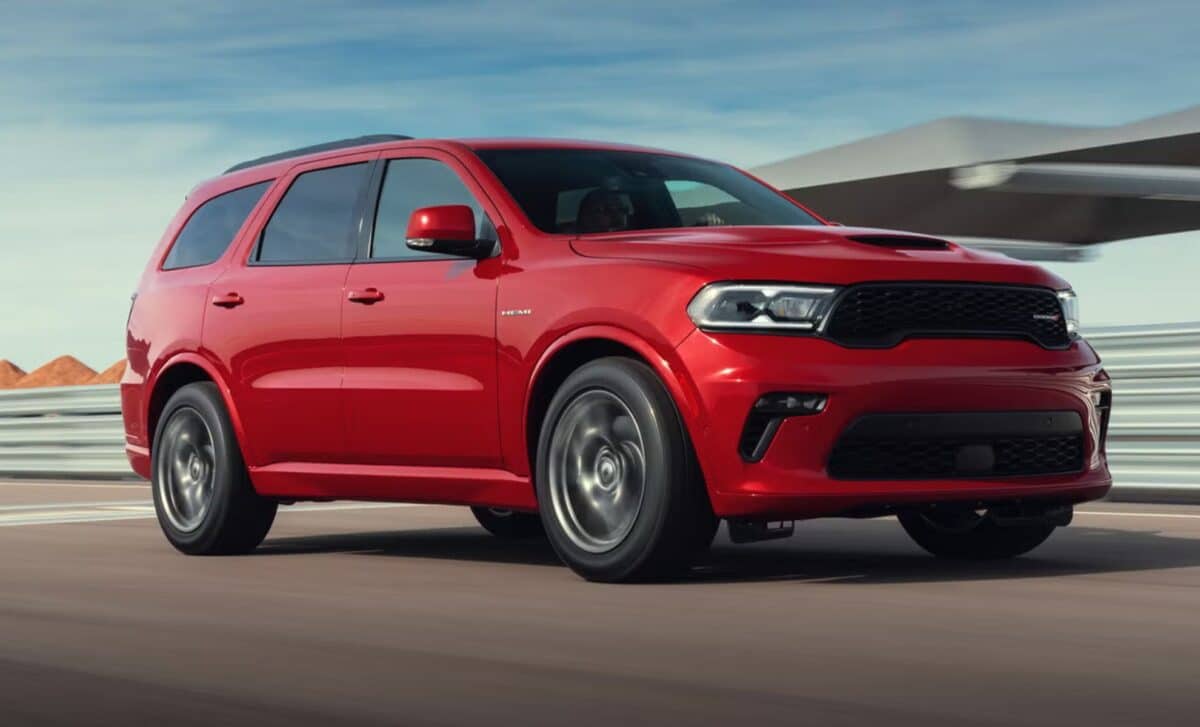
The 2027 Dodge Durango continues as the brand’s long-running three-row SUV, but its lineup becomes simpler. The 3.6-liter Pentastar V-6 and rear-wheel-drive GT are gone for now.
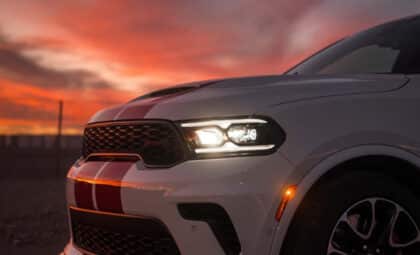
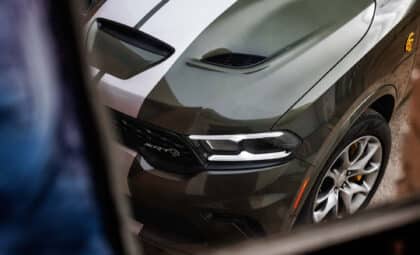
That leaves every 2027 Durango with a Hemi V-8 and all-wheel drive. The range starts with the GT Hemi, powered by a 5.7-liter V-8, while the 6.4-liter R/T 392 sits above it.
The R/T 392 lineup expands with new Plus and Premium grades. Depending on trim, those upgrades include Nappa leather, heated and ventilated front seats, heated second-row outboard seats, a Harman Kardon audio system, forged carbon-fiber interior accents, and upgraded Brembo brakes.
The GT Hemi adds a new Brass Monkey package. The R/T 392 offers Brass Monkey wheels and a new Blacktop Redline package, while the SRT Hellcat Jailbreak expands its personalization menu with new forged wheel choices and a new six-passenger seating configuration.
The 2026 Dodge Durango has been ranked No. 3 among best muscle cars. For 2027, the Durango’s update is centered on a more focused V-8 lineup, more appearance choices, and added equipment for buyers looking at the upper trims.
Copperhead And GLH Point To Dodge’s Possible Next Chapter
Beyond the 2027 Charger and Durango, Dodge’s future-product news includes two familiar names: Copperhead and GLH. Both are presented as future models, not confirmed 2027 vehicles.
The Copperhead could become a new performance flagship near the end of the decade, though the project still appears closer to an intention than a confirmed production car. Dodge has described the idea as a sporty model that is “not a Viper successor” but still very much “a snake.”
That description suggests something more focused and special than another Charger variant. If it happens, the Copperhead would likely lean into internal-combustion performance rather than a full-EV formula. The source says Dodge could offer Hurricane inline-six power and possibly a V-8 for buyers who want the sound and character of a traditional Dodge halo car.
A Corvette-rivaling two-seater or a low-slung sports car is described as the layout that would make the most sense. For now, though, the Copperhead remains one of Dodge’s more intriguing “what if” models.
The GLH name is also expected to return before the end of the decade, reviving the “Goes Like Hell” badge once used on the Omni hot hatch of the 1980s. This time, the GLH is expected to become a midsize hatch or hatchlike SUV related to the upcoming Chrysler Airflow.
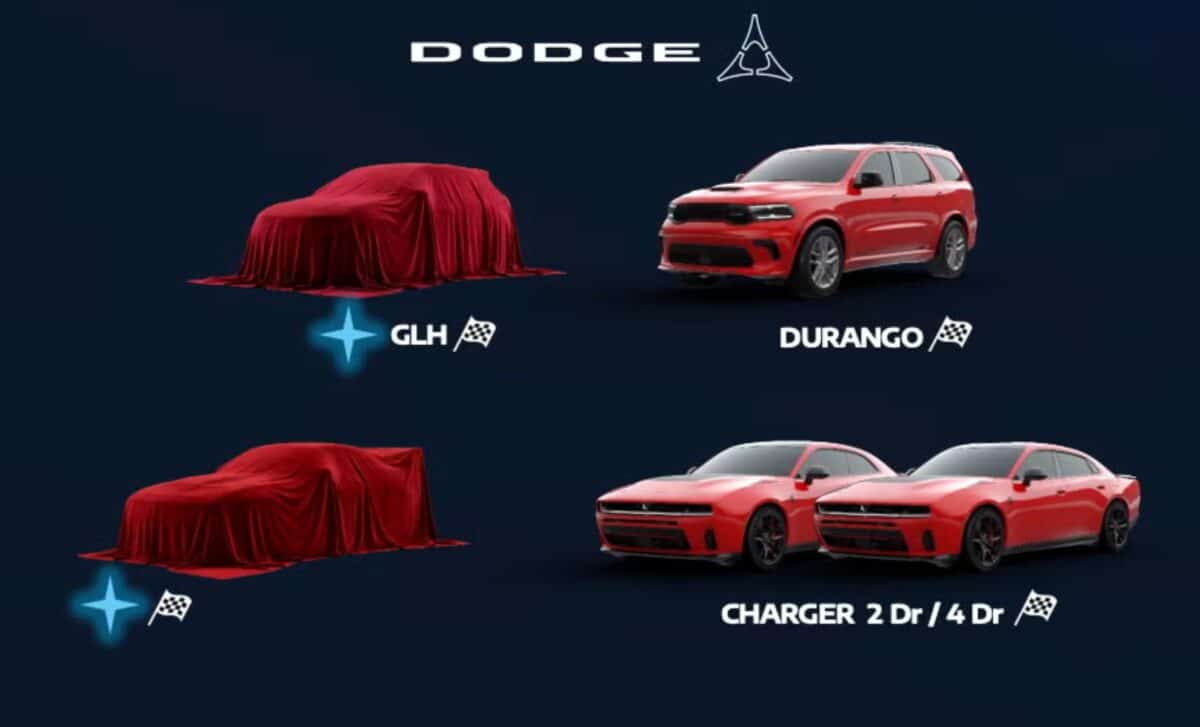
The reported plan links the GLH to Stellantis’ new STLA One platform and targets roughly 300 hp. That positioning could make it Dodge’s more practical performance play: roomier than the departed Hornet, less expensive and less extreme than a Charger, and more attitude-driven than mainstream family crossovers.
Powertrain details are still speculative. The expected lineup could include gas, hybrid, and eventually EV variants, with the volume version likely using a turbocharged four-cylinder.
For 2027, Dodge’s confirmed updates remain narrow: the Charger gets a minor update, and the Durango gets a minor update. The Copperhead and GLH sit outside that immediate lineup as future models, but they give the brand’s next act a sharper outline.