The announcement marks a new phase in the relationship between two of Japan’s largest automakers. Rather than reviving merger discussions, both companies are focusing on cooperation in selected areas of their businesses, while each continues to navigate significant internal restructuring.
The two manufacturers first attracted widespread attention in December 2024 when they signed a memorandum of understanding to explore a merger. According to Reuters, those discussions ended by February 2025 after disagreements emerged over the structure of the proposed deal.
Honda reportedly sought to make Nissan a subsidiary instead of proceeding with what had initially been presented as a merger of equals. Honda pushed for deeper job cuts and additional factory closures, proposals that met resistance from Nissan.
Honda Confirms a New Agreement Is Approaching
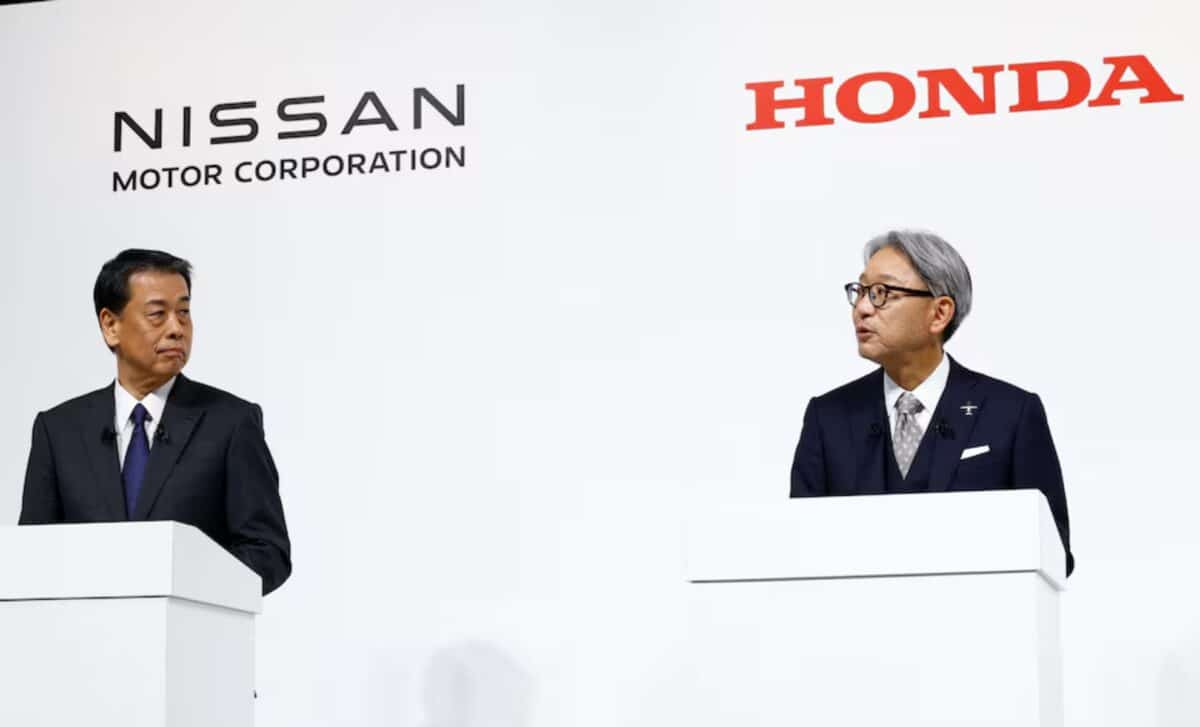
According to Nikkei Asia, Honda President and CEO Toshihiro Mibe told shareholders that negotiations with Nissan are “quite far along, with some aspects close to an announcement.”
Mibe did not disclose the exact content of the planned partnership. He said the two companies are “proceeding with each project in a win-win relationship,” indicating that the discussions concern collaboration on specific initiatives rather than a corporate merger.
At this stage, Honda has not specified whether the cooperation will involve joint vehicle development, shared production capacity, or other areas of its business.
Shared Electronic Control Units Are Reportedly Under Discussion
Reports indicate that Honda, Nissan, and Mitsubishi are working toward standardizing electronic control units (ECUs) for future vehicle programs.
The shared ECUs are expected to be used in next-generation hybrid and electric vehicles scheduled to arrive around the turn of the decade. Discussions are still ongoing and that not every aspect of the project has been finalized.
Renault could also play a role in any agreement, as the French automaker continues to hold a 15% voting stake in Nissan, down from 43% in 2023.
Both Automakers Continue Major Restructuring Efforts
The negotiations come as Nissan carries out its RE:Nissan restructuring plan. The company is closing seven factories, shutting two design studios, and reducing its workforce by around 20,000 employees. Nissan is also lowering its production capacity from 3.5 million to 2.5 million vehicles.
Honda is also implementing significant changes after recording its first annual loss in the company’s history. The automaker has canceled several electric vehicle projects because of demand concerns and has dropped its objective of becoming an all-electric manufacturer by 2040.
Instead, Honda is shifting its focus toward a new generation of hybrid vehicles, including a wedge-shaped sedan and SUV that are expected to arrive in 2028.