
BYD has recently drawn attention for its new charging technology, which combines second-generation Blade Battery chemistry with ultra-high-power charging equipment capable of delivering up to 1,500 kilowatts to a lithium iron phosphate (LFP) battery pack. The company says its newest electric vehicles can charge from 10% to 70% in roughly five minutes and from 10% to 97% in under 10 minutes under ideal conditions.
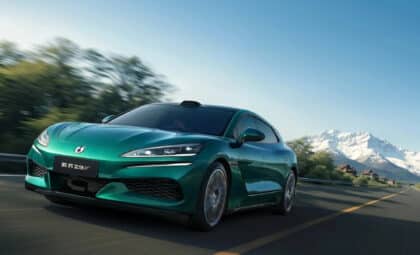
The latest demonstration focused specifically on cold-weather performance, an area where battery charging speeds are often affected by low temperatures. The vehicle used in the test was a Denza Z9GT, a model that recently made its European debut.
A Deep-Freeze Test at -30°C
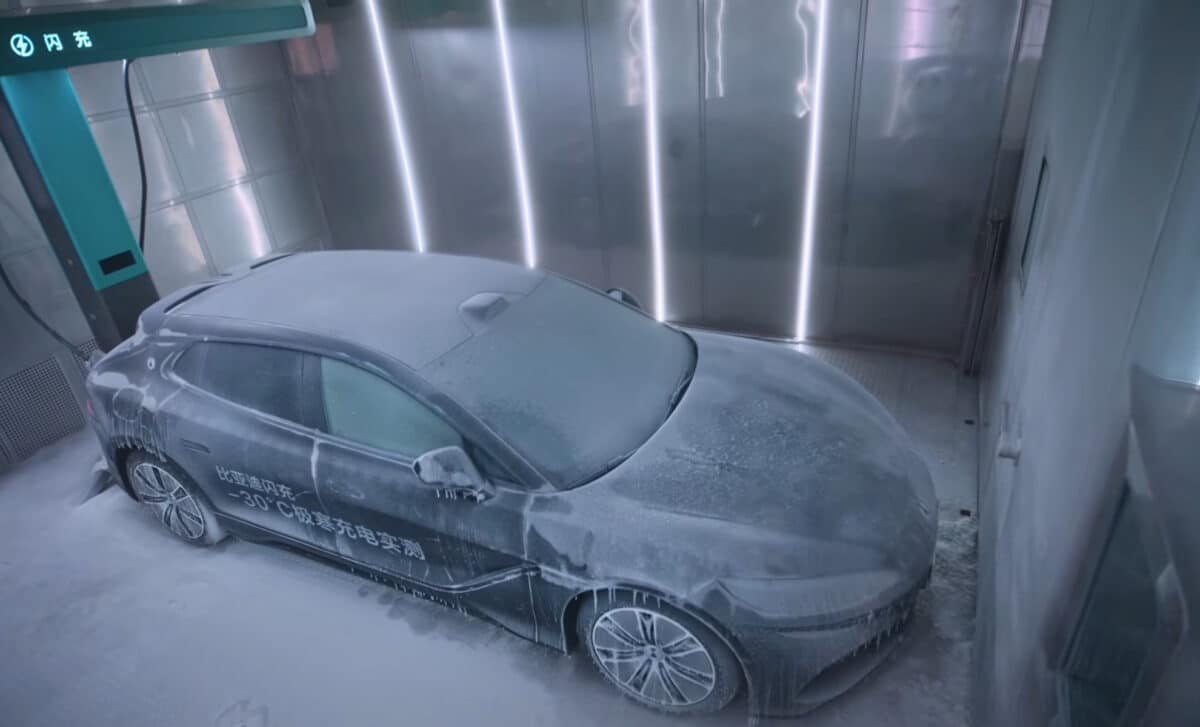
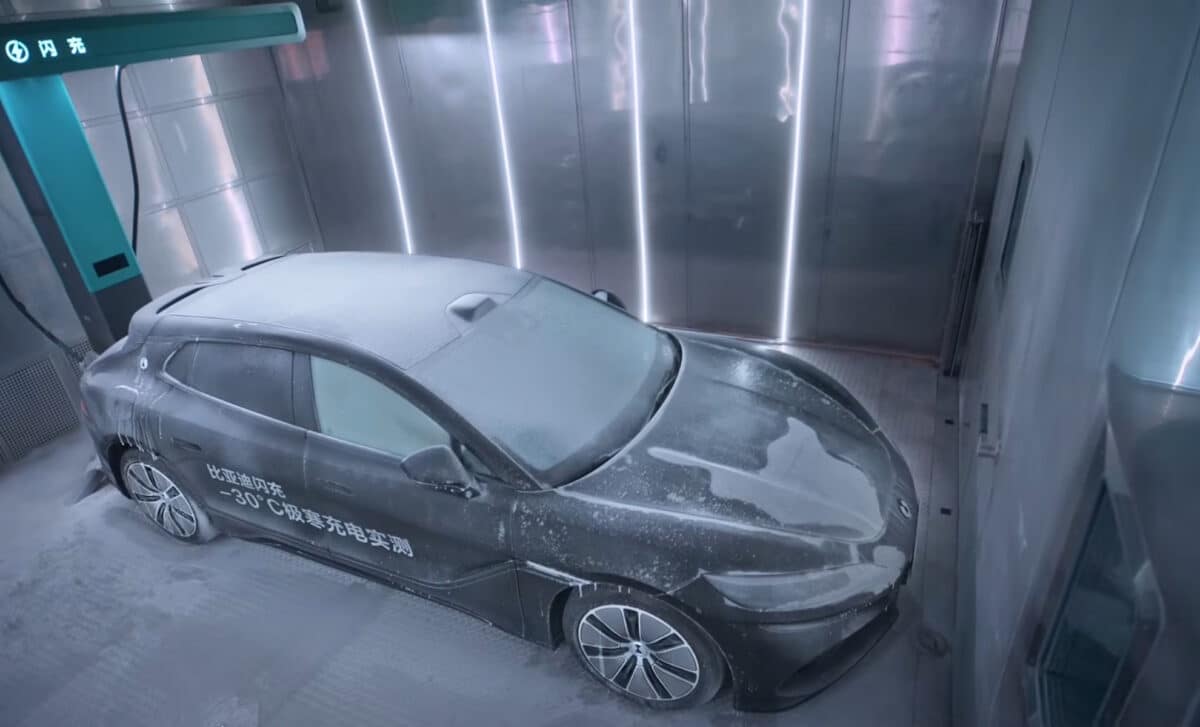
According to InsideEVs, a brand-new Denza Z9GT was placed in a freezing environment at -22°F (-30°C) for 24 hours before the charging session began. The objective was to evaluate how the vehicle’s charging system would perform after prolonged exposure to extreme cold.
Once removed from the freezing conditions, the vehicle was connected to a BYD Flash charger. The charging session shown in the video increased the battery’s state of charge from 20% to 97% in 12 minutes. At the end of the process, the vehicle’s range display indicated nearly 626 miles (1,009 kilometers).
This displayed range likely corresponds to China’s CLTC testing procedure, which is oriented more toward lower-speed urban driving conditions than highway driving.
BYD’s Latest Battery and Charging Technology
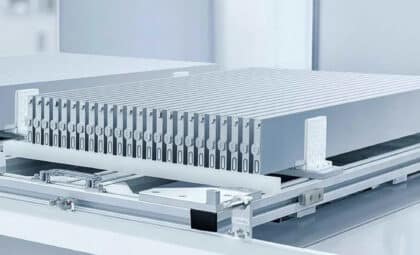
The demonstration relied on BYD’s second-generation Blade Battery technology working alongside the company’s newest Flash charging infrastructure. According to the source, the system can transfer up to 1,500 kilowatts from a DC fast charger to the battery pack.
When BYD introduced the technology, the company stated that its latest EVs could charge from 10% to 70% in approximately five minutes. Under ideal conditions, BYD also said a charge from 10% to 97% could be completed in less than 10 minutes.
The cold-weather test produced a result of 12 minutes from 20% to 97%, matching the charging performance claims that BYD highlighted when unveiling the battery technology.
Why the Test Stopped at 97%
The charging session ended at 97% rather than 100%. BYD Chairman Wang Chuanfu previously explained that the company intentionally leaves a 3% buffer during charging demonstrations.
Wang said the remaining capacity allows regenerative braking to continue functioning immediately after a high-speed charging session. If the battery is completely full, there is no available capacity to receive energy recovered through regenerative braking, meaning that function is temporarily unavailable until some charge has been used.
The report also places BYD’s charging performance alongside other recent electric vehicles. Mercedes-AMG says its latest GT EV can accept up to 600 kW from a DC charger and can charge from 10% to 80% in 11 minutes under ideal conditions. Meanwhile, State of Charge YouTube channel host Tom Moloughney found that the Lucid Gravity SUV charged from 0% to 50% in 12.5 minutes.