
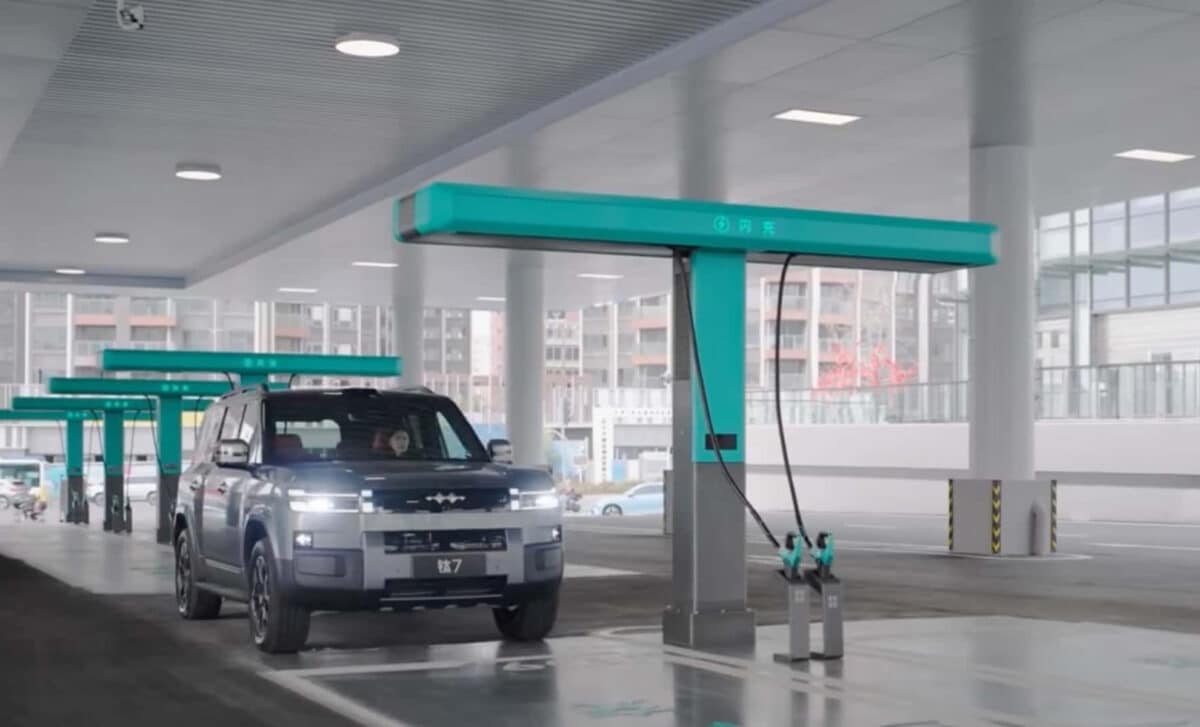
The announcement marks another step in the global race to shorten EV charging times. BYD is pairing the new charging infrastructure with an updated version of its Blade lithium-iron phosphate battery, designed to handle extremely high power levels.
The development comes as Chinese automakers push ahead with ultra-fast charging technology, while many existing public charging networks in the United States still operate at significantly lower power levels.
A 1.5 Megawatt Charger Designed to Rival the Speed of Refueling
BYD’s new Flash charger delivers up to 1,500 kilowatts of peak charging power. The system operates with 1,500 amps of current and a 1,000-volt electrical architecture, allowing energy to flow into the battery far more quickly than most existing chargers.
According to InsideEVs, this peak charging capability is roughly three times higher than the maximum output of Tesla’s latest V4 Superchargers currently available in the United States. Most fast chargers deployed across the U.S. typically provide between 250 kW and 400 kW.
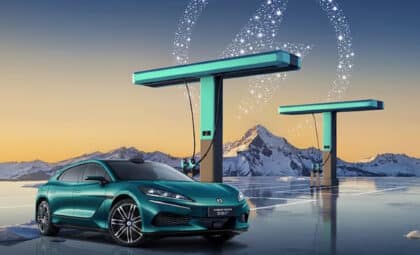
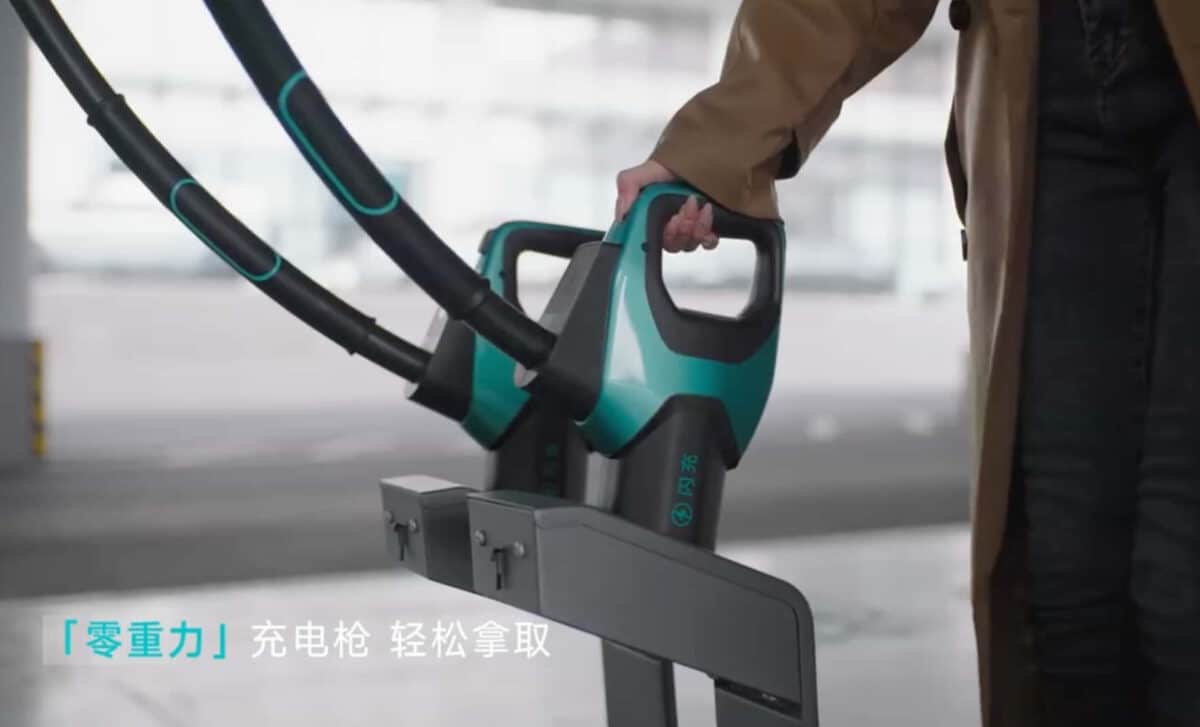
The physical design of the charging stations reflects the goal of rapid turnover. BYD arranged the chargers in layouts similar to traditional gas stations so drivers can pull in, charge quickly, and continue their trip. The charging towers feature what the company calls “zero-gravity” charging guns, described as lighter and easier to handle.
The stations also include plug-and-charge functionality, meaning drivers do not need to manage apps or payment systems before charging begins.
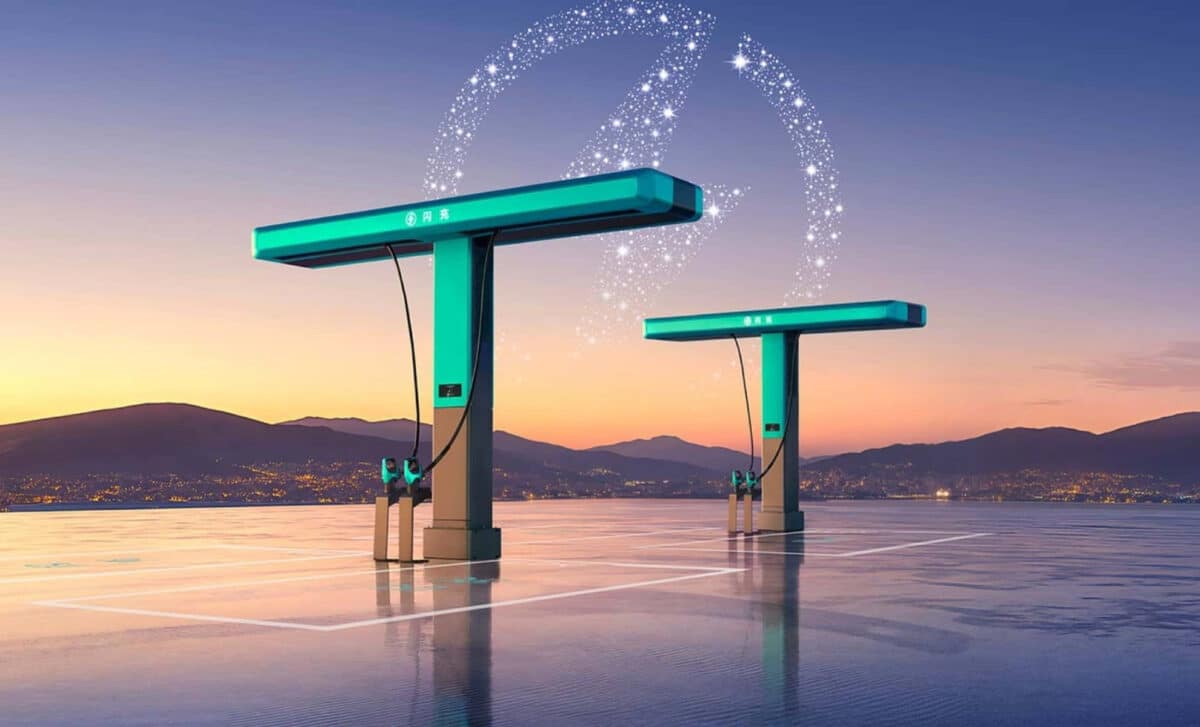
New Blade Battery Enables Ultra-Fast Charging Cycles
The charging performance relies on BYD’s second-generation Blade lithium-iron phosphate battery. When connected to the Flash charger, the system can rapidly increase the battery’s state of charge.
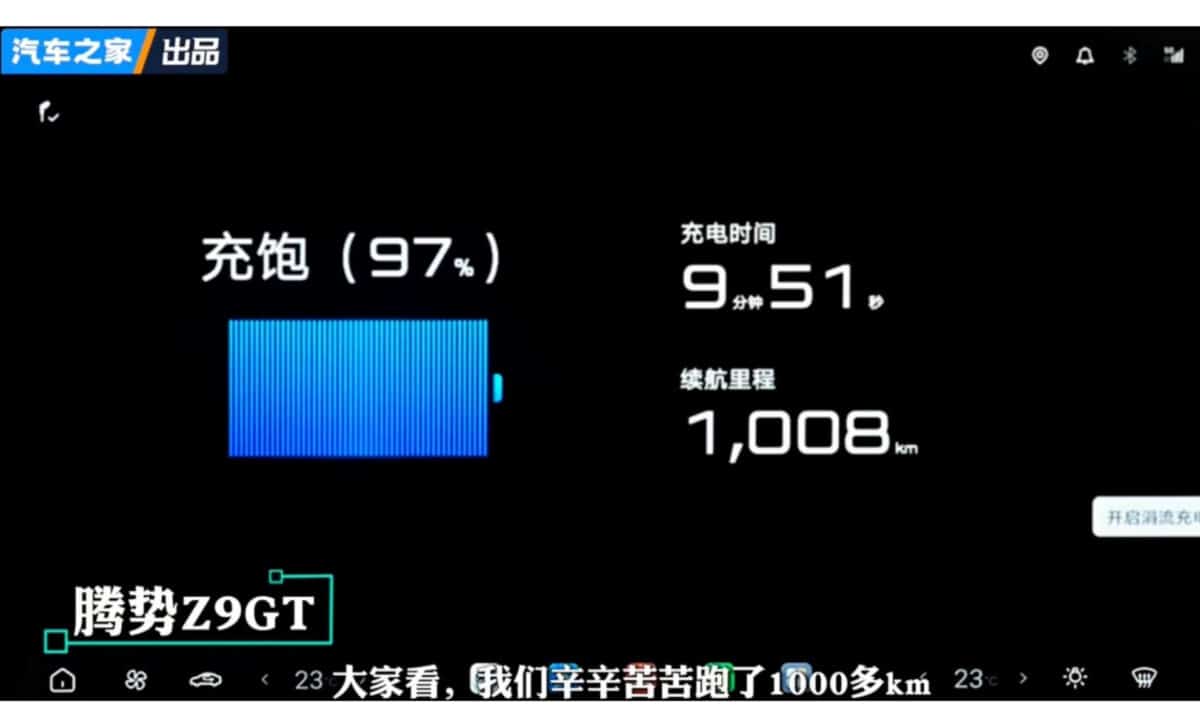
The battery can move from 10% to 70% charge in about five minutes and reach 97% in around nine minutes. BYD chairman Wang Chuanfu said the charging process deliberately stops at 97% to keep about 3% of the battery capacity available for regenerative braking, a detail reported by Chinese media outlets.
The technology is also designed to operate in extreme conditions. BYD says that even at temperatures as low as –30 degrees Celsius (–22 degrees Fahrenheit), the battery can charge from 20% to 97% in approximately 12 minutes.
Real-World Demonstration and Rapid Deployment Across China
BYD demonstrated the system using a Denza Z9 GT during a live test. The vehicle’s battery was driven down to 9% state of charge, leaving about 93 kilometers (58 miles) of remaining range. The car was then connected to a Flash charger delivering up to 1,500 kW. After 9 minutes and 51 seconds the vehicle’s display showed an estimated driving range of 1,008 kilometers, equivalent to about 626 miles.
The figure relies on China’s CLTC testing cycle, which tends to produce higher range estimates than the U.S. EPA system because it favors city-driving conditions. Even accounting for that difference, the demonstration showed how quickly large amounts of range can be added.
BYD is already deploying the new charging network. The company says it has completed around 4,200 Flash charging stations across China and plans to build 20,000 stations by the end of the year. According to the automaker, that expansion would place at least one Flash charger within five kilometers of more than 90% of urban areas in China. The rollout is also expected to extend beyond China. BYD indicated that the Flash charging stations will also be introduced in Europe, Latin America, the Middle East, Africa, and the Asia-Pacific region.
Because such high power output can place pressure on electrical grids, BYD plans to install energy-storage batteries at charging sites to help manage demand. Wang Chuanfu said these systems will store electricity during periods of lower demand and release it during peak usage, while also storing surplus renewable energy such as solar power.
The push for megawatt-level charging is also drawing competition. Companies including Zeekr and Huawei are developing their own ultra-fast charging systems as Chinese manufacturers compete to accelerate EV charging technology.