
The announcement comes as the Chinese automaker faces increasing pressure in its domestic market. BYD recorded its steepest sales drop since the pandemic, with February sales falling 41% amid intense competition in China’s electric vehicle sector.
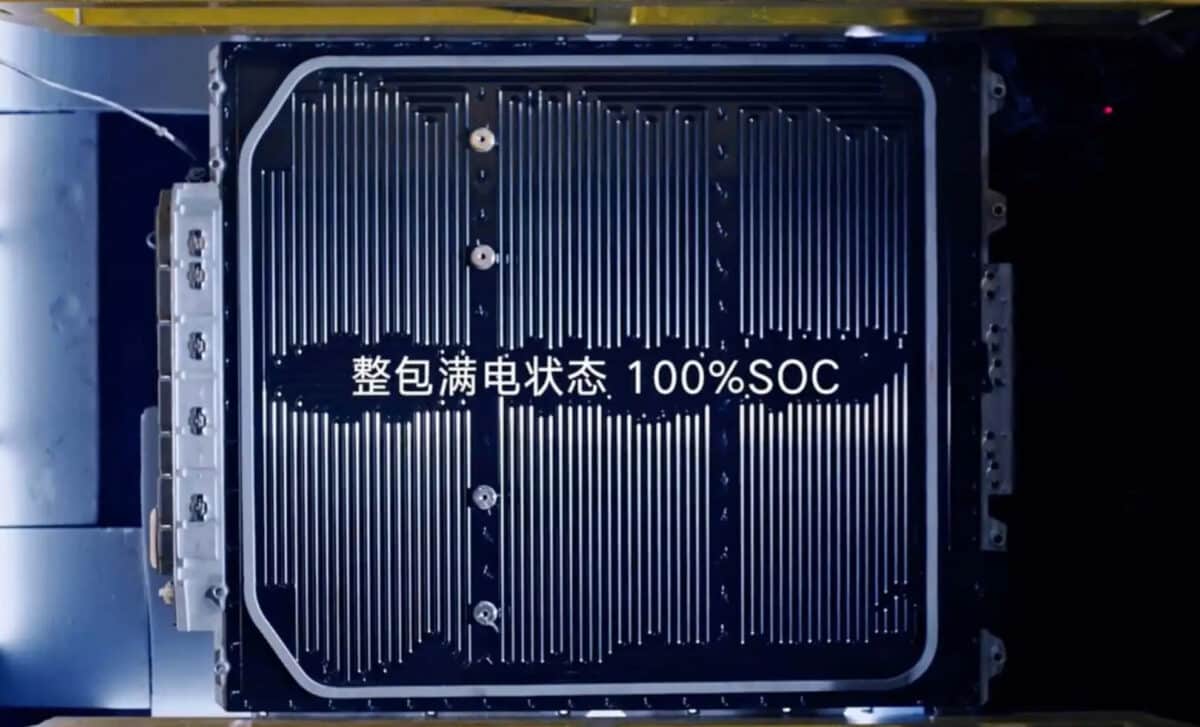
In response, the company is positioning its new battery technology as a key advantage. By pairing the second-generation Blade battery with powerful charging infrastructure, BYD aims to make ultra-fast EV charging more widely available across its upcoming models.
Charging Speeds Approach the Convenience of Gasoline Refueling
The most striking feature of the new Blade battery is its charging performance. According to InsideEVs, the battery can charge from 10% to 70% in roughly five minutes and from 10% to 97% in under 10 minutes.
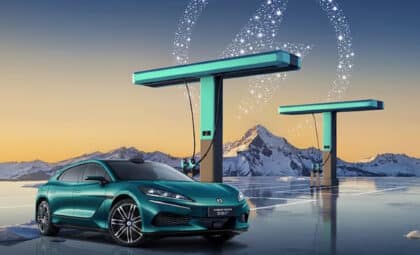
BYD demonstrated this capability in a video shared on China’s social media platform Weibo. In the demonstration, a Denza Z9GT electric wagon was connected to the company’s new 1,500-kilowatt Flash charging station while the battery was at 9% state of charge and showing 93 kilometers (57 miles) of range.
After 9 minutes and 51 seconds, the vehicle reached 97% charge. The dashboard display showed an estimated range of 1,008 kilometers (626 miles). That figure is based on the China Light-Duty Test Cycle (CLTC), a testing standard that generally produces more optimistic range estimates than the Environmental Protection Agency (EPA) cycle used in the United States.
Even so, the charging time demonstrated in the video is far shorter than the typical 20 to 40 minutes required for many current EV fast-charging sessions in the U.S.
Performance Maintained Even in Extreme Cold
Another key feature highlighted by BYD is the battery’s ability to charge in very low temperatures. In a demonstration, the second-generation Blade battery charged from 20% to 97% in about 12 minutes at −22°F (−30°C).
This performance is notable because conventional lithium-ion batteries typically charge much more slowly in freezing conditions. Cold temperatures hinder the movement of electrons inside the battery, which reduces charging efficiency.
The BYD system took only about three minutes longer to reach the same level of charge in extreme cold compared with normal temperatures.
New Charging Infrastructure and Battery Safety Standards
To support the new battery technology, BYD also introduced its Flash charging stations, capable of delivering up to 1,500 kilowatts, or 1.5 megawatts, of power. The stations are arranged similarly to traditional gas stations, allowing vehicles to pull in, recharge quickly, and leave.
Battery safety remains a central issue for the industry. China has implemented some of the world’s strictest safety standards for electric vehicle batteries. According to these regulations, automakers must ensure that a battery will not catch fire or explode for at least two hours after a single cell enters thermal runaway.
BYD stated that the second-generation Blade battery meets these requirements. In a demonstration video, the company conducted multiple nail penetration tests on a battery pack, and the pack did not appear to catch fire.
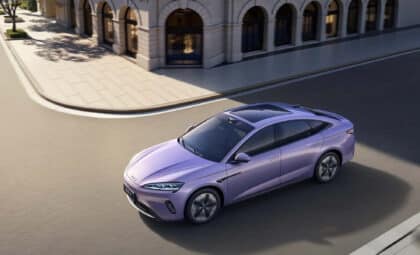
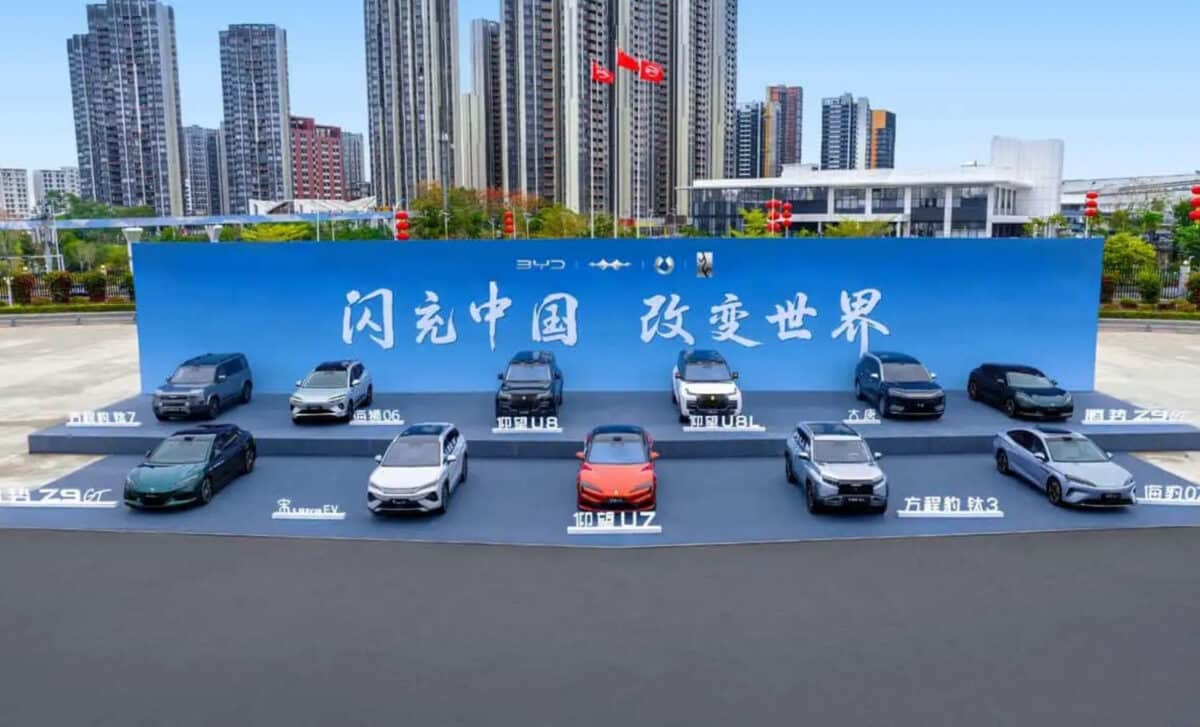
The technology is already planned for several production vehicles. According to the report, BYD expects the battery to be used in as many as ten models, including the Yangwang U7, Denza Z9GT, Seal 07, and Sealion 06.