

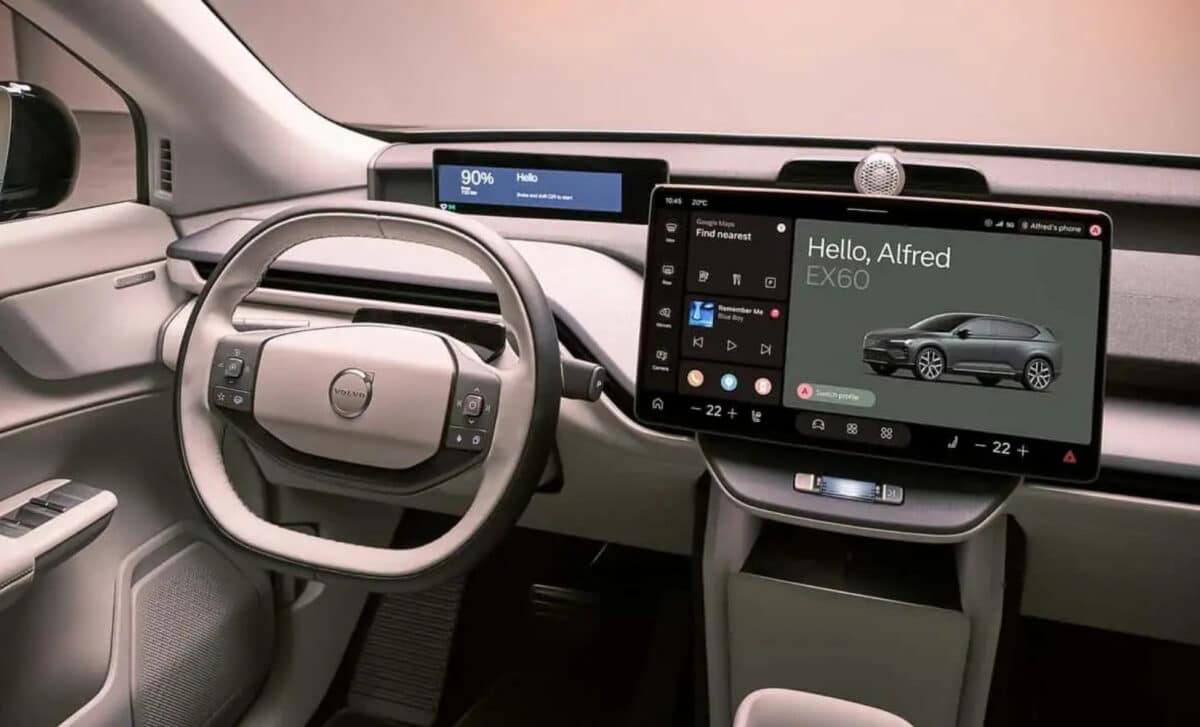
The initiative introduces Android Automotive OS for Software Defined Vehicles (AAOS SDV), an open-source platform built to accelerate development and reduce costs for manufacturers. It reflects a broader industry transition toward software-defined architectures, where digital systems increasingly dictate vehicle performance and features.
Until now, Android Automotive OS has primarily acted as an interface layer, communicating with different vehicle modules and displaying their data on infotainment screens. This new approach changes that structure by giving the operating system direct control over multiple components, marking a significant evolution in how in-car software is deployed.
A Shift From Interface to Central Control
According to InsideEVs, current Android Automotive OS implementations rely on separate modules within the car, each running its own programming and feeding information into a central system. The operating system then accesses this data and presents it to users through the infotainment interface.
With AAOS SDV, Google is replacing this fragmented model with a centralized approach. The new system is designed to directly manage non-driving functions such as seat adjustments, climate control, lighting, and displays. This removes the need to depend on third-party component software, effectively turning Android into the primary control layer for these features.
The change signals a move toward tighter software integration inside vehicles, where a single operating system governs multiple subsystems rather than coordinating between them.
Android Automotive OS for Software Defined Vehicles is going open source. 🏎️ → https://t.co/EueFUIltAJ
— Android Developers (@AndroidDev) March 24, 2026
AAOS SDV will soon be available in AOSP, providing a lightweight and scalable foundation for software-defined vehicles.
The road to software-defined vehicles just got wider. pic.twitter.com/QTOPx0AnVC
Faster Updates and New Development Workflows
The updated platform also enables more granular over-the-air updates. According to the same source, automakers will be able to target individual components instead of updating only the infotainment system. This could allow for quicker deployment of improvements such as enhanced voice assistants, predictive maintenance alerts, personalized driver profiles, and remote cabin conditioning.
Another key element is virtualization. Google has integrated this capability into AAOS SDV so developers can begin working on software for vehicle components before the corresponding hardware is ready. This allows teams in different locations to collaborate simultaneously, with software development progressing independently of hardware production timelines.
This approach is intended to streamline workflows and reduce delays, particularly in large-scale automotive projects involving multiple suppliers and engineering teams.
Standardization and Industry Adoption Challenges
A central feature of Google’s strategy is the introduction of a standardized signal catalog. Instead of using different programming methods for each component, manufacturers and suppliers would adopt a unified set of commands. Google argues that this reduces redundant engineering work and lowers platform development costs.
At the same time, this model requires suppliers to adapt to a new system that positions Google as the core software provider. That shift echoes similar efforts by Apple, whose CarPlay Ultra aims to integrate more deeply into vehicle systems. Automakers have shown resistance to such approaches, with only Aston Martin adopting CarPlay Ultra so far, while Porsche has indicated future plans to implement it.
Google’s platform is already in use in Renault’s Trafic e-Tech electric van, as reported by InsideEVs, and is expected to become more widely available to other manufacturers later this year.