
For years, Tesla has designed its own processors while outsourcing their manufacture to Asian foundries. That arrangement has become a bottleneck. As global demand for AI chips has surged, Tesla has found itself competing for production slots alongside Apple, Nvidia and AMD, with wait times stretching to unprecedented lengths. Musk eventually concluded that even the most optimistic production scenarios at TSMC or Samsung would not meet Tesla’s needs, and so the idea of building the factory himself took shape.
The project also fits a broader industrial reality. The United States remains heavily dependent on chips made in Taiwan and South Korea, and Washington has been pushing hard to reshore semiconductor manufacturing. Terafab, in that sense, carries a geopolitical dimension that extends well beyond a single company’s supply chain concerns.
AI5, the Chip at the Center of Everything
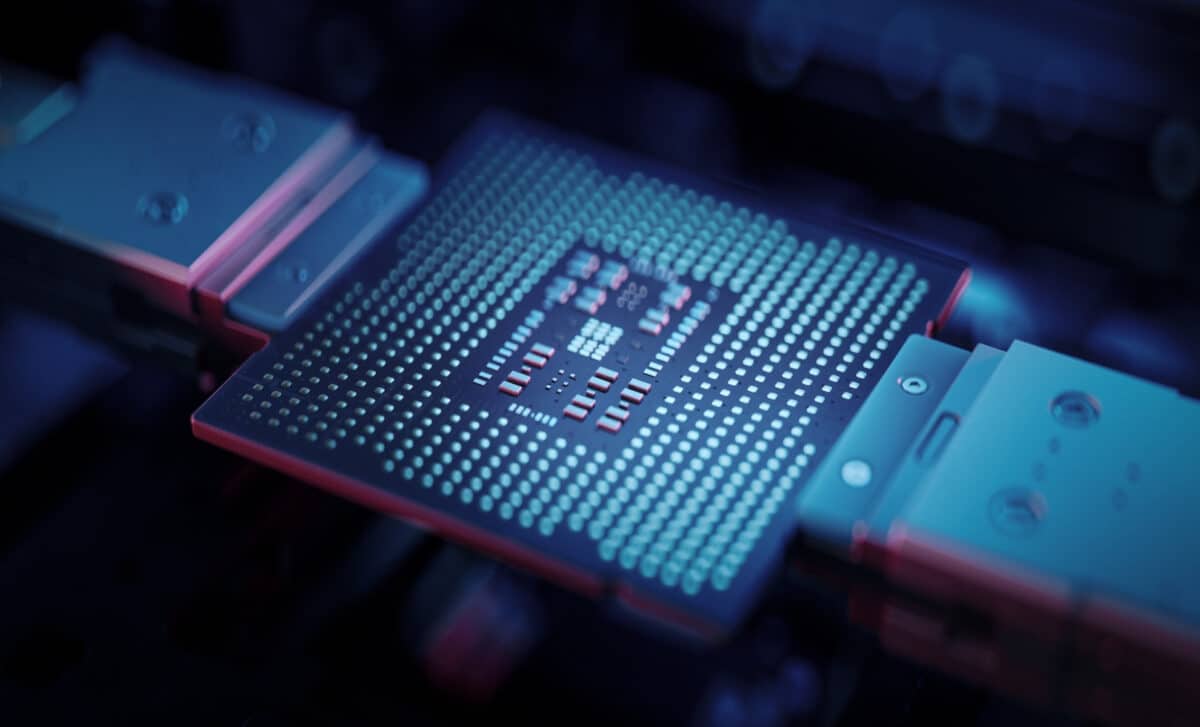
At the heart of the Terafab project sits a single piece of silicon: the AI5, Tesla’s next-generation onboard chip, already described as the fifth generation of the company’s in-house processor line. According to L’Automobile Magazine, Tesla is targeting a performance jump of four to five times compared to the current Hardware 4 system, reaching between 2,000 and 2,500 TOPS, tera-operations per second, the standard unit for measuring AI computational power.
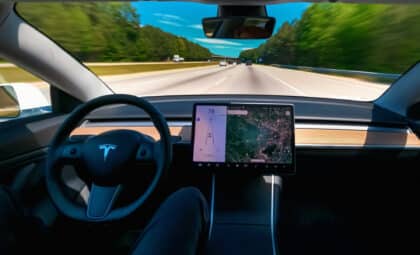
The rationale behind that leap is technical and operational. Guiding a car through a complex intersection without human input requires processing in real time the feeds from all onboard cameras, sensor data, trajectory predictions and driving decisions simultaneously. As vision and planning models grow larger and more demanding, the chip underneath has to keep pace.
Terafab is therefore designed to produce both AI5 chips and memory components, with a 2-nanometer manufacturing process considered essential to contain power consumption and heat output. First small production runs are expected by late 2026, with a genuine ramp-up from 2027, a timeline the source describes as extremely aggressive for an industry where five to seven years typically separate a factory launch from reliable mass production.
Terafab Project launches in 7 days
— Elon Musk (@elonmusk) March 14, 2026
A Factory Built on a Controversial Premise
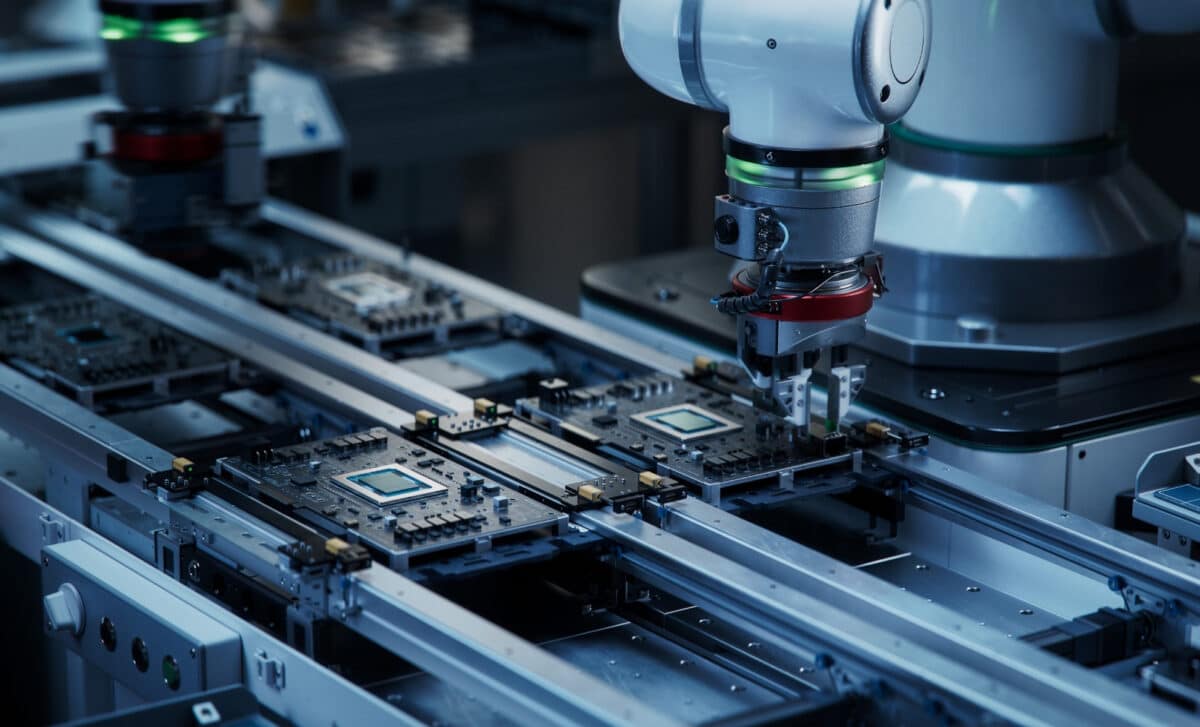
What sets Terafab apart from any existing chip facility is not just its scale but one of its core design choices. In a traditional semiconductor fab, ultra-controlled cleanrooms are non-negotiable: temperature, humidity, pressure and particle levels are regulated down to the nanometer, and workers operate in full protective suits. Building and maintaining these environments costs hundreds of millions of dollars but has long been considered technically unavoidable for chips manufactured at 2 or 3 nanometers.
Musk has suggested doing away with that model almost entirely. Only the transport enclosures for silicon wafers would be hermetically sealed under his proposed design, with the rest of the building left far less constrained. He reportedly joked that employees could walk around in normal clothes and eat a cheeseburger on the factory floor. Industry experts are, by the source’s account, considerably less amused: a single failure in containment could render an entire batch of wafers, worth several million dollars, unusable.
Some specialists have offered an alternative interpretation of the project. Rather than targeting the most advanced fabrication processes across its full production chain, Terafab might focus on advanced packaging, component integration and a portion of memory manufacturing, while leaving the most sensitive chip fabrication to established partners. Under that scenario, the headline figure of 100 to 200 billion chips per year becomes more plausible, but the image of a facility capable of competing head-on with Asian giants on core processor production would need to be substantially revised.
Between Independence and Compromise
Despite the scale of the announcement, Musk is not severing ties with his current suppliers. Tesla still relies on TSMC and Samsung for its existing chip generations, and those relationships are not about to disappear. The construction and ramp-up timeline for Terafab means Tesla will need to keep sourcing volumes externally for years, if only to avoid a supply shortage that would halt vehicle deliveries.
What Musk has hinted at is a hybrid arrangement: rather than building everything from the ground up, Tesla could invest in dedicated production lines at Intel Foundry or TSMC in exchange for long-term reserved capacity. Intel, which has been struggling with its foundry business, would likely welcome a strategic American client. TSMC, for its part, has publicly indicated openness to long-term capacity reservations for major partners.
That model would give Tesla a presence in domestic American production, a strong geopolitical argument at a time when Washington is pushing hard on semiconductor reshoring, while avoiding the full weight of developing an entirely new industrial competency from scratch. If Terafab delivers on its promises, Tesla would become the first automaker to own its AI training data centers, its embedded chips and the factories that manufacture them. Whether the obstacles, financial, technical and industrial, prove surmountable is a question the coming years will answer.