
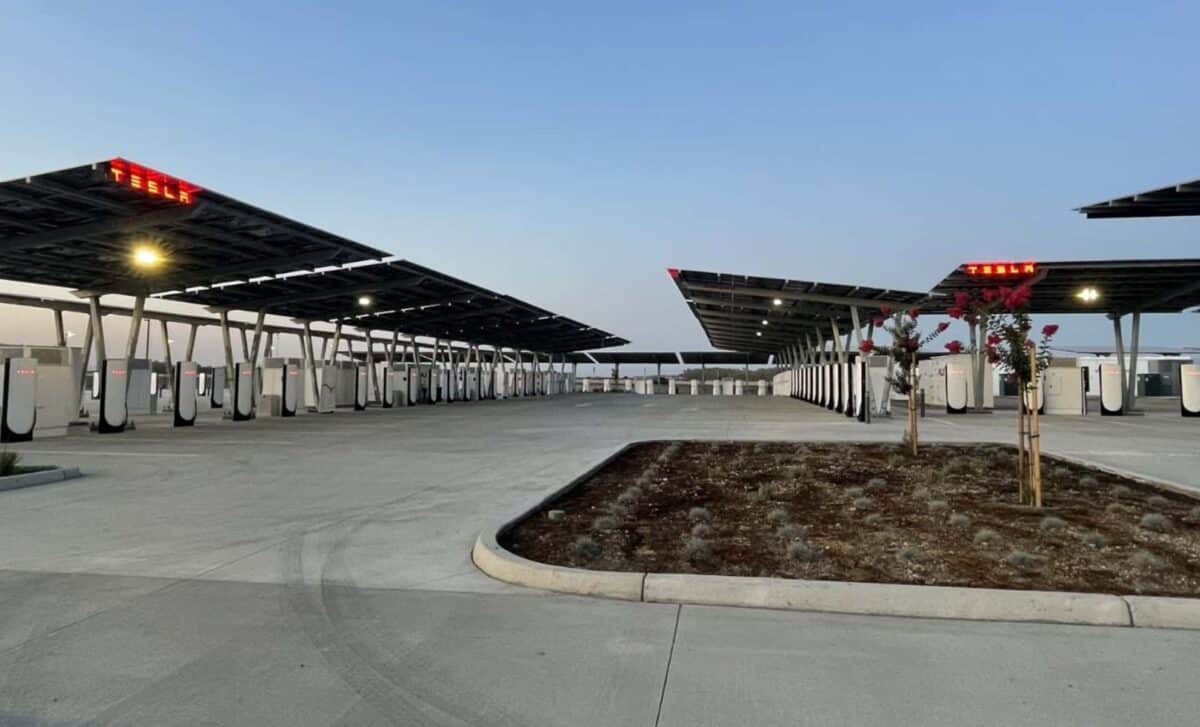
The 164-stall station is the largest of its kind, surpassing Tesla’s previous record-holder, a 120-stall station in Barstow, California. The site is strategically located along the I-5 corridor, a vital route between San Francisco and Los Angeles.
Tesla’s decision to power this massive Supercharger entirely with solar panels and Megapack batteries is part of its ongoing effort to advance the sustainability of electric vehicle (EV) charging. This initiative not only provides an eco-friendly solution but also addresses a key issue in EV infrastructure: the long delays often associated with connecting to the grid.
Tesla’s Vertical Integration Speeds Up Deployment
Tesla’s approach to charging infrastructure sets it apart from other companies in the industry. Unlike traditional projects that rely heavily on utility grid connections, Tesla’s use of its own solar energy and Megapack storage allowed it to accelerate the station’s construction timeline.
According to Max de Zegher, Tesla’s director of charging, the station was completed in under eight months, a feat that would have taken much longer if they had waited for a utility connection. By bypassing the grid, Tesla was able to deploy the Lost Hills station faster and meet the growing demand for charging along the high-traffic I-5 corridor, reports InsideEVs.
This efficiency is especially significant given the current limitations of the U.S. electric grid, which often faces long delays in upgrading infrastructure to meet the needs of new projects. Tesla’s self-sufficient model—drawing on solar energy and battery storage—could become a blueprint for future EV charging stations.
The Role of Solar Energy and Megapack Batteries
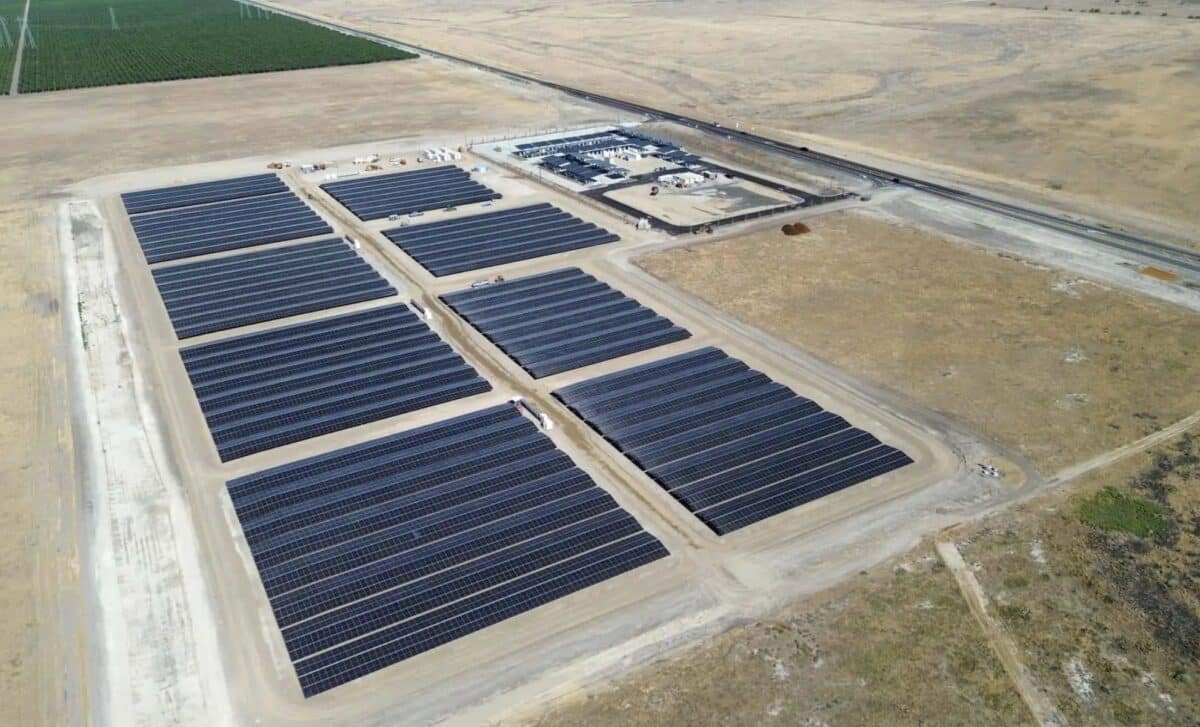
The integration of solar panels and Megapack storage is central to Tesla’s vision for a fully sustainable EV charging infrastructure. At the Lost Hills site, the 11 megawatts of solar capacity feed into 10 Megapack batteries, storing 39 megawatt-hours of energy.
This setup allows the station to operate even when the sun isn’t shining, ensuring a steady and reliable energy supply for charging vehicles. The solar panels not only provide clean energy but also serve as canopies that provide shade for vehicles, enhancing the customer experience.
Although the station isn’t entirely off-grid—Tesla has a small utility connection for potential future expansion—the setup is designed to be powered by the sun for nearly every day of the year. According to Tesla, the station will rely on solar power for most of its operation, with the batteries providing backup during times of high demand or cloud cover.
A Model for the Future of EV Charging
Tesla’s Lost Hills Supercharger is more than just a technological achievement; it’s a glimpse into the future of sustainable transportation. As demand for electric vehicles continues to grow, efficient and eco-friendly charging solutions will be essential.
Tesla’s ability to deploy large-scale charging infrastructure quickly and sustainably could influence the way other companies and governments approach EV charging. By combining solar power with advanced battery storage, Tesla is not only addressing the immediate needs of the EV market but also shaping the future of clean energy and mobility.