
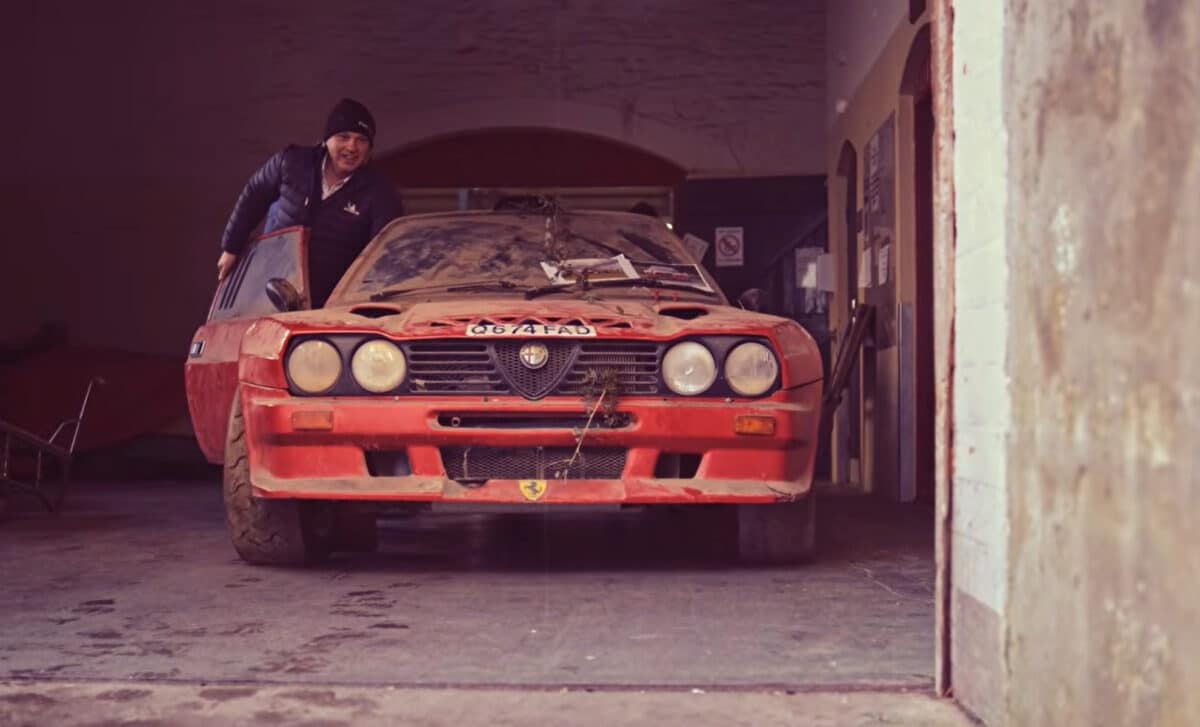
The story begins with what seemed to be a neglected Italian coupe, left untouched for close to thirty years. At first glance, nothing suggested the car carried anything unusual. Yet, as enthusiasts examined it more closely, they uncovered a complex and highly personal engineering project dating back to the 1980s.
This rediscovery matters because it highlights a period when independent builders pushed technical boundaries outside official factory programs. The vehicle was created by British driver Andrew Burton, blending ingenuity with available parts to produce a competitive rally machine.
A Hybrid Creation Built from Two Damaged Cars
The car originated from an unusual idea: combining two accident-damaged vehicles, an Alfa Romeo Alfasud Sprint and a Ferrari 308. According to Automobile Magazine, Burton merged these platforms to create what could be described as a “Frankenstein” car, assembling components from multiple sources into a single functioning machine.
At its core sits a 3.0-liter Ferrari V8 engine producing around 252 horsepower, mounted in a central position. Around this engine, the structure was heavily modified. The rear suspension came from a Ford RS200, while the hood was taken from an Opel Manta 400. Additional parts included motorcycle components and numerous custom-built elements.
The design also drew inspiration from several rally icons. The overall lines referenced the Lancia 037, while the project echoed the experimental Alfa Sprint 6C developed by Autodelta, which never reached full production.
A Decade of Competition and Measurable Success
This was not merely a conceptual build. The car actively competed in rally events across the United Kingdom for about ten years, from 1986 to 1996. During that time, it achieved tangible results.
The car secured seven class victories and reached a peak in 1995 by winning the BTRDA Silver Star title. Its performance was matched by a distinctive sound, with the Ferrari V8 delivering an unmistakable acoustic signature that contrasted with its unconventional appearance.
The project demonstrated that a handcrafted machine, assembled outside traditional manufacturing frameworks, could still compete effectively in organized motorsport. It stood out both for its results and its technical originality.
Sudden Mechanical Failure and Decades of Abandonment
The car’s competitive career ended abruptly during a forest stage when an engine failure occurred. A broken connecting rod caused significant damage, forcing Burton to stop using the vehicle.
The lack of time or resources prevented immediate repairs. The car was then stored in a hangar with the intention of being restored later, a plan that did not materialize for decades.
It remained there, largely untouched, accumulating dust but retaining its core components, including the Ferrari engine and its unique architecture.
Rediscovery During a Centenary Event
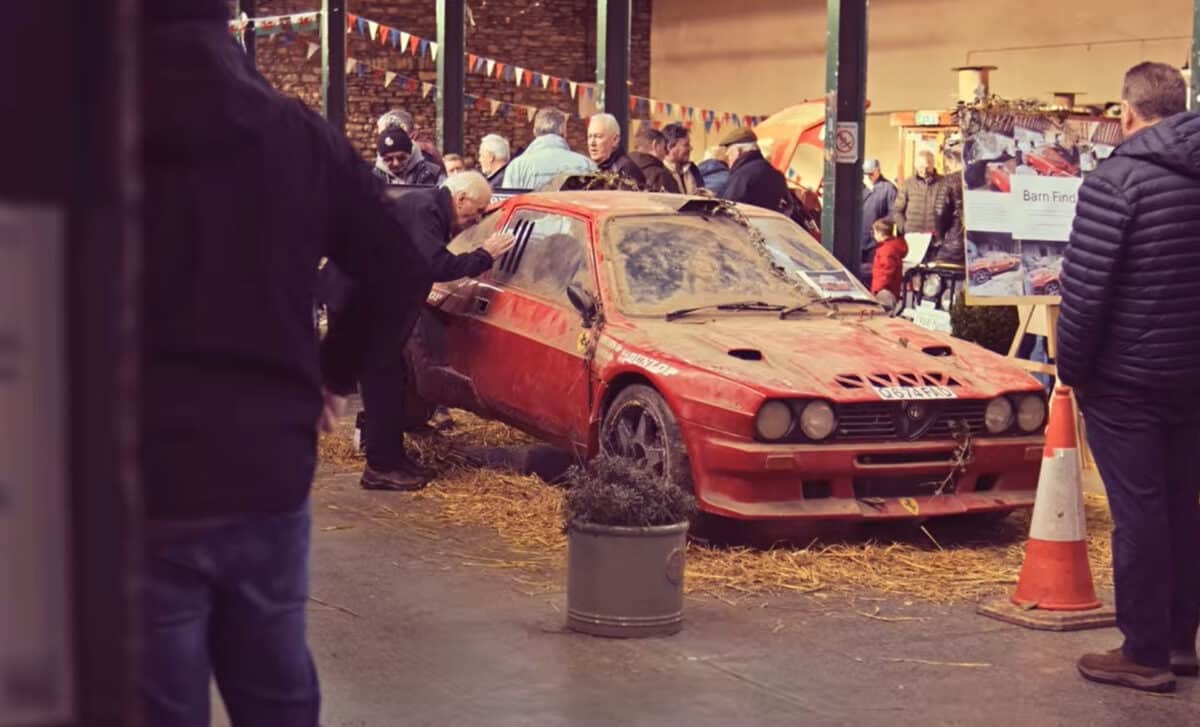
Nearly thirty years later, the car was brought back into public view during the centenary of the Brecon Motor Club in the United Kingdom. It was exhibited at Brecon Market Hall, where its condition reflected years of inactivity but also preservation.
A YouTuber documented the rediscovery, while Andrew Burton himself provided archival images and testimony to recount the car’s history. The vehicle showed clear signs of wear and would require a full restoration, yet its defining features remained intact.
What initially appeared to be a forgotten Alfa Romeo turned out to be a singular piece of rally history, shaped by experimentation and left frozen in time.