
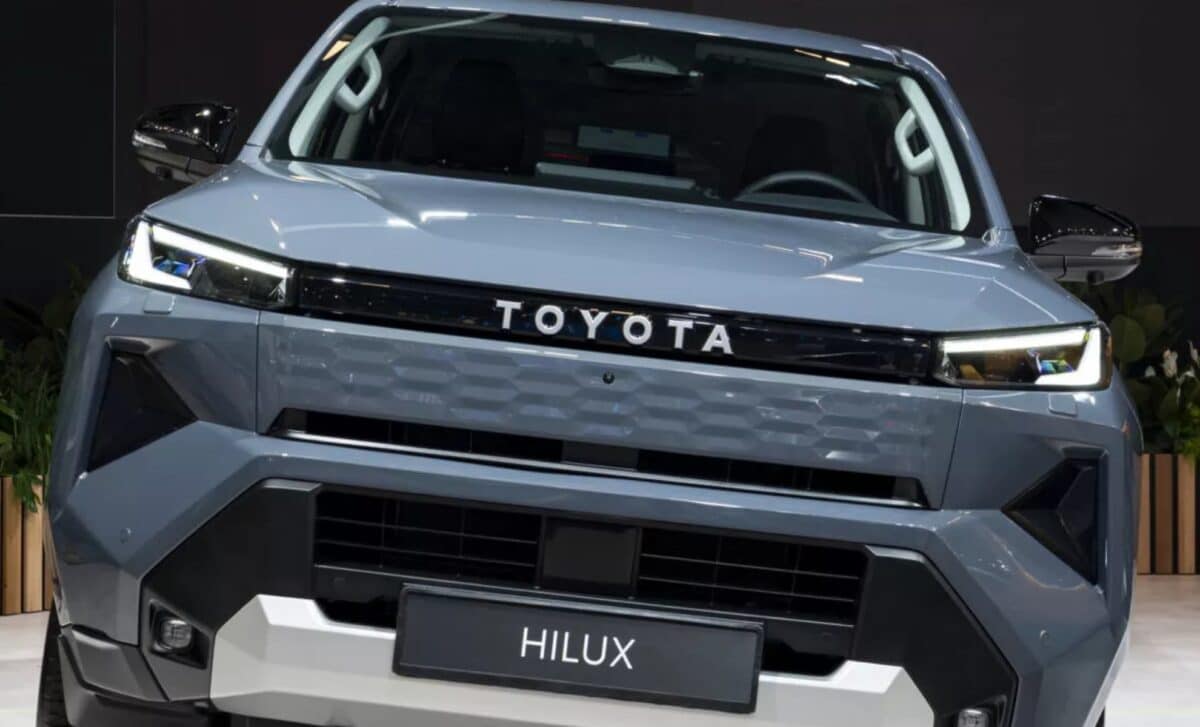
Built on the same platform as the traditional Hilux, the electric version, which made its European debut at the 2026 Brussels Motor Show, keeps many of its rugged features while adopting a dual-motor powertrain, electric power steering, and a new off-road driving system tailored for EVs. While not coming to the US, this model reflects Toyota’s commitment to diversifying its powertrain options under what it calls a “multipath strategy.”
The Hilux has sold over 27 million units globally since its launch more than 50 years ago, gaining a reputation for durability and reliability. Until now, it remained a symbol of diesel power. But with rising environmental standards across Europe and changing expectations from business customers, Toyota is rolling out the Hilux BEV as part of a broader transformation of its utility vehicle lineup. Alongside the electric model, the company is also working on a hydrogen-powered version and continuing to offer mild-hybrid and traditional diesel variants.
Toyota has confirmed that the electric Hilux will not be offered in the US market. This is partly due to Toyota’s product strategy and shifting policy conditions, including Ford’s decision to halt production of the F-150 Lightning in favor of an EREV (extended-range EV) replacement. In contrast, the Hilux EV is intended primarily for Europe and other regions where the truck already has a strong presence.
Dual-Motor Setup and Retained Off-Road Capability
At the heart of the Hilux BEV is a 59.2 kWh lithium-ion battery powering two electric motors, one on each axle, for permanent all-wheel drive. The front motor delivers 151 lb-ft (205 Nm) of torque, while the rear motor adds 198 lb-ft (268 Nm). This configuration allows the Hilux to maintain its identity as a capable off-roader, with 212 mm (8.3 inches) of ground clearance and a wading depth of 700 mm (27.5 inches), unchanged from the diesel model.
Toyota has introduced electric-specific features, including its first-ever electric power steering in a pickup and a Multi-Terrain Select System that adjusts torque and brake distribution for better control on uneven surfaces. This system is specifically designed to match the electric drivetrain and maximize performance during off-road use.
Despite the shift to electric, the Hilux BEV preserves the body-on-frame structure that underpins its reputation for toughness. From muddy worksites to remote trails, the electric version is built to tackle conditions that are common to the Hilux customer base worldwide.
Urban-Focused Range and Reduced Utility Specs
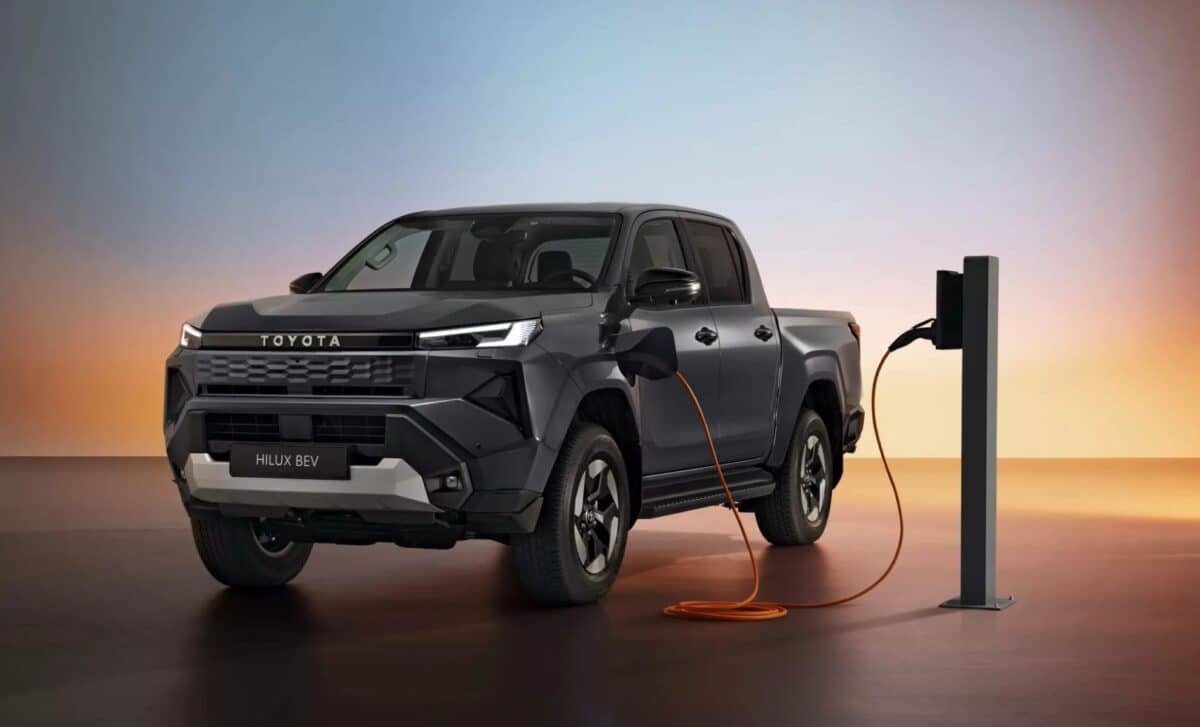
While the Hilux BEV remains visually and structurally similar to its combustion siblings, the switch to electric power does come with compromises. The truck offers a WLTP combined range of up to 257 km (160 miles), rising to 380 km (236 miles) in city driving. Though sufficient for daily use in urban areas, the numbers fall short of most larger EVs or hybrid pickups.
Payload and towing capacity are also reduced compared to the diesel model. The Hilux BEV has a maximum payload of 715 kg (1,580 lbs) and a towing capacity of 1,600 kg (3,530 lbs), while the diesel mild hybrid retains a 1,000 kg (2,205 lbs) payload and 3,500 kg (7,720 lbs) towing capacity. This may steer some business customers back toward traditional powertrains, especially in sectors where maximum utility is non-negotiable.
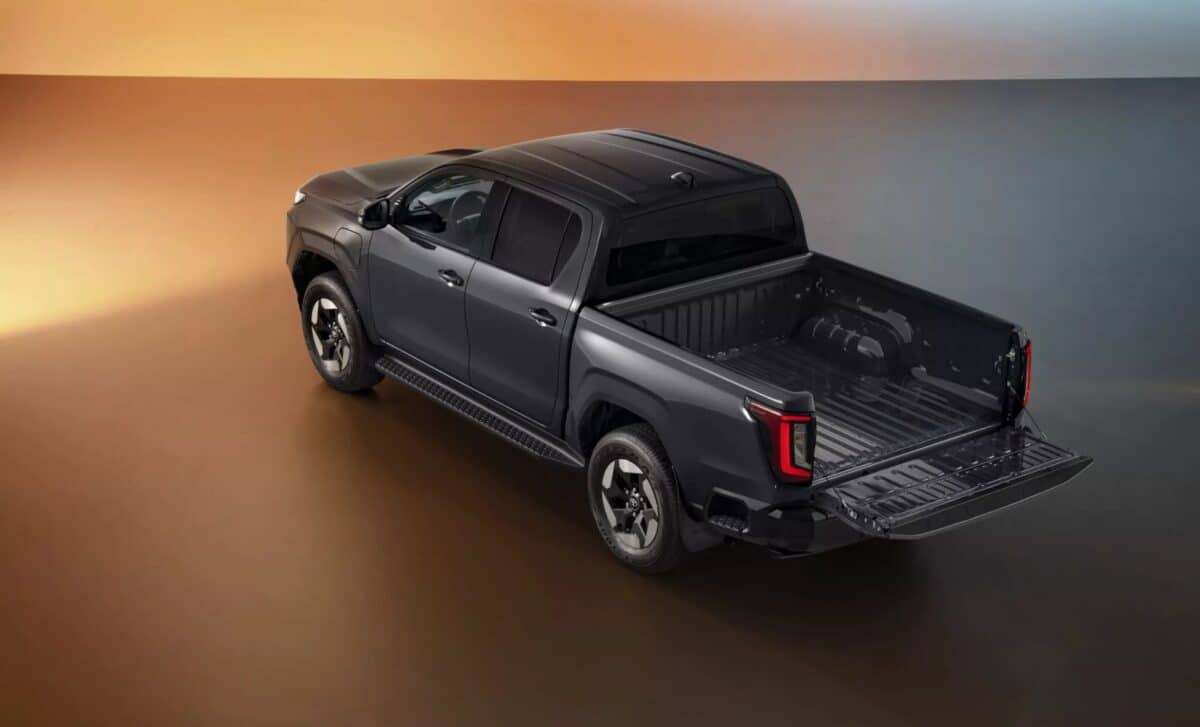
Toyota seems to be aware of this trade-off. The company expects the diesel mild-hybrid to remain the best-seller in several European markets, where EV infrastructure may still be limited or inconsistent. The electric version, by contrast, is likely to appeal to urban fleets and commercial users looking to reduce operating costs and emissions.
Redesigned Interior and New Visual Identity
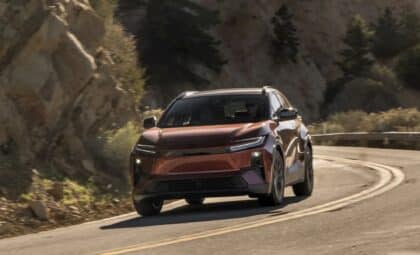
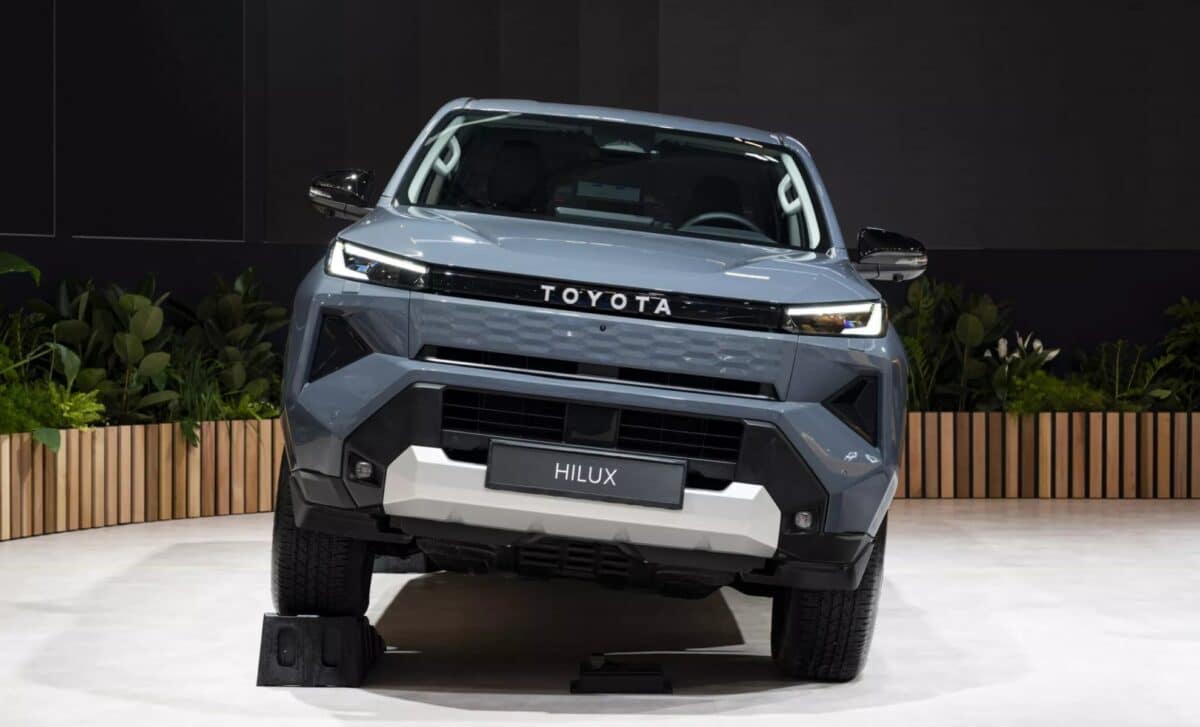
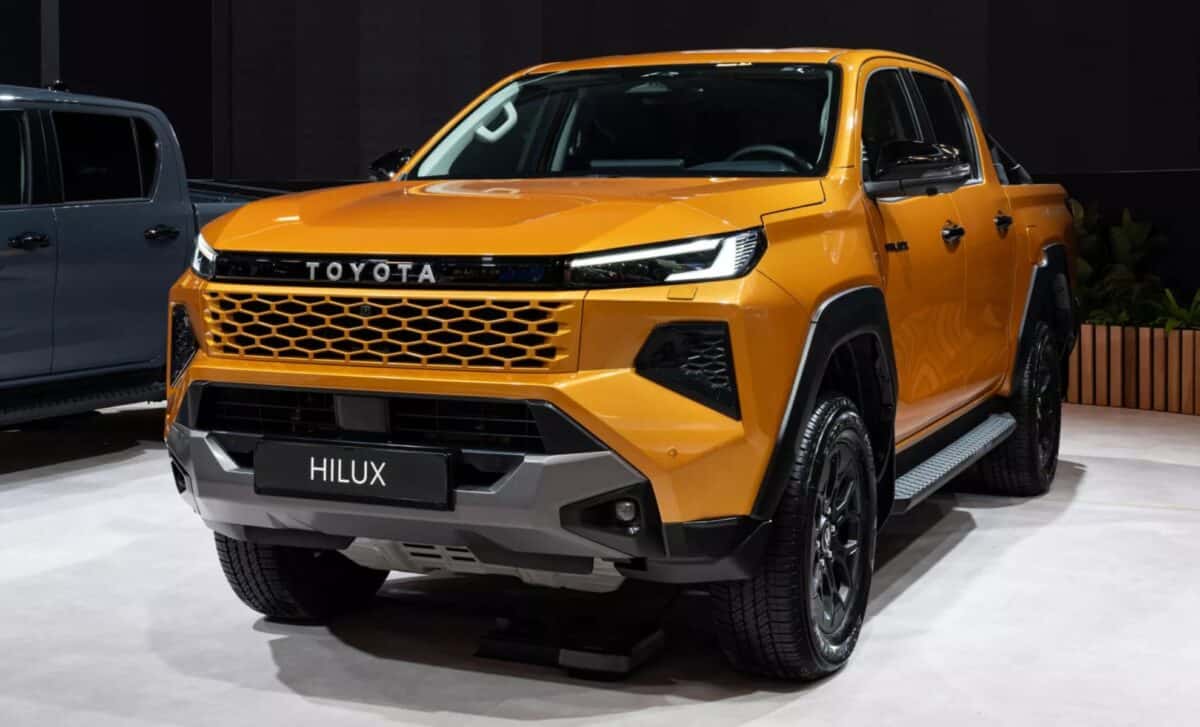
The electric Hilux is not just about the drivetrain; it also introduces a new design language and upgraded cabin. Externally, both the BEV and hybrid models adopt what Toyota calls a Cyber Sumo aesthetic. Developed by its Australian design team, the styling includes flatter surfaces, stronger lines, and a simplified front end. The EV model stands out with a closed-off grille and a redesigned silver bumper insert, though not all reactions to the look have been positive.
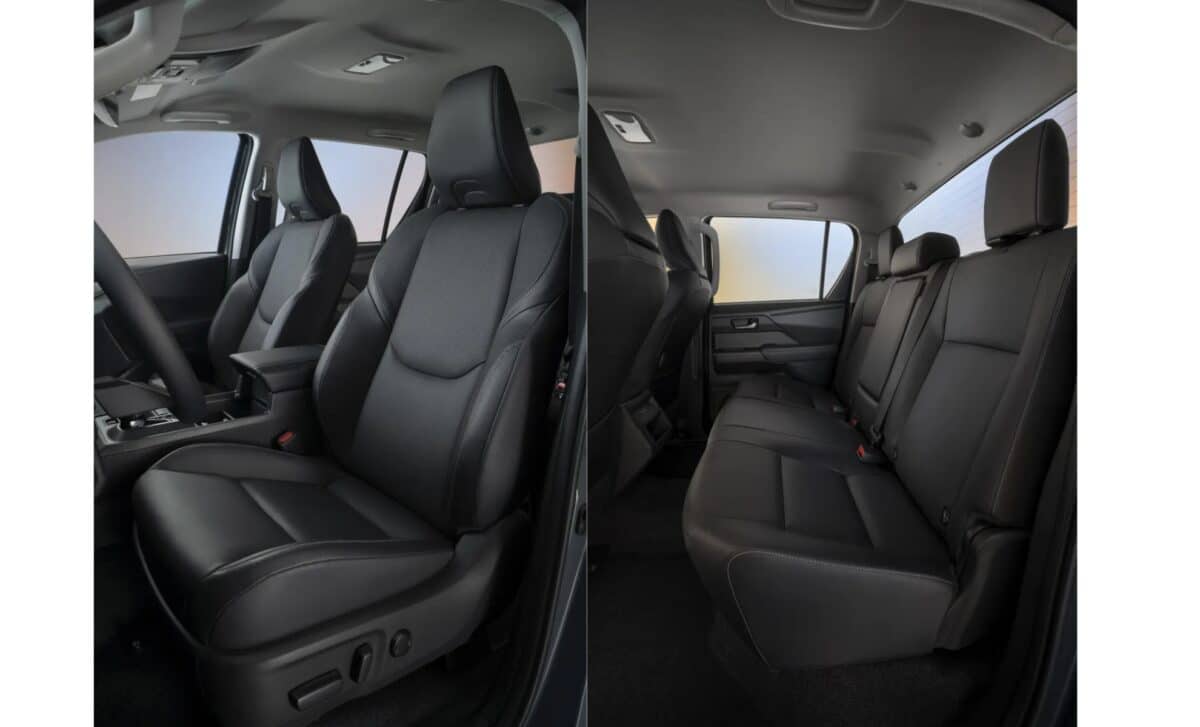
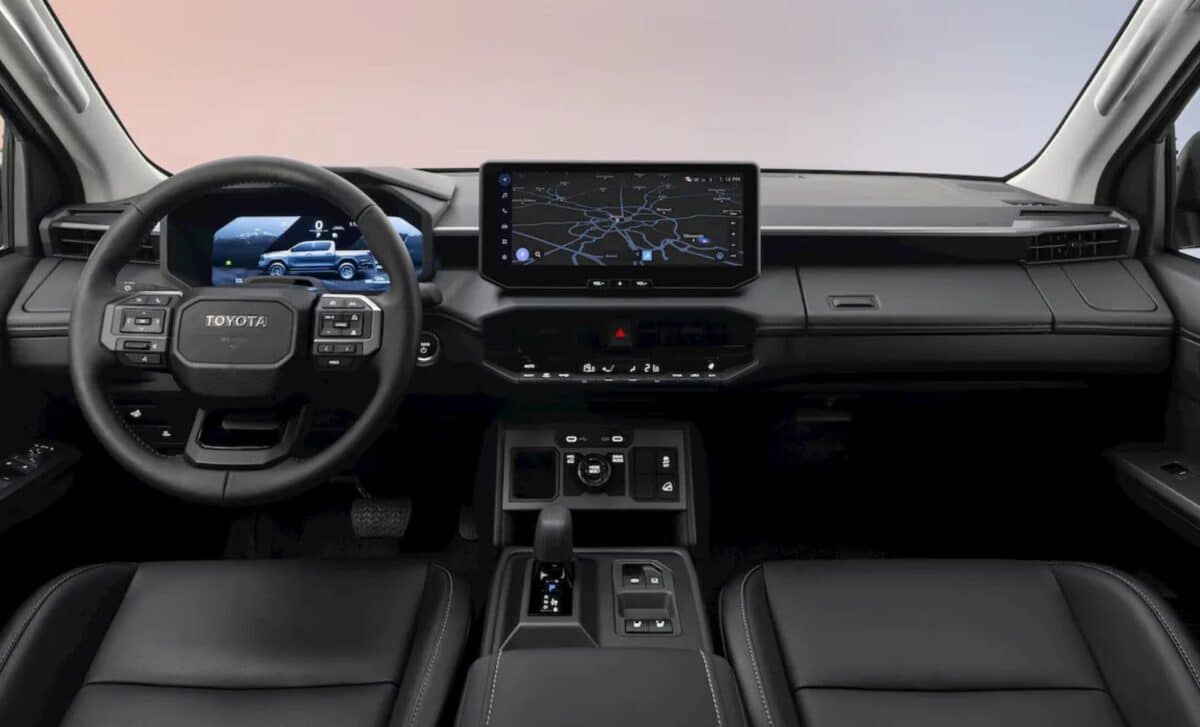
Inside, the Hilux BEV features a 12.3-inch digital driver display and a matching 12.3-inch infotainment touchscreen. The steering wheel is shared with the latest Land Cruiser, and Toyota has included both modern tech and practical details. The truck includes dual glove compartments, dashboard-mounted cupholders, and a mix of digital interfaces and physical buttons, catering to professionals who value both convenience and durability.
Safety systems have also been upgraded, though Toyota hasn’t detailed the full suite yet. Crew cab is currently the only configuration available, aligning with the truck’s focus on fleet and work-related use cases.
The Hilux BEV will launch across Europe in April 2026, with pricing details expected in the coming months. UK sales begin in June.