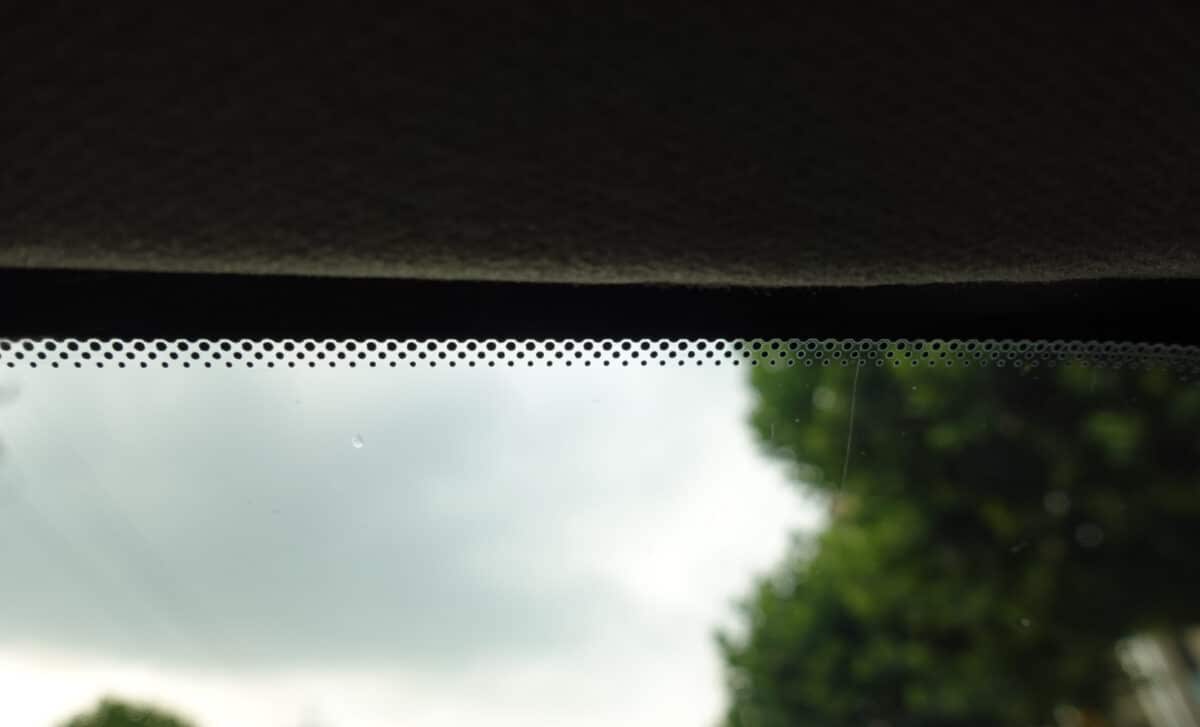
They’re on almost every car, right at the edge of your windshield, small, black dots fading from a solid black band. Most drivers never think twice about them. But these subtle features, known as “frits,” are doing far more than you might expect. Far from being decorative, they’re essential to the safety, structure, and performance of modern vehicles.
They’ve been standard in automotive design since the shift away from older windshield-mounting methods in the mid-20th century. Their design might seem simple, but their function touches nearly every aspect of the windshield’s job, from installation and heat management to visibility and crash protection. Without them, your car’s most important window could fail when it’s needed most.
From Powdered Glass To A Structural Safety Feature
The term “frit” comes from the world of ceramics and glassmaking, where it refers to a powdered glass mixture made by melting and grinding raw materials. On a car windshield, the frit is applied as an enamel-based coating that’s fused, or baked, onto the inside surface of the glass during manufacturing. The result is a solid black band around the edge, usually followed by a gradient of increasingly spaced-out dots that extend inward.
According to Thomas Patterson, director of new product development and technical training at Glass Doctor, the rough texture created by the frit is critical for modern adhesives. It allows polyurethane glue, now standard in vehicle construction, to bond the windshield securely to the car’s body.
This adhesion process stabilizes the glass, ensuring that it doesn’t slide or pop out. Before frits, windshields were attached using clips or rubber gaskets, sealed with butyl-based products that offered much weaker structural support.
Today’s frits are part of a system designed to keep windshields in place even during serious collisions. Patterson explains that a bonded windshield not only deflects the force of a deploying airbag but also contributes up to 80% of the vehicle’s structural integrity in a rollover accident.
Heat, Light, And A Subtle Optical Illusion
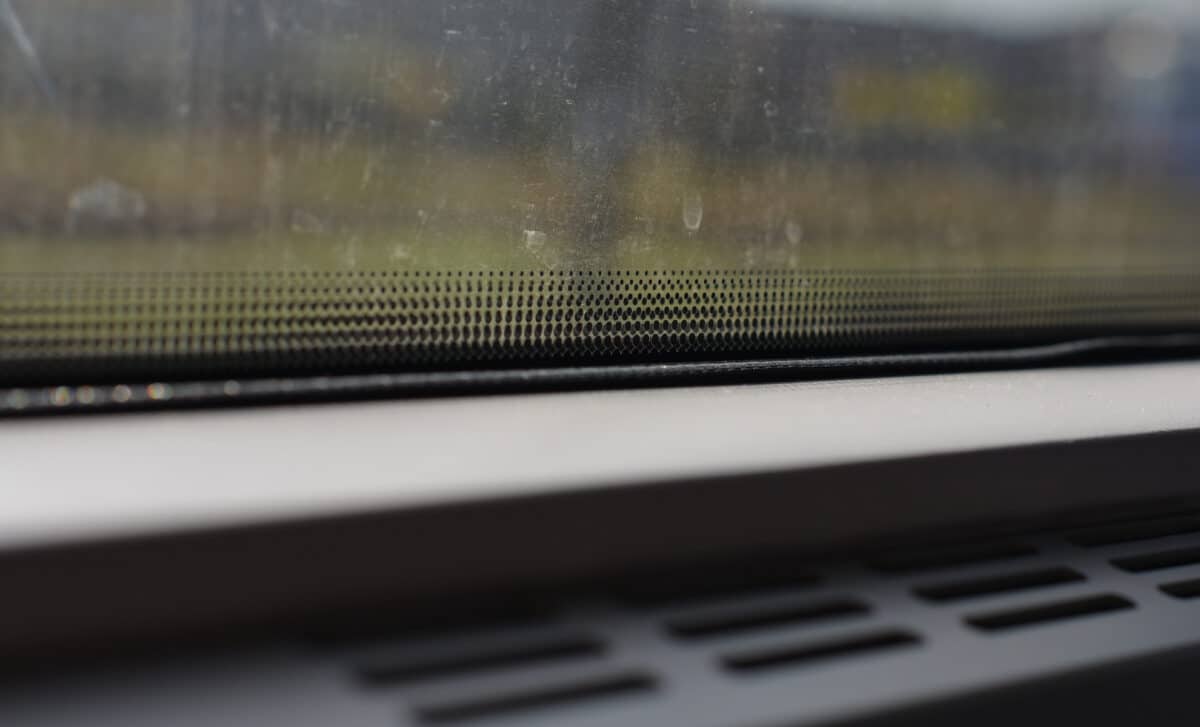
Frits are also essential in managing heat. The solid black band around the edges of a windshield naturally heats up faster than the rest of the glass under sunlight. This uneven temperature distribution can create stress that warps or cracks the glass. To solve this, the dot matrix pattern creates a gradual transition that distributes heat more evenly across the surface. As the dots fade out from the edge, they help blend the thermal gradient, reducing stress on the cooler central glass.
This pattern also helps prevent “lensing”, a phenomenon where distorted heat zones bend light unevenly, making straight lines appear curved through the windshield. Without frits, visual distortions could affect a driver’s ability to see clearly, creating risks when reading road signs or navigating lane markings.
Beyond heat control, the dot pattern plays a role in reducing glare. The gradual fade from dark to clear reduces the sharp contrast between the black border and transparent glass, making it easier on the eyes. Patterson notes that this transition improves comfort for drivers, especially when sunlight hits the edges of the windshield.
In many cars, the upper central section of the windshield features a denser cluster of dots. This area acts like a “third visor”, filling the gap between the driver and passenger sun visors and helping block sunlight from directly entering the center of the driver’s field of view.
Robotic Precision And Visual Harmony
Frits aren’t just for temperature or aesthetics, they serve as crucial alignment markers during vehicle assembly. According to Patterson, robotic systems that install auto glass rely on these black dot patterns as installation guides. The dots help robots apply adhesive in exactly the right locations and place the glass precisely into position.
In addition to supporting factory automation, the frits may include “frit tic marks”, subtle indicators used to align wiper blades or identify positioning points on the windshield. These built-in markers reduce installation errors and improve long-term reliability by ensuring consistency across production runs.
While frits are found on all fixed windows bonded to the frame, including windshields, rear windows, and stationary side panels, they’re not needed on movable windows, such as door glass or sunroofs. These windows are mounted in rubber seals and don’t require bonding adhesives, so the black dots are usually absent.
Designs can vary between car manufacturers. For example, larger windshields often feature a slowly fading matrix, while smaller fixed windows might have a denser pattern that fades quickly. No matter the variation, the purpose is consistent: to control light, heat, and visibility while guiding installation and protecting adhesive seals.
When The Dots Start To Disappear
Even though frits are baked onto the glass and designed to be maintenance-free, they can still be damaged. While rain and UV light won’t harm them, since they’re located on the protected interior surface, improper cleaning tools like scrapers can scratch them.
According to Patterson, extreme fading or missing dots can compromise the UV protection layer and expose the adhesive underneath to light damage. This could weaken the glue and increase the risk of the glass separating from the frame. One early warning sign is the appearance of whitish discoloration around the windshield’s edge, a clear indicator of glass delamination or adhesive failure.
In such cases, Patterson advises drivers to immediately visit a professional auto glass shop or their vehicle dealer’s service department. It’s not a job for a regular mechanic. Specialized tools and knowledge are required to inspect and address any failure in the adhesive bond.