Public charging in the United States has undergone visible changes in recent years. In San Diego, for example, more charging stalls have appeared, and older stations have been replaced with newer, more dependable equipment. That local shift reflects a broader trend highlighted in new survey data.
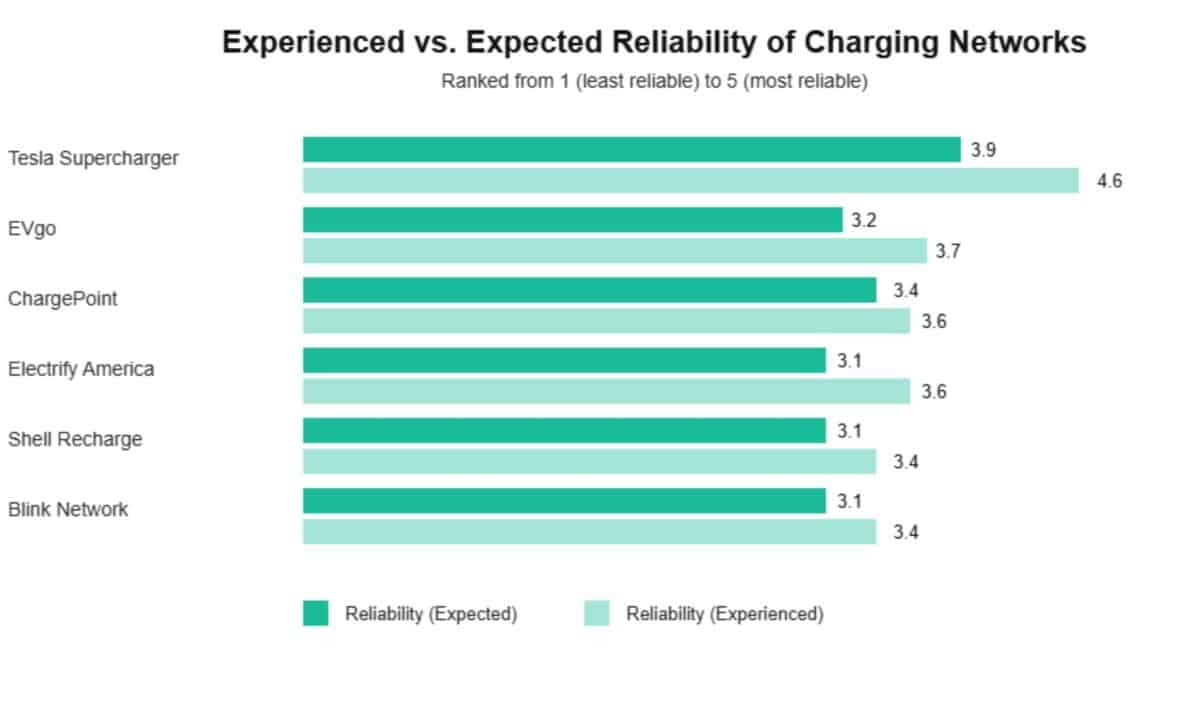
Research firm Escalent asked EV drivers to rate charging network reliability in two ways: how reliable they expect chargers to be, and how reliable they have actually been in personal experience over the past six months. Both were measured on a five-point scale, with five representing the highest level of reliability.
Tesla Superchargers Lead in Reliability Rankings
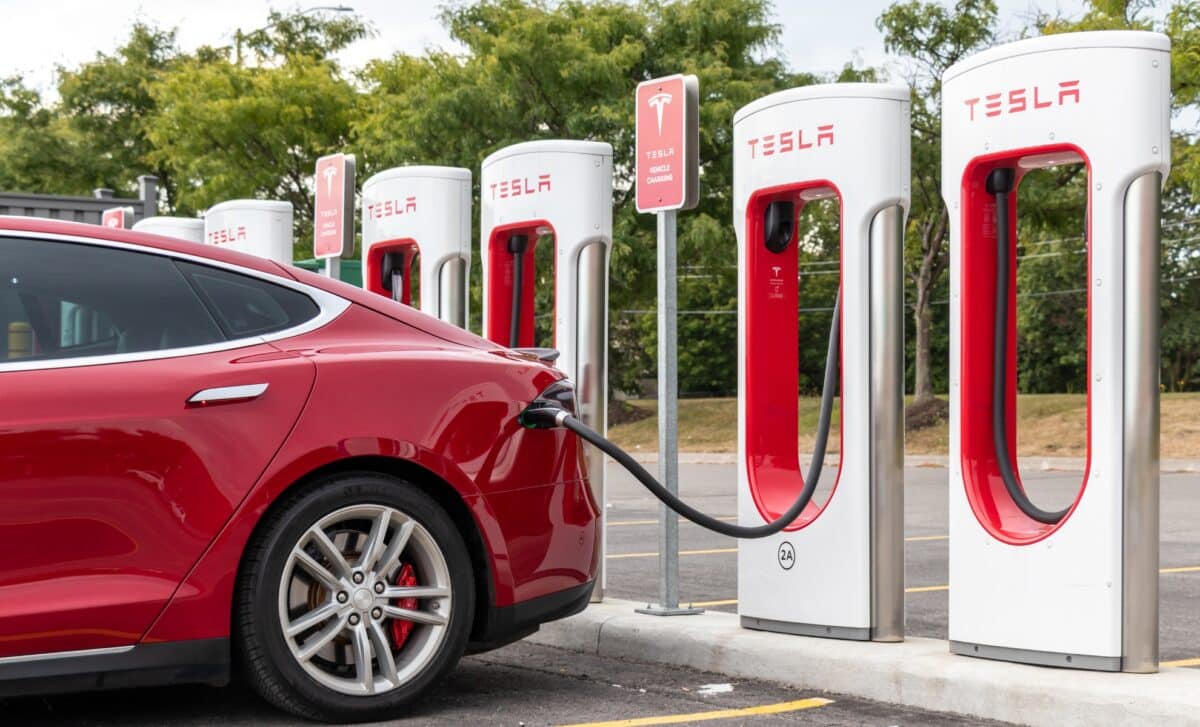
It is no surprise that Tesla’s Supercharger network tops the rankings. The network is widely known for its extensive footprint and plug-and-play functionality, particularly for Tesla vehicles, where authentication and payment are handled seamlessly through the car.
According to the survey data, Tesla drivers formed a significant portion of respondents, 51% of those surveyed. That detail matters, as Tesla owners benefit from native integration with the Supercharger network, which can streamline the charging process compared to third-party systems.
The survey asked respondents to score both expected and experienced reliability. Tesla emerged as the clear leader in both categories, reinforcing its reputation for dependable public fast charging.
Satisfaction Levels Exceed Expectations Across Networks
Beyond Tesla’s dominance, the broader findings offer encouraging signs for the industry. When asked about overall satisfaction with public charger reliability, 45% of respondents rated their experience five out of five. Another 29% gave a four out of five rating. Only 2% reported being “very dissatisfied,” assigning a score of one.
According to Escalent’s survey as cited by InsideEVs, every major charging network included in the study received higher scores for experienced reliability than for expected reliability. In other words, drivers’ real-world experiences over the last six months were better than what they had anticipated.
That gap suggests that public perception may not fully reflect recent improvements in infrastructure. Sentiment often lags behind on-the-ground developments, particularly in sectors undergoing rapid expansion.
Infrastructure Improvements Reflected in Real-World Use
The reported improvements are not limited to survey statistics. Charging-point operators have replaced older, unreliable stations with newer equipment, contributing to more consistent performance.
In practical terms, routine charging failures appear to be less common than before. Minor issues, such as needing to reauthorize a session due to payment glitches, still occur. The only charging failures reported in the past 18 months by the article’s author happened during the Amazon Web Services outage, which temporarily prevented an Ioniq 5 XRT from charging at a Supercharger station.
The comparison to traditional fuel stations is telling. Gas pumps and card terminals occasionally malfunction, yet drivers generally expect to refuel without issue at a reputable station. According to the experience description, public fast chargers are approaching that level of dependability, especially at sites with multiple stalls, where redundancy reduces the risk of being unable to charge.