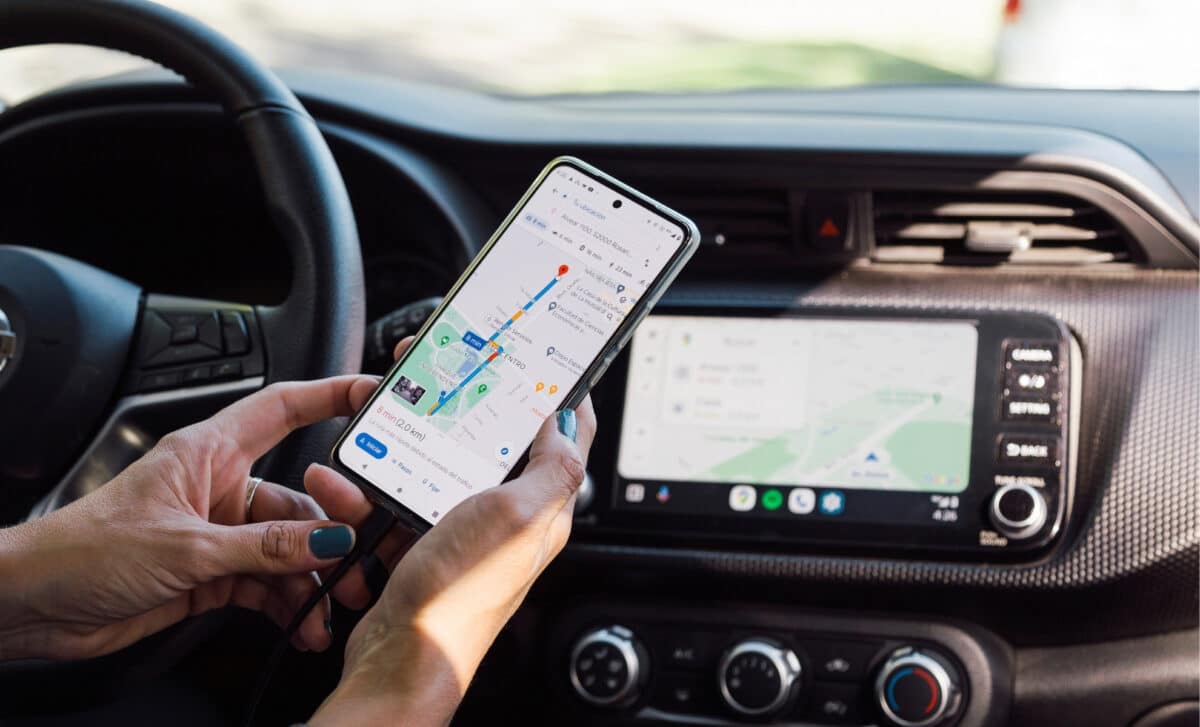
The new functionality is designed to reduce uncertainty around charging stops, a common concern for EV users. By integrating route planning directly into Google Maps on Android Auto, the company is positioning itself against established tools like A Better Route Planner.
Google’s move reflects a broader push to improve in-car software experiences, especially for drivers who rely on familiar navigation platforms rather than built-in vehicle systems. For many, this could streamline trip planning without requiring third-party apps.
A System Built on Vehicle Data and Real-Time Conditions
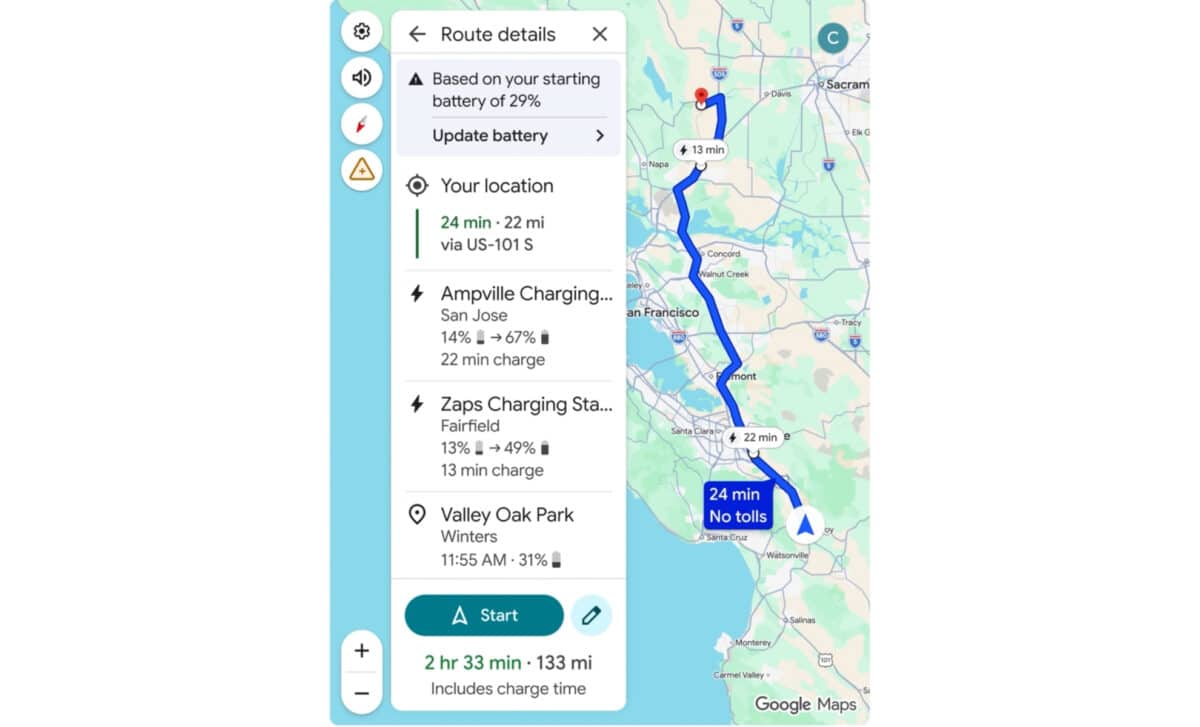
The feature requires drivers to first select their vehicle’s make and model via their smartphone. This step allows Google Maps to estimate battery consumption more accurately and recommend when and how long to charge during a trip.
According to Google, the system combines AI with detailed energy models that factor in vehicle characteristics such as weight and battery size. These inputs are then merged with real-time data on traffic, elevation, and weather conditions to generate predictions.
Drivers can also set a preferred state of charge upon arrival, offering some control over how conservatively the route is planned. Once a journey begins, the system updates the estimated battery level dynamically as driving conditions and charging stops evolve.
Limitations Compared to Dedicated EV Planning Tools
One notable limitation is the lack of direct communication between the app and the vehicle. Drivers must manually input their starting state of charge before beginning a trip.
As reported by InsideEVs, this contrasts with A Better Route Planner, which can connect to a vehicle via an OBD reader to access real-time battery data and refine its recommendations. That difference may affect the level of precision in certain scenarios.
Despite this, Google’s approach still automates much of the planning process, particularly for users who prefer an integrated and familiar interface over additional hardware or apps.
Broad Compatibility but Uneven Relevance Across Brands
The rollout will initially cover a wide range of manufacturers, including Audi, BMW, Chevrolet, FIAT, Genesis, Hyundai, Jaguar, Kia, Lexus, Lucid, Mercedes-Benz, Nissan, Porsche, Subaru, Toyota, and Volkswagen. Google indicates that more brands will be added over time.
The feature may be less impactful for drivers of brands like Tesla or Rivian, which already offer advanced built-in route planning systems and do not support Android Auto. For others, especially vehicles with weaker native navigation or no route planning at all, the update could fill a significant gap.
The lack of confirmation regarding availability on the standard Google Maps mobile app also leaves some uncertainty for users outside the Android Auto ecosystem, including iPhone owners.
Still, for many EV drivers, the appeal lies in using a familiar platform. Google Maps, already widely adopted, could reduce reliance on less intuitive in-car systems and make long-distance EV travel feel more predictable, even if not fully automated.