


The context matters here. For years, Canada and the United States maintained roughly aligned stances on Chinese electric vehicles, both imposing 100% tariffs to protect their domestic automotive industries. That changed in January 2026, when Canadian Prime Minister Mark Carney and Chinese President Xi Jinping reached a bilateral agreement that brought the rate down to just 6%, applicable to up to 49,000 imported vehicles per year, with the condition that at least half of those vehicles be priced below $35,000. In return, China committed to removing its own customs duties on certain food products. The quota is also set to expand, reaching 70,000 vehicles annually within five years.
That shift sent a clear signal to Chinese automakers. BYD was among the first to respond, announcing its intention to establish a production presence in Canada, though its plans remain vague for lack of existing infrastructure. Stellantis is approaching the same opportunity from a much stronger starting position: it already has manufacturing facilities in the country, a workforce, and an existing stake in Leapmotor through a joint venture that has already been tested in Europe, where the brand started producing vehicles in Spain for local sale.

A Dormant Ontario Plant at the Heart of the Project
The Brampton facility, located in Ontario, has been sitting idle since Donald Trump’s return to the White House. The plant previously manufactured Jeep models primarily intended for export to the United States, but once the American administration introduced steep import tariffs, cross-border exports became economically unviable. Production lines were subsequently relocated to the United States, leaving the Brampton site empty and approximately 3,000 workers on temporary layoff.
Restarting the plant with Leapmotor production would directly address both of those problems. The workers would return to their posts, and the site would regain an industrial purpose, this time producing electric vehicles under favorable fiscal conditions created by the Canada-China agreement. The Canadian government, for its part, can only welcome the prospect of renewed activity at a facility that has been desperately empty for months.
There is, however, a caveat that Canadian authorities have already raised in the context of BYD’s plans. Chinese manufacturers typically build their vehicles independently, without partnership agreements involving local companies or suppliers. That approach limits how much economic benefit flows outward to the surrounding industrial ecosystem, which remains a point of contention with Ottawa.

A Strategy Already Proven in Europe, Now Replicated Across the Atlantic
This is not the first time Stellantis has applied this kind of logic. According to Automobile Magazine, the group has been following a clear strategic pattern: produce Chinese-branded vehicles inside regulated markets, using nearby plants to sidestep various taxes and import duties. Spain was the pilot. Canada, if the Brampton project proceeds, would be the next iteration of that same model.
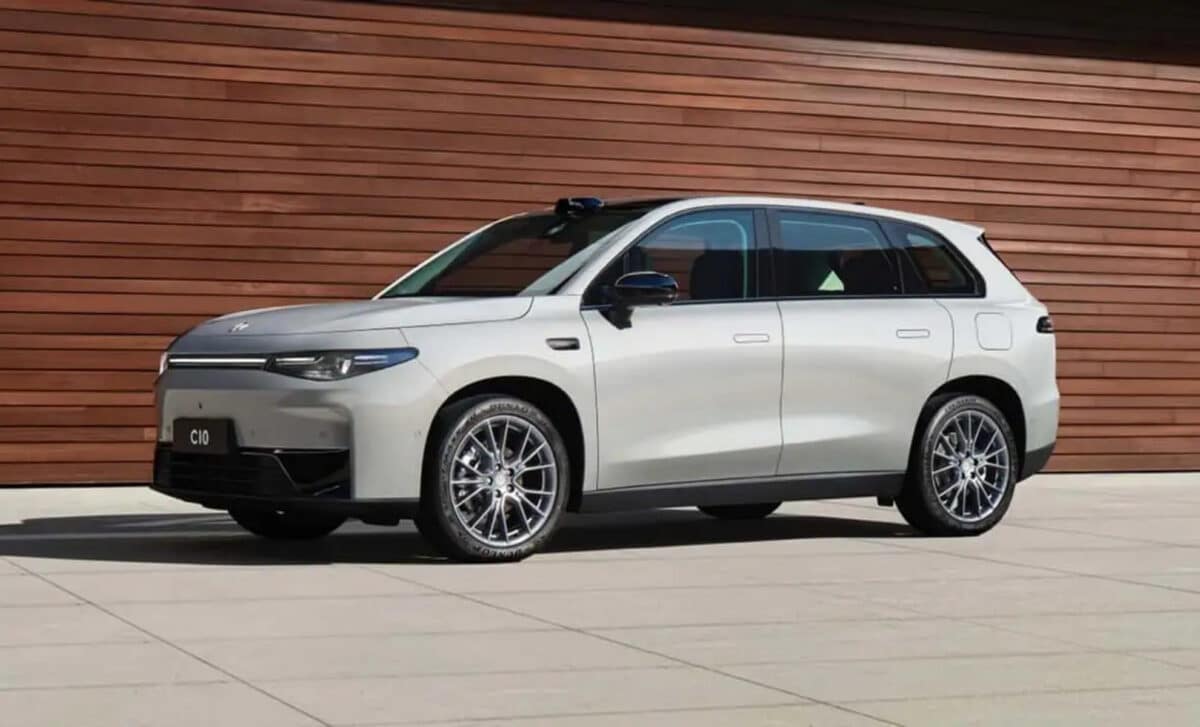
Leapmotor itself is a brand on the rise. Stellantis holds a controlling stake in the joint venture and has already moved to establish European production in Spain, catering to local demand while keeping costs manageable. Extending that approach to North America, where Stellantis already operates through legacy Chrysler brands, requires far less groundwork than building from scratch, which is precisely the advantage the company holds over BYD in this race.
The initiative also reflects a broader dynamic in the global automotive industry: as protectionist barriers multiply, manufacturers are increasingly manufacturing close to the markets they want to serve, rather than importing finished vehicles from abroad. Canada’s regulatory opening, narrow as it currently is, provides exactly the kind of foothold needed to build that presence.
Trump’s Frustration and Its Limits
The Trump administration has already expressed displeasure with the Canada-China trade agreement, and the prospect of Leapmotor vehicles rolling off a Canadian assembly line would do little to improve Washington’s mood. Yet, the practical consequences for the American automotive industry would remain minimal.
The vehicles produced at Brampton under this project would be intended exclusively for the Canadian market, not for export to the United States. Their volume, capped at 49,000 units per year under the current agreement, represents less than 3% of annual Canadian car sales. That is not the kind of scale that reshapes an industry or meaningfully threatens established players on either side of the border.
What it does represent, though, is a precedent. A Chinese brand, backed by a Western automotive group, producing cars on North American soil with favorable tax treatment, all of it technically beyond the reach of American trade policy. For an administration that has staked much of its economic identity on keeping Chinese industrial influence out of its backyard, that is an uncomfortable reality to sit with, however limited the immediate impact may be.