
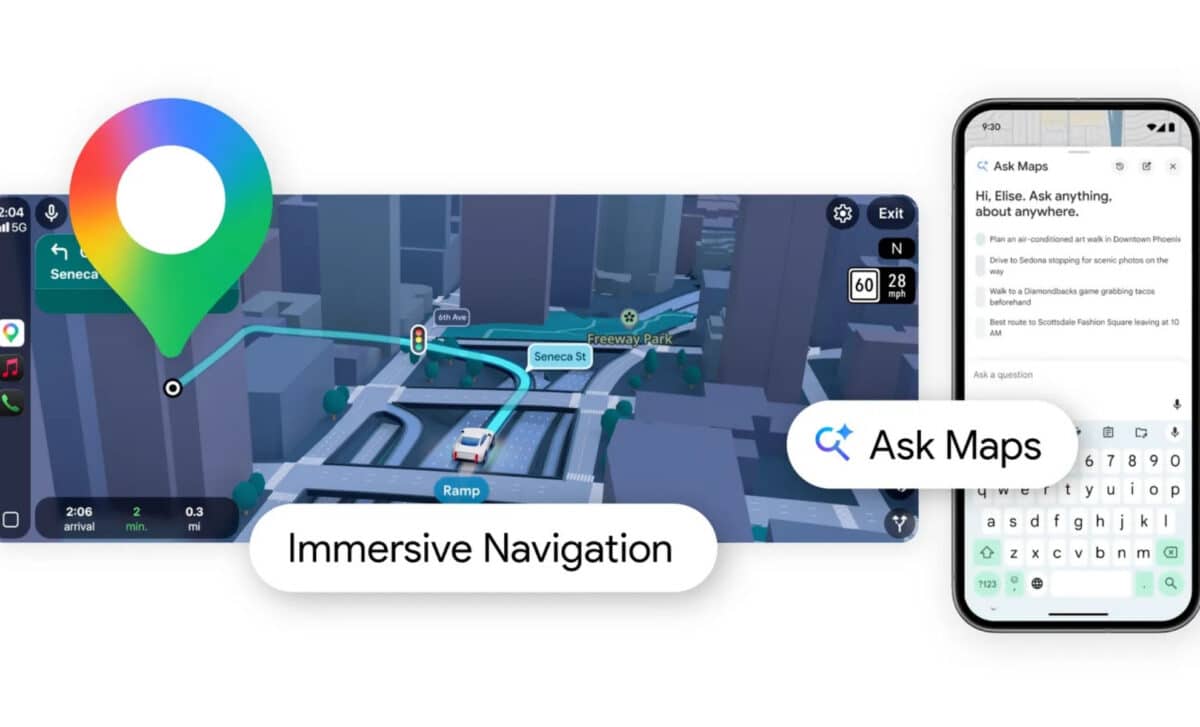
Google Maps has long been one of the most widely used navigation tools on smartphones, but the company is now integrating more visual mapping data and artificial intelligence into the platform. The update introduces a redesigned interface that uses Street View data to produce more realistic map visuals.
At the same time, Google is expanding the platform’s role beyond navigation. With the launch of Ask Maps, the app can now answer complex questions, recommend destinations, and even help plan multi-day trips using information drawn from the web, user reviews, and Google’s own database of locations.
A New 3D Driving Interface Designed for Orientation
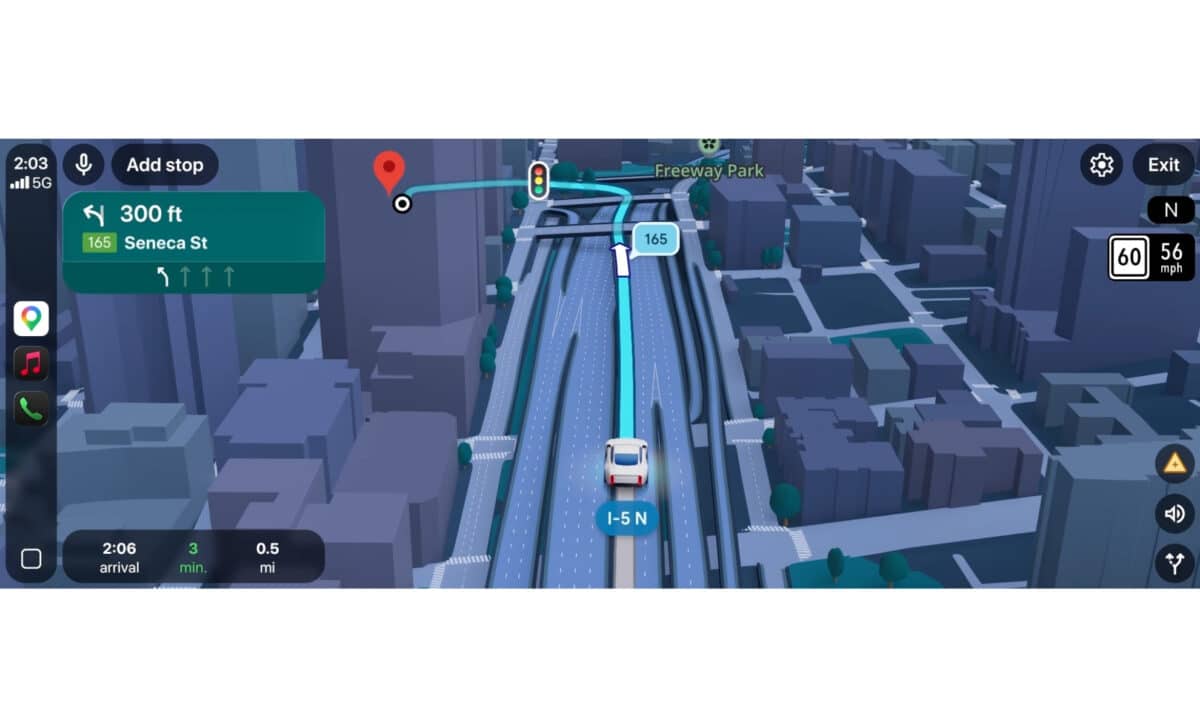
The most visible change arrives through the new Immersive Navigation interface, which introduces a more detailed 3D map display. According to Carscoops, the updated design uses Street View data to render buildings, overpasses, and surrounding landscaping in a more realistic way. The goal is to help drivers orient themselves more easily when navigating unfamiliar locations.
The interface also highlights practical road elements such as lanes, crosswalks, traffic lights, and stop signs. These visual markers appear directly in the map view, giving drivers additional context as they approach intersections or complex road layouts.
Google has also added features such as smart zooming and transparent buildings. These tools allow drivers to preview upcoming turns and lane changes more clearly, even when buildings would normally obscure the route on a traditional map display.
Navigation Guidance with Clearer Route Explanations
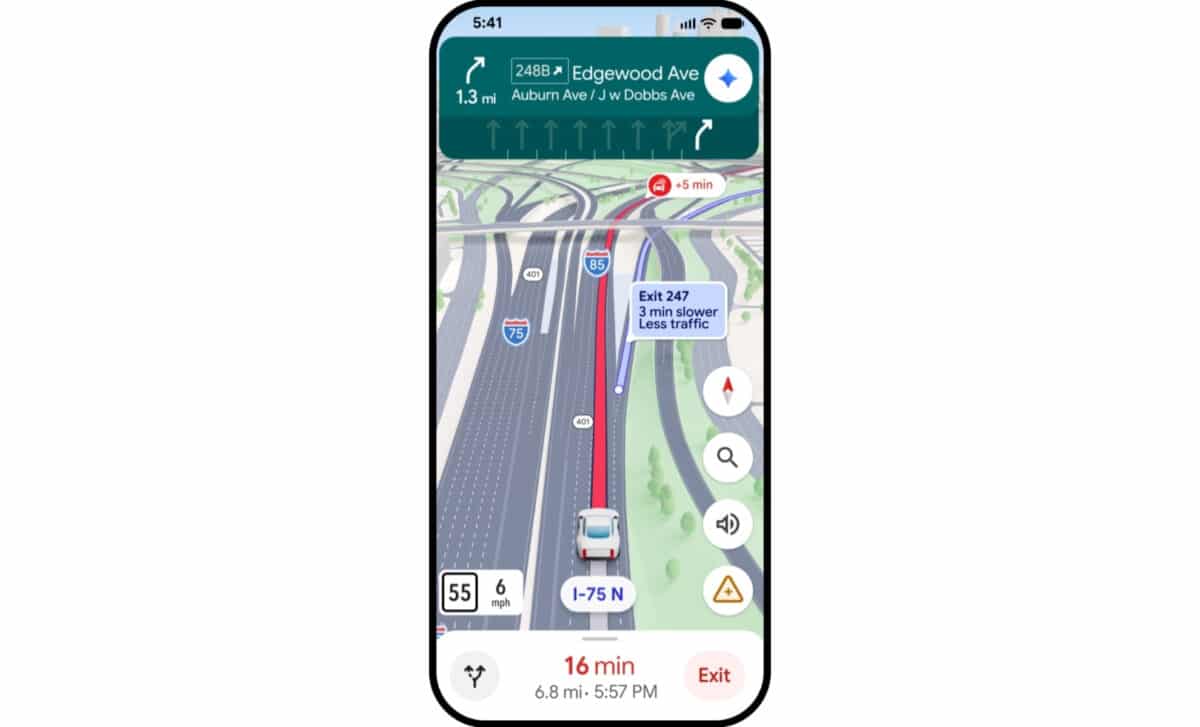
Alongside the visual redesign, Google Maps is introducing several updates to the navigation system itself. One of the most noticeable changes is more natural voice guidance while driving. The system also now provides clearer explanations of alternative routes when traffic disruptions occur.
Google officials explained during a media briefing that the platform processes roughly five million traffic updates every second, constantly analyzing conditions to determine the fastest route. The updated interface will now present alternative routes along with explanations of their trade-offs.
For example, if a crash causes congestion on a highway, Maps may suggest leaving at the nearest exit. The app can explain that the alternative route has less traffic but could add several minutes to the total travel time. This allows drivers to decide whether they prefer a quicker arrival or a less stressful route with lighter traffic.
Drivers can also preview future journeys before departure. The preview feature displays the route in advance, lets users view Street View imagery along the way, and even provides recommendations on where to park near the destination.
Immersive Navigation is starting to roll out in the United States and will later expand to Android and iOS devices as well as vehicles equipped with Android Auto, Google built-in systems, and Apple CarPlay.
Ask Maps Introduces Ai-Powered Travel Planning
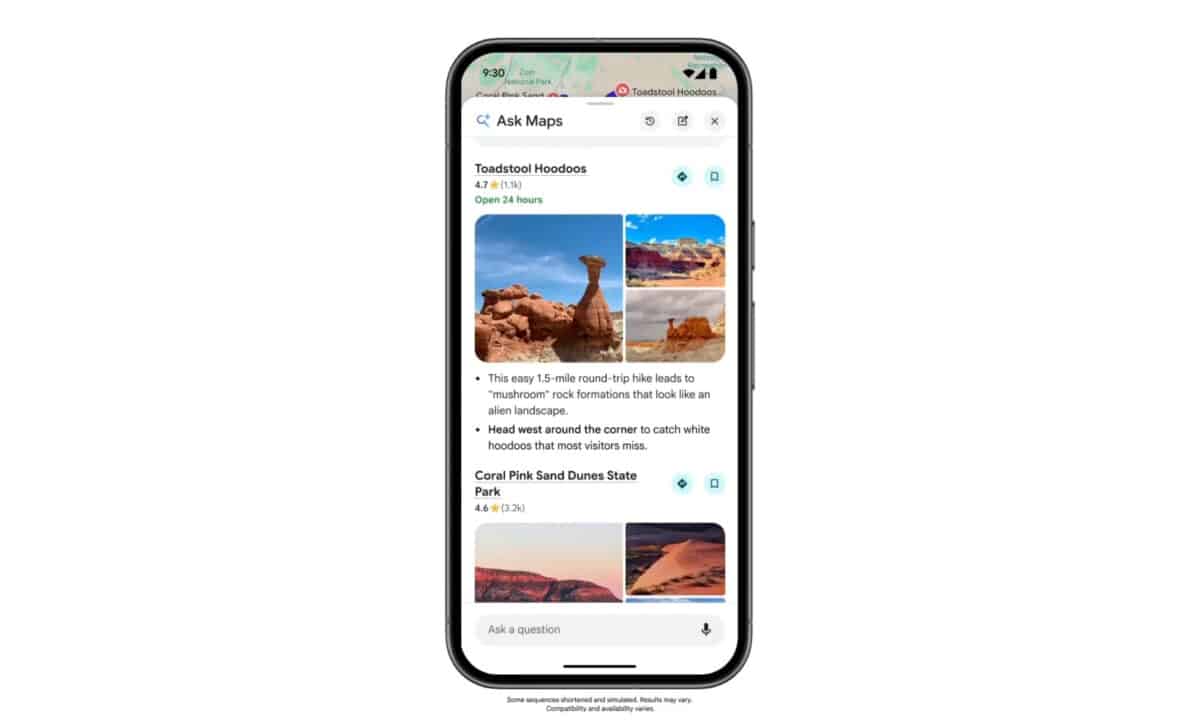
The second major addition is Ask Maps, a conversational feature powered by Google’s Gemini AI. The tool allows users to ask detailed questions about destinations, restaurants, or activities and receive contextual answers. While simple searches remain possible, the system is designed to handle more complex planning requests.
Ask Maps can help organize multi-day travel plans. In one example demonstrated by Google, a user planning a three-day trip to the Grand Canyon, Horseshoe Bend, and Coral Dunes could receive a recommended route along with suggested stops along the way.
The AI also provides images and route details, including toll information. During a preview demonstration, the system even suggested insider tips, such as avoiding parking areas that tend to fill up quickly.
To generate these recommendations, Google Maps analyzes web information and draws from a database containing more than 300 million places. The system also incorporates reviews from over 500 million contributors.
Ask Maps uses a user’s previous searches and saved locations to personalize suggestions. For instance, someone could ask for restaurant options for four people at a specific time, and the app would recommend places matching their past preferences.
Users can then book reservations directly from the app and share the details with friends. Ask Maps is currently rolling out on Android and iOS in the United States and India, while desktop support is expected to arrive later.