
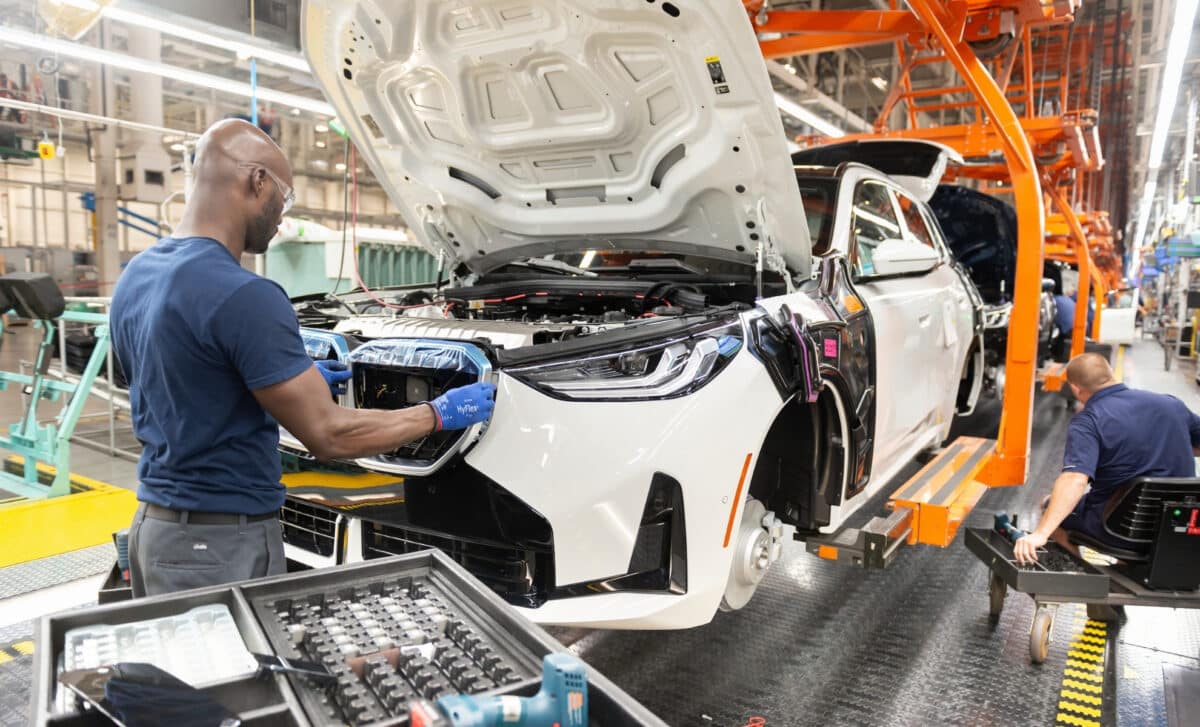
The result may seem surprising at first glance. In the U.S. market, American brands such as Ford and Chevrolet dominate sales by a wide margin, selling millions of vehicles annually. BMW, by comparison, ranks much lower in domestic registrations.
Yet when the focus shifts from sales to exports, the hierarchy changes significantly. According to data drawn from the U.S. Department of Commerce, BMW exports more vehicles built in the United States than any other automaker operating in the country.
BMW Leads U.S. Vehicle Exports Despite Modest Domestic Sales
In 2025, BMW ranked 14th among the most widely sold brands in the United States, with 388,897 registrations. That figure places the Bavarian manufacturer far behind major American players such as Ford, which records more than two million annual sales, and Chevrolet with around 1.8 million.
The situation is different when examining export volumes. Among automakers producing vehicles on U.S. soil, BMW exports the highest number of cars to international markets.
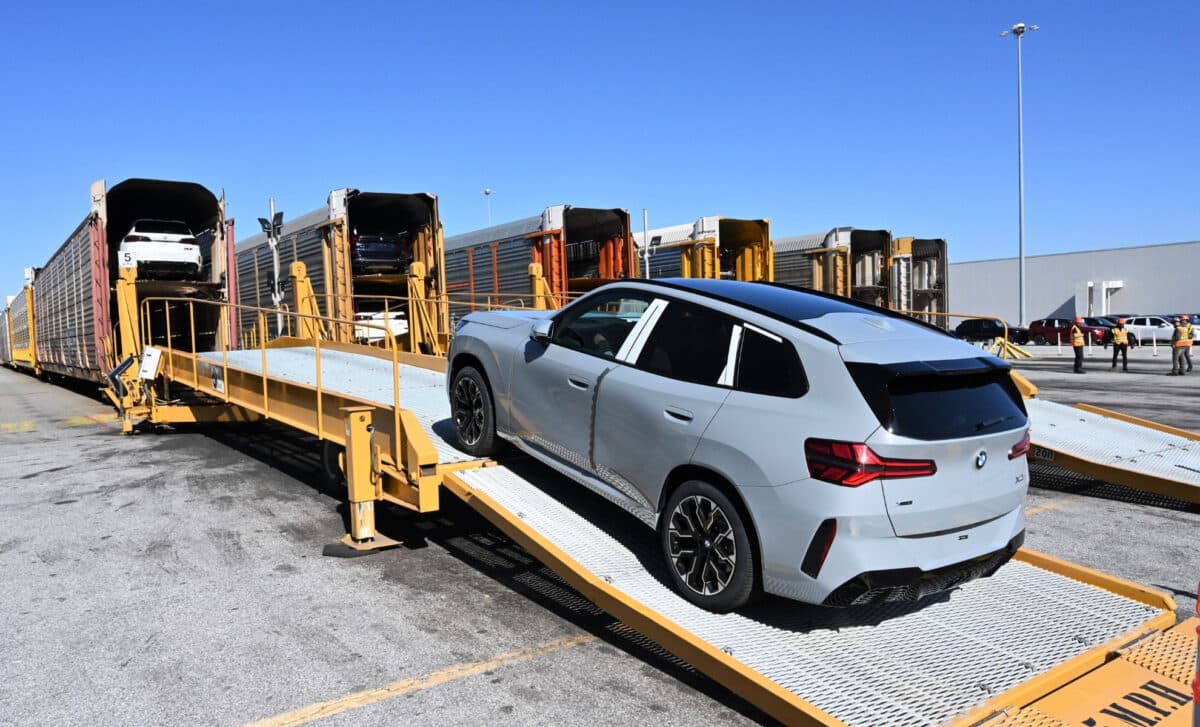
According to the U.S. Department of Commerce, approximately 200,000 BMW vehicles assembled in the United States were exported to 120 countries in 2025. This export performance is not a recent development. Since 2014, nearly three million BMW vehicles produced in the United States have been shipped abroad.
Spartanburg, BMW’s Largest Factory Worldwide
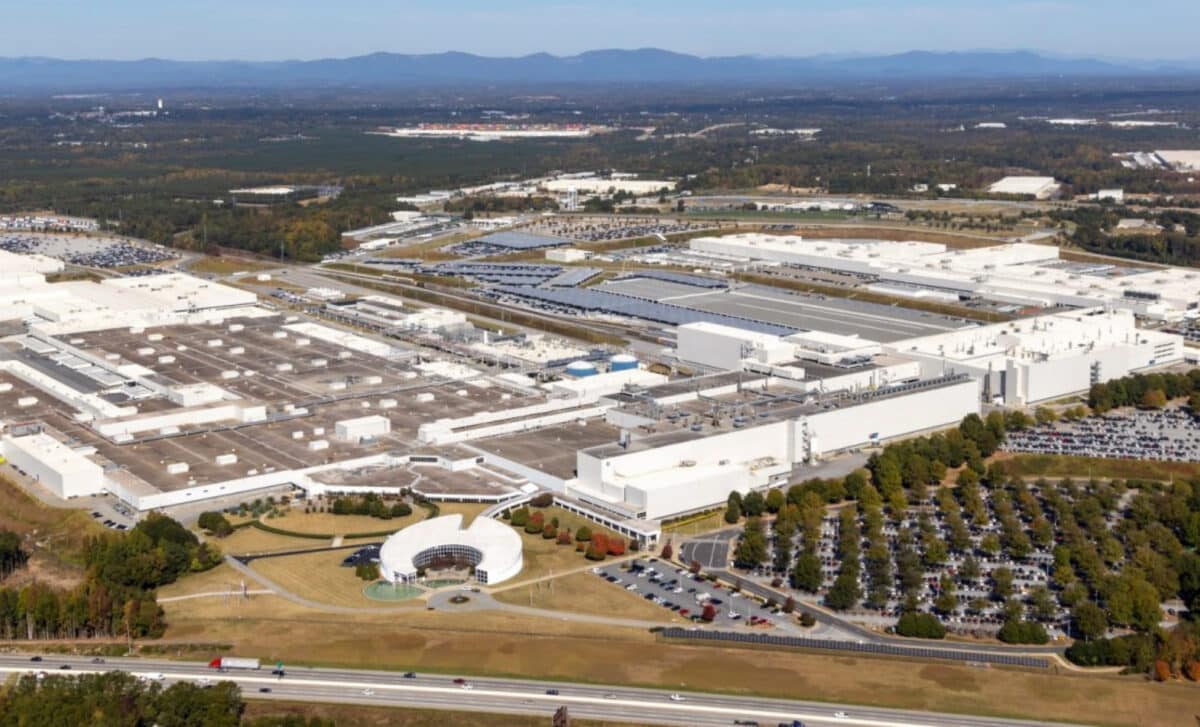
BMW’s export strength is closely linked to its long-standing presence in South Carolina. The company established operations in the state in 1992 and has invested 16 billion dollars in its American facilities over 34 years.
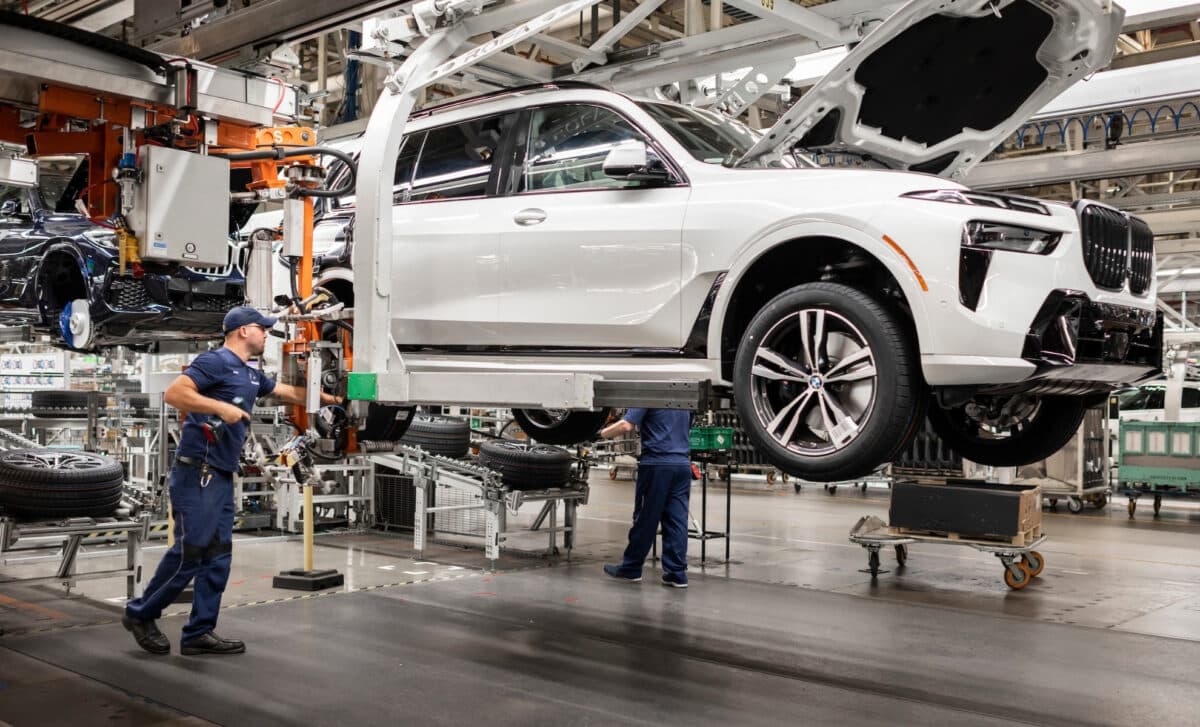
The Spartanburg plant, originally intended to serve the U.S. market, has grown into BMW’s largest factory worldwide. The site employs about 11,000 workers and produces around 1,500 vehicles every day.
Roughly half of this output is exported to foreign markets. Most of the production consists of the X3, X4 and X5 sport utility vehicles, which are sold in large volumes around the world. According to Automobile Magazine, exports of these models from South Carolina represent around 9 billion dollars in annual revenue for BMW.
Production Strategies Spanning the United States and Mexico
BMW’s manufacturing footprint in North America also includes Mexico. In 2019, the company opened a plant in San Luis Potosí where 3,700 employees build the 2 Series Coupé and the 3 Series. The facility also produces batteries for the brand’s electric vehicles.
Following expansion work completed in 2024, the site now has more than 90,000 square meters available. The upcoming Neue Klasse generation of the 3 Series is expected to be produced there.
This dual manufacturing strategy is common across the industry. American automakers such as Ford also operate plants both in the United States and in Mexico. Despite having 24 production sites in the United States, Ford uses Mexican facilities to produce vehicles at lower cost for export and for the American market.
Political pressure has attempted to slow this trend. In March 2025, Donald Trump signed a decree imposing a 25 percent tax on vehicles sold in the United States if they are built in Mexico or assembled with parts produced there. The measure aims to encourage companies to relocate production and jobs to American soil.
A year later, the effectiveness of this policy remains uncertain. Ford recently celebrated the milestone of seven million vehicles produced in Mexico, while General Motors has announced plans to invest 4 billion dollars by 2027 to bring several production lines back to the United States. These changes would allow GM to reach a capacity of two million vehicles produced domestically for both the American market and export.