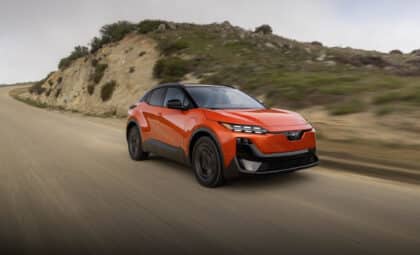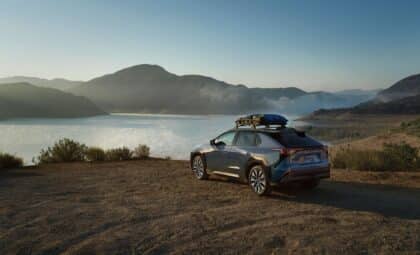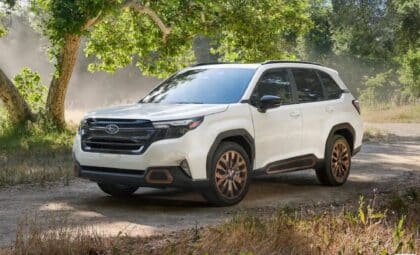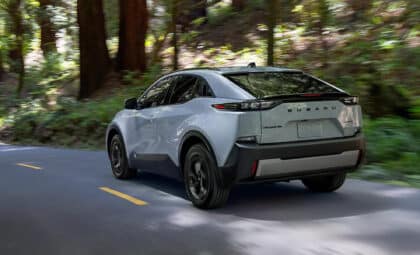
The reveal of the Getaway marks a significant step in Subaru’s electric push, as the automaker moves beyond smaller crossovers into the more competitive, and more lucrative, three-row family SUV segment. With seven seats, substantial towing capability, and a fast-charging system compatible with Tesla’s Supercharger network, the Getaway is clearly engineered to appeal to a broad audience of family-oriented buyers who have so far been reluctant to make the switch to electric.
The timing is also notable. The Getaway arrives as the EV market matures and consumers increasingly demand practicality alongside environmental credentials. A three-row electric SUV with standard AWD represents exactly the kind of product that could convince suburban families still on the fence about going electric.
Powertrain, Performance, and Charging
Every Getaway comes equipped with two electric motors, one per axle, delivering a combined output of 420 horsepower. According to Motor1, the SUV can sprint from zero to 60 miles per hour in under 5.0 seconds, offering a 3,500-pound towing capacity and 8.3 inches of ground clearance.
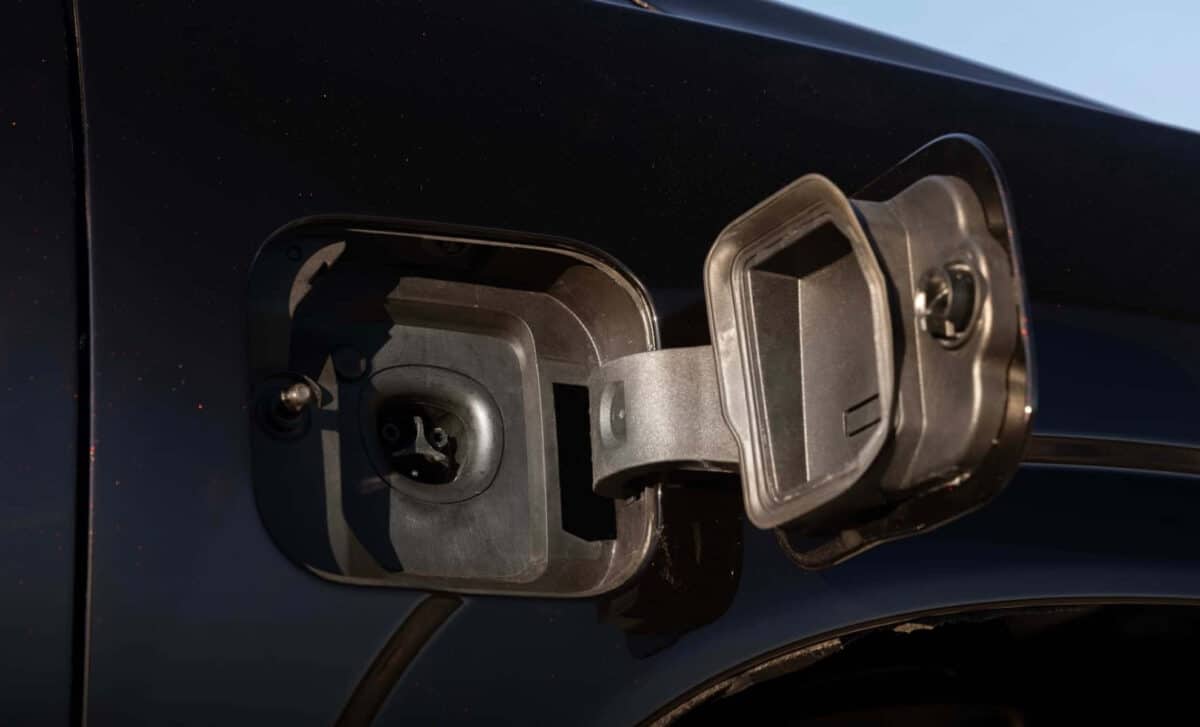
The long-range variant, which will be the first available at launch, is powered by a 95.8-kilowatt-hour lithium-ion battery paired with 150-kilowatt DC fast charging. That setup allows the Getaway to recharge from 10 to 80 percent in just 30 minutes. Every model comes standard with the North American Charging Standard, giving owners direct access to Tesla’s Supercharger network.
A standard-range model is also in the pipeline, built around a smaller 77.0-kWh battery, and is slated to arrive in the first half of 2027.
A Toyota Partnership Behind the Scenes
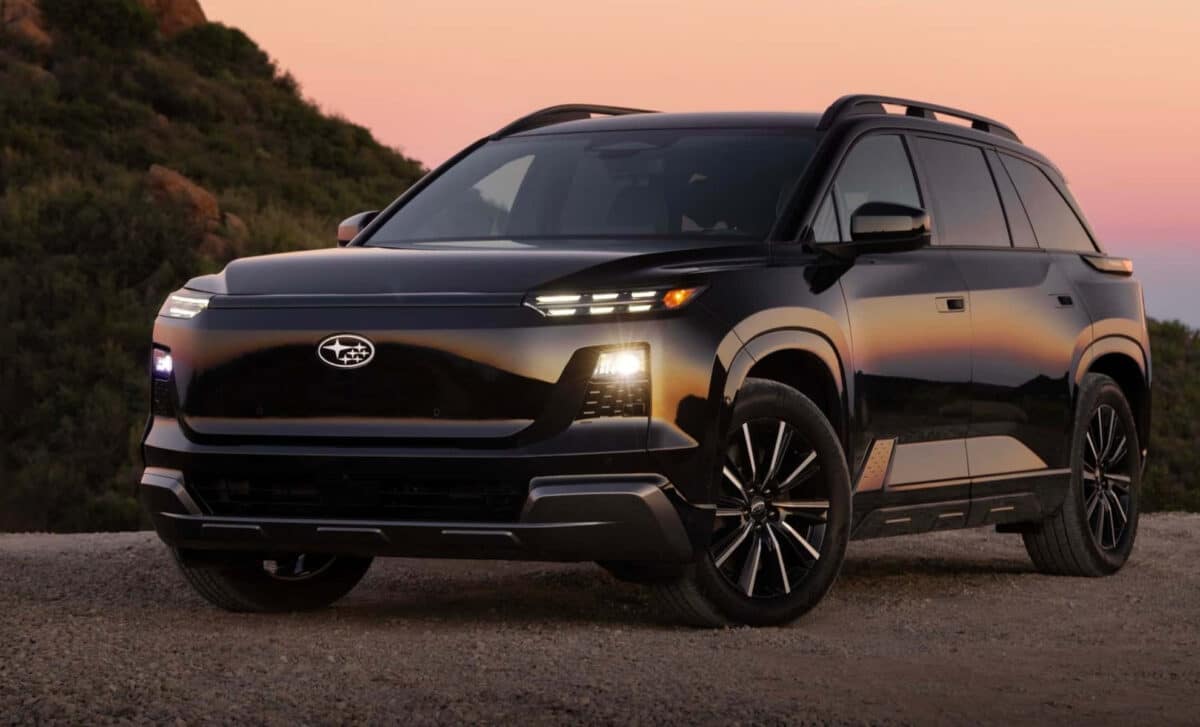
The Getaway does not emerge from a vacuum. Subaru developed the SUV jointly with Toyota, andthe connection is hard to miss. The Getaway shares its available battery pack sizes, 95.8 kWh and 77.0 kWh, with the new Toyota Highlander EV, and the two vehicles look nearly identical. The dashboard, steering wheel, and center console inside the Getaway are described as indistinguishable from those in the Highlander EV.
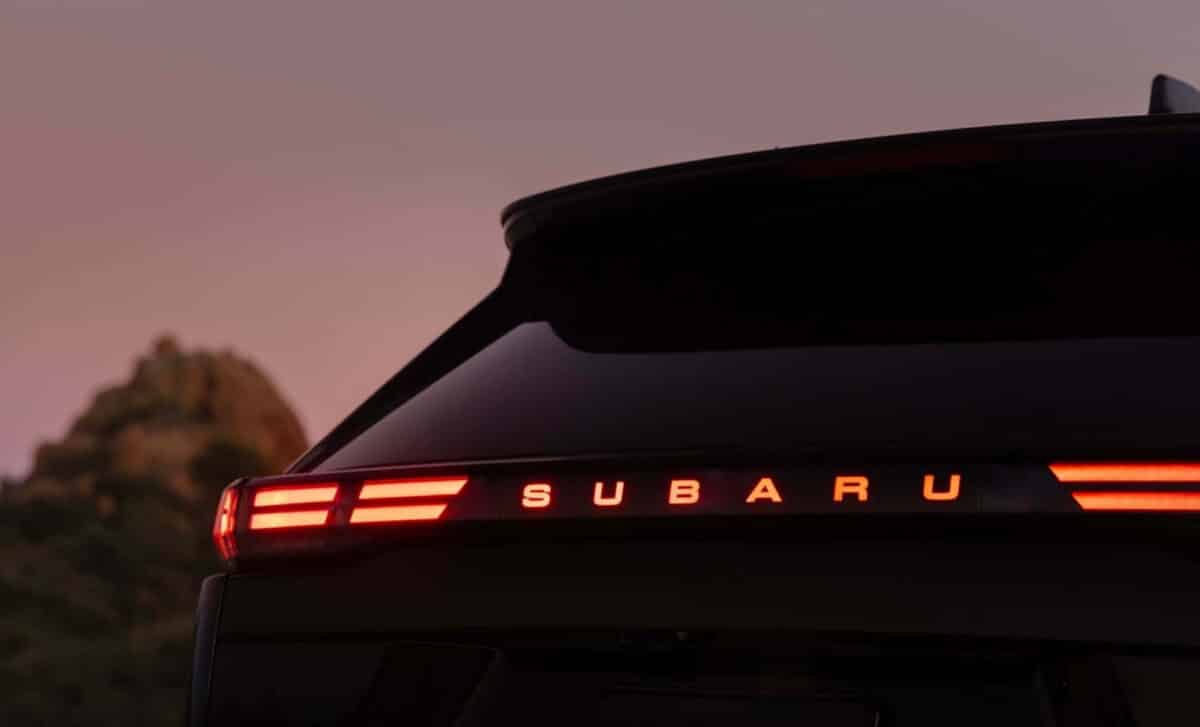
Where Subaru does draw a line is on power. Despite the shared architecture, the Getaway outmuscles its Toyota cousin and comes with all-wheel drive as standard equipment. On the outside, Subaru has worked to carve out its own identity with an illuminated brand logo, fitted as standard on every trim, along with signature headlights and an illuminated Subaru wordmark mounted between the taillights at the rear. Roof rails are also standard, and buyers can choose between 19- or 20-inch wheels depending on their trim level.
Interior Comfort and Technology
Step inside the Getaway and the Toyota DNA remains visible, but the cabin is nonetheless well-equipped. A 12.3-inch digital instrument cluster and a 14.0-inch infotainment touchscreen anchor the dashboard, accompanied by wireless 15-watt charging and wireless Android Auto and Apple CarPlay, all standard.
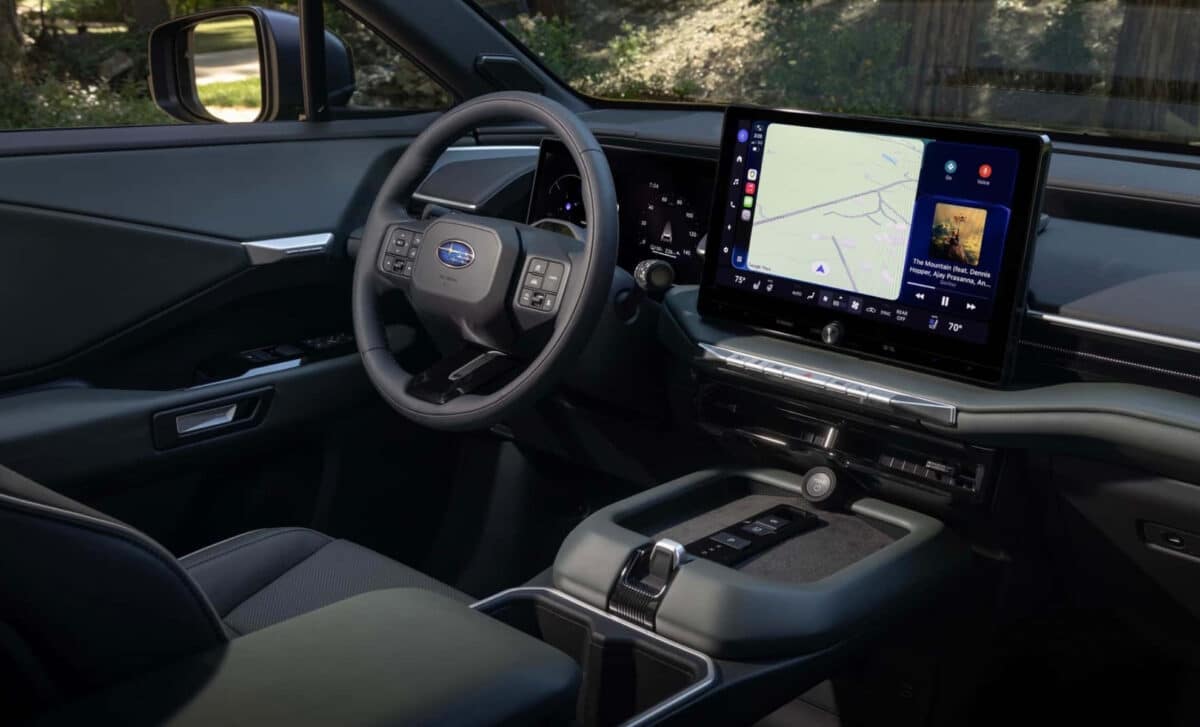
Heated front seats come on every model, while second- and third-row heated seats are available as options. Ventilated front- and second-row seats and a heated steering wheel are offered on select trims. The SUV seats up to seven passengers across three rows, with three-zone climate control, dedicated third-row vents, and USB-C charging ports in every row ensuring that no passenger is left without comfort or connectivity.
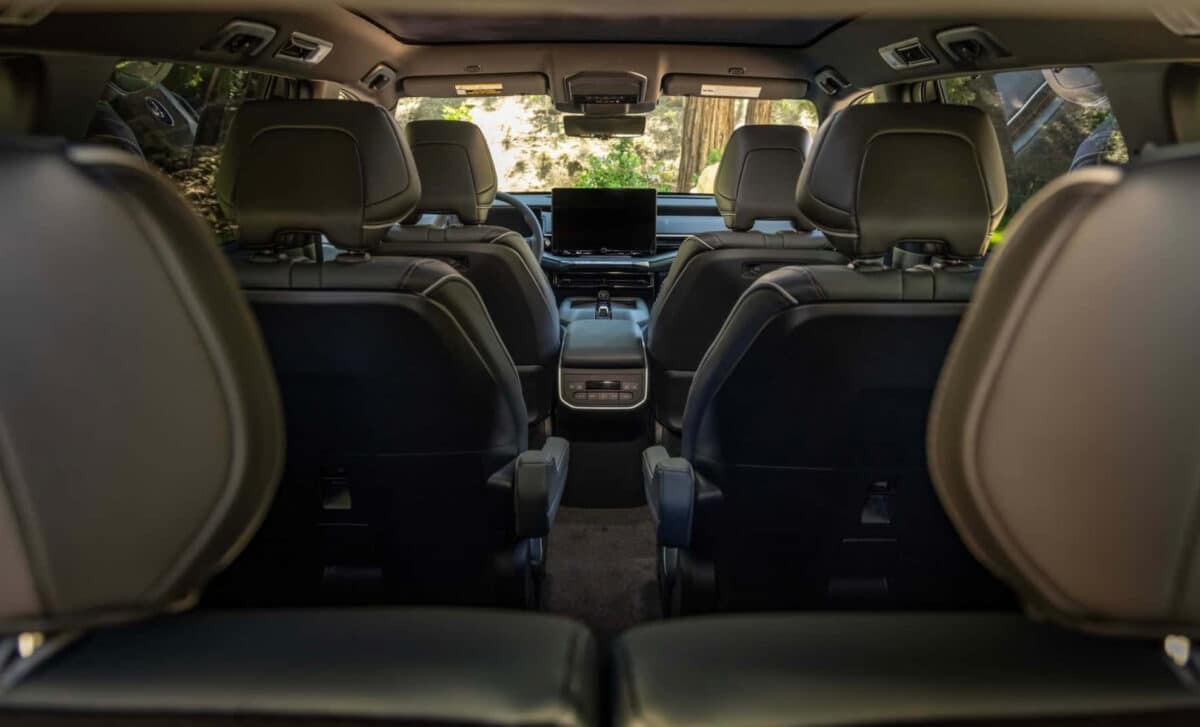
On pricing, Subaru has yet to release official figures. The Getaway is expected to start somewhere in the mid- to upper-$40,000 range, positioning it above the brand’s Trailseeker in the lineup. Final pricing details will be communicated closer to the vehicle’s on-sale date later this year.