

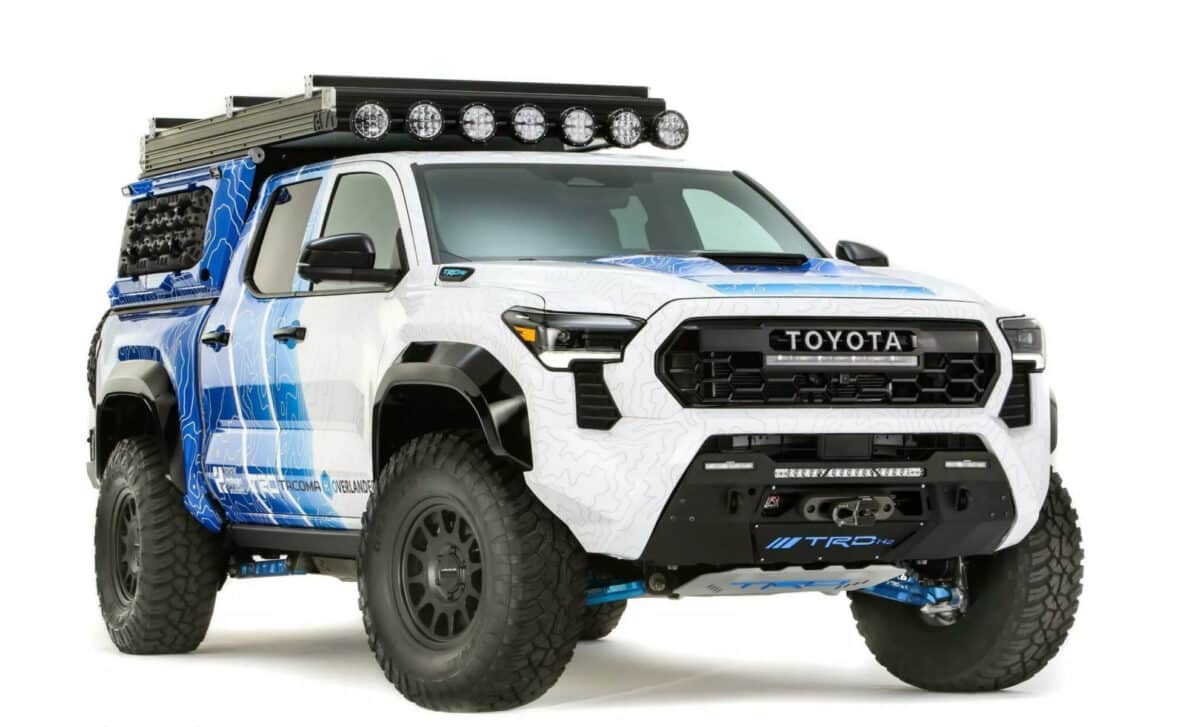
Dubbed the Tacoma H2 Overlander, this concept vehicle features a hydrogen fuel cell system and a groundbreaking water recovery system that captures exhaust vapor for use in remote settings, such as washing or showering. By utilizing the clean emissions of a hydrogen-powered vehicle, Toyota is exploring a future where off-roading and sustainability go hand in hand.
As overlanding becomes increasingly popular, many enthusiasts are seeking ways to make their adventures more eco-friendly. Toyota’s Tacoma H2 Overlander presents a new approach, leveraging hydrogen fuel cells and cutting-edge technology to create a vehicle that produces zero emissions while offering a practical solution for off-grid living.
The truck’s ability to collect and recycle water from its exhaust could provide essential resources for adventurers in remote areas where water is scarce, positioning it as an intriguing, albeit futuristic, solution for sustainable travel.
Harnessing Hydrogen for Off-Roading
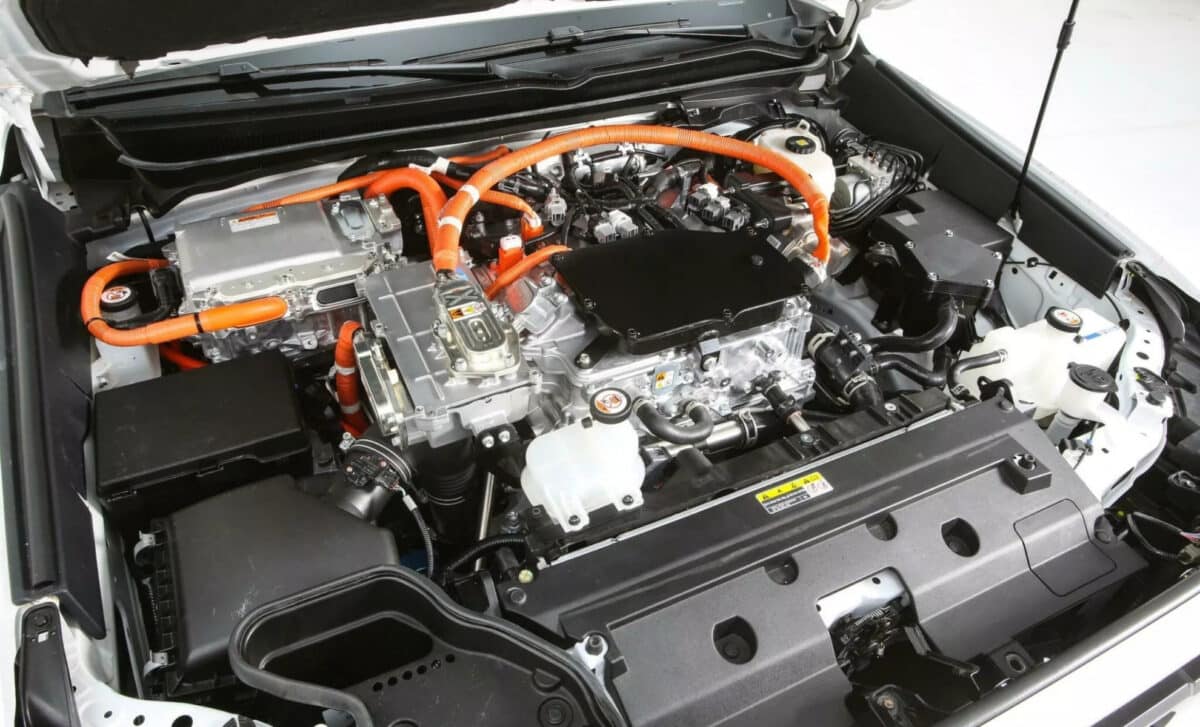
The Tacoma H2 Overlander is powered by Toyota’s hydrogen fuel cell technology, a key component of the automaker’s ongoing commitment to sustainable energy solutions. This technology, derived from the Toyota Mirai, allows the truck to produce 547 horsepower using dual electric motors, making it capable of tackling rugged terrains while emitting only water vapor as a byproduct, reports Carscoops.
Unlike traditional internal combustion engines, which release harmful pollutants, hydrogen fuel cells generate electricity through a chemical reaction between hydrogen and oxygen, with water as the only output.
In addition to the vehicle’s powertrain, Toyota has implemented a patent-pending water recovery system that collects and distills the water vapor produced by the fuel cell’s exhaust. According to The Autopian, this water, although not suitable for drinking, can be used for non-potable needs such as showering, cleaning, or washing hands—ideal for off-grid situations where fresh water is limited. The concept taps into the potential of hydrogen fuel cells to provide both environmental benefits and practical off-road functionality.
Built for Rugged Terrain
Despite its focus on sustainability, the Tacoma H2 Overlander does not skimp on off-road capabilities. The truck features a TRD long-travel suspension kit, Fox 2.5 Performance Elite Series shocks, and 35-inch tires, all designed to tackle tough, uneven terrain with ease. Toyota has also equipped the truck with a front limited-slip differential and an electronic locking rear differential, which enhance its off-road performance by improving traction and control.
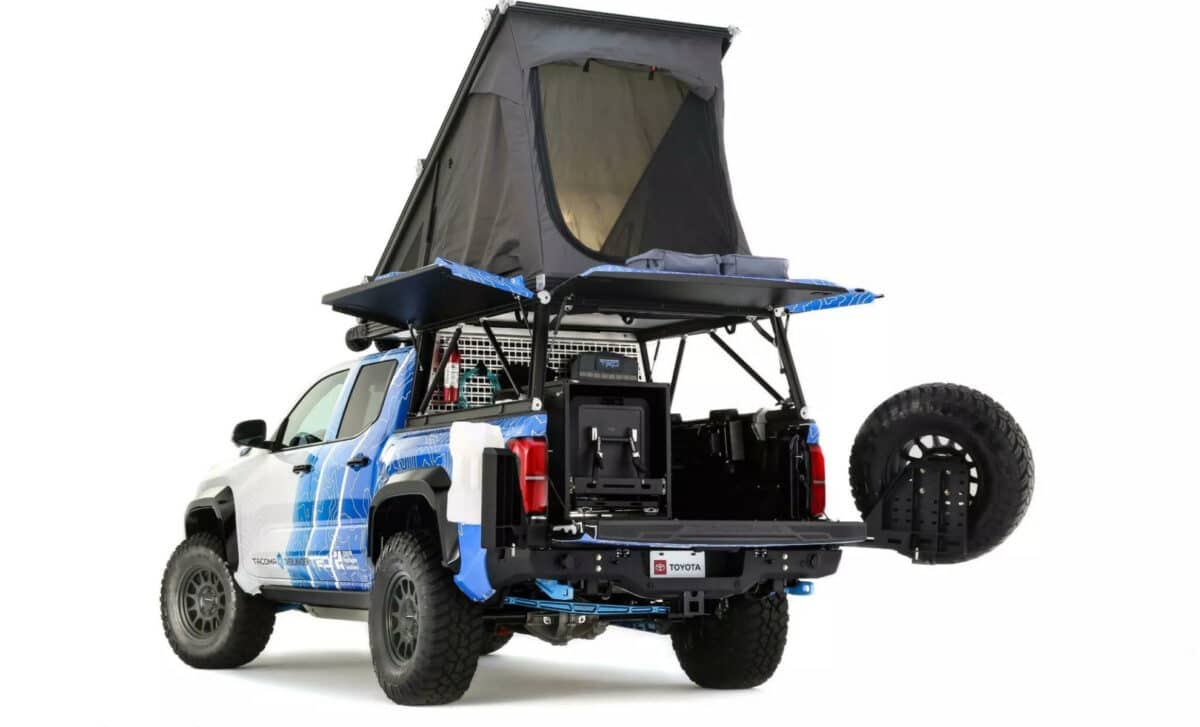
Further enhancing the vehicle’s overlanding features are a pop-up roof tent and a rear canopy that opens on all three sides, turning the Tacoma into a self-sufficient base camp. With recovery points, a winch, and additional LED lighting, the Tacoma H2 Overlander is ready to take on the challenges of extended off-road journeys, all while maintaining its commitment to zero emissions and water conservation.
A Vision with Practical Hurdles
While the concept of a hydrogen-powered off-roading vehicle is exciting, there are practical challenges that must be addressed before it can become a viable option for adventurers. The most significant of these hurdles is the limited hydrogen refueling infrastructure.
Hydrogen refueling stations are scarce in the U.S., primarily concentrated in certain areas of California. This lack of infrastructure means that long-distance travel in a hydrogen-powered vehicle, particularly in remote areas, remains a significant challenge.
Despite these limitations, Toyota’s concept offers a glimpse into a future where vehicles can support both sustainable energy use and off-grid living. The idea of collecting water from a hydrogen fuel cell’s exhaust could have real-world applications for camping, overlanding, or emergency situations. However, the feasibility of hydrogen-powered vehicles becoming mainstream, especially in remote areas, will depend heavily on the development of a robust refueling network.