
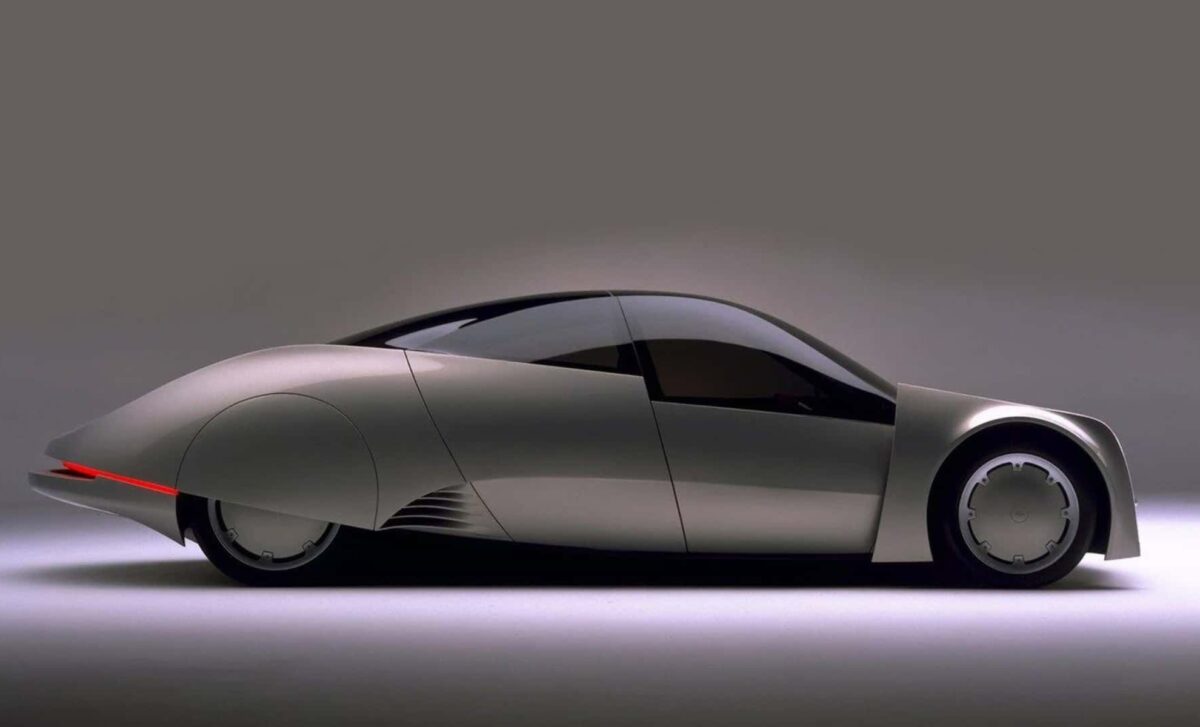
When Ford unveiled the Synergy at the Detroit Auto Show in 1996, it presented a radical design and a groundbreaking hybrid powertrain that would take years to materialize in production cars. Ford’s vision was clear: an ultra-efficient family car, powered by a combination of electric motors and a small combustion engine.
While the car itself never reached production, its innovative features, many of which have become commonplace today, still provide an insight into how car manufacturers have evolved in response to the demands for more sustainable, tech-heavy vehicles.
The Hybrid Powertrain: Ahead of Its Time
The Synergy was one of the earliest concepts to combine electric power with a range-extending internal combustion engine (ICE). Instead of using the ICE to drive the wheels, it acted solely as a generator to power four electric motors, one at each wheel.
According to the report, this powertrain setup was remarkably advanced for its time, especially when considering that the BMW i3 REx, the first production vehicle with a similar powertrain, didn’t arrive until 2013. In addition to the range-extending engine, the car featured a flywheel that captured excess engine and braking energy, making it a precursor to modern regenerative braking systems used in hybrids and electric vehicles today.
Sleek Design for Maximum Efficiency
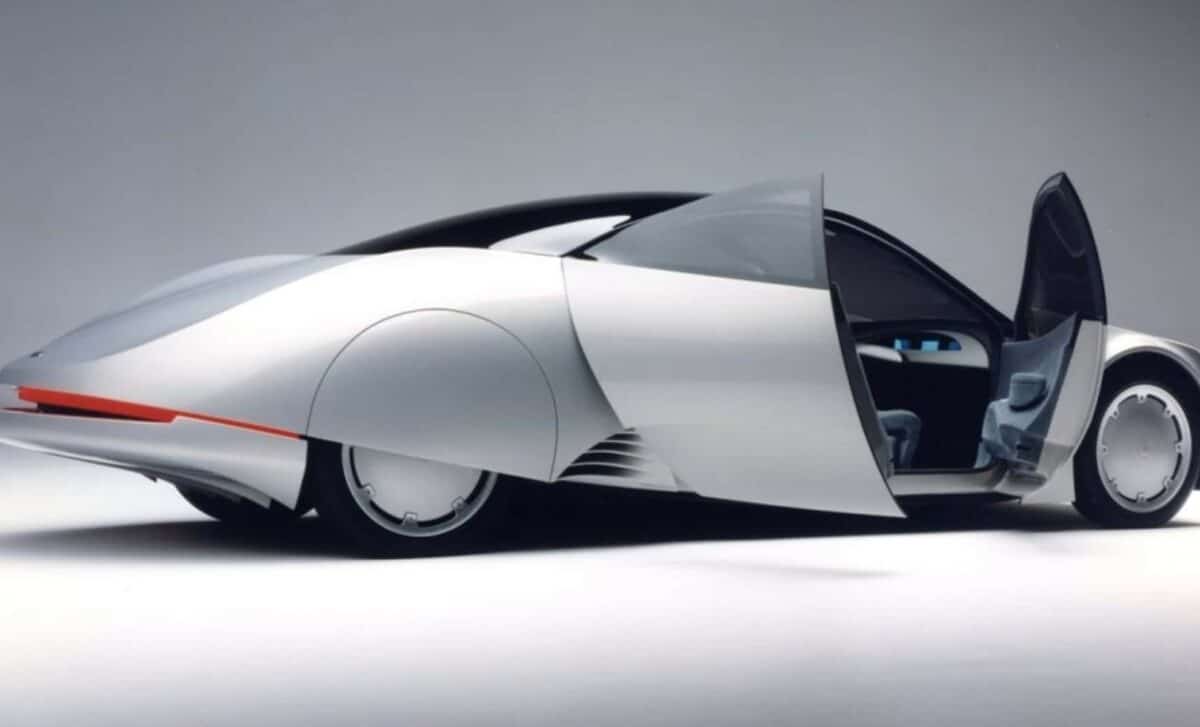
Ford also pushed the boundaries of aerodynamics with the Synergy. With a drag coefficient of just 0.20, the vehicle was designed to minimize air resistance, making it one of the most aerodynamic cars of its era. The car’s body was crafted from lightweight aluminum, which reduced its overall weight to just 2,200 pounds, about 1,100 pounds lighter than a typical mid-sized sedan.
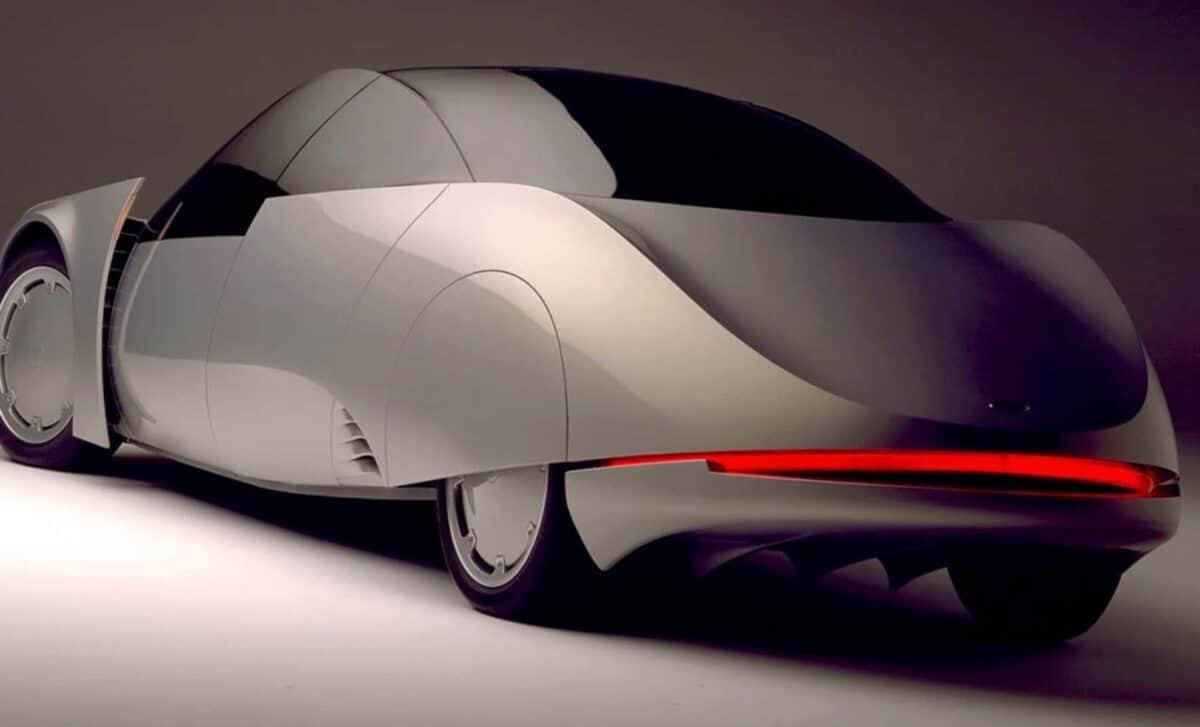
According to Ford, this material choice allowed them to use smaller components across the board, further contributing to the car’s efficiency. Despite its impressive efficiency, the Synergy’s design was not without criticism, particularly its front end, which featured fin-shaped fenders. Though unconventional, the design focused on minimizing drag, rather than appealing to aesthetics.
Futuristic Features: From Solar Panels to Voice Controls
Beyond the powertrain and design, the Synergy was loaded with futuristic features that are now commonplace in many modern vehicles. For example, the Synergy had side cameras instead of traditional mirrors, and its cabin was controlled entirely by voice commands, eliminating the need for physical buttons or switches.
This feature alone was decades ahead of most production cars, which only began integrating voice-activated controls in the 2000s. The car also had solar roof panels that powered a fan to cool the cabin while the vehicle was parked, another early nod to sustainable energy use. These solar panels were just one of many innovative touches that made the Synergy stand out.
Although the Ford Synergy never made it to production, it accurately forecasted many of the tech-heavy features that would later become standard in the automotive industry. As car manufacturers continue to push the envelope on sustainability and efficiency, the Synergy serves as an early reminder of how far the industry has come. The Ford concept may have been a stretch exercise, as Ford’s late chairman Alex Trotman noted, but it’s clear that the vision it offered has shaped much of today’s automotive landscape.