
The South Korean automaker is shifting gears and starting to export electric vehicles manufactured in China. This new battle plan is designed to keep the brand competitive as low-cost Chinese models continue to gain ground worldwide.
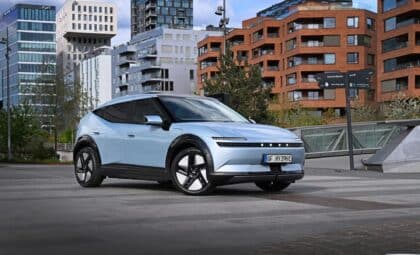
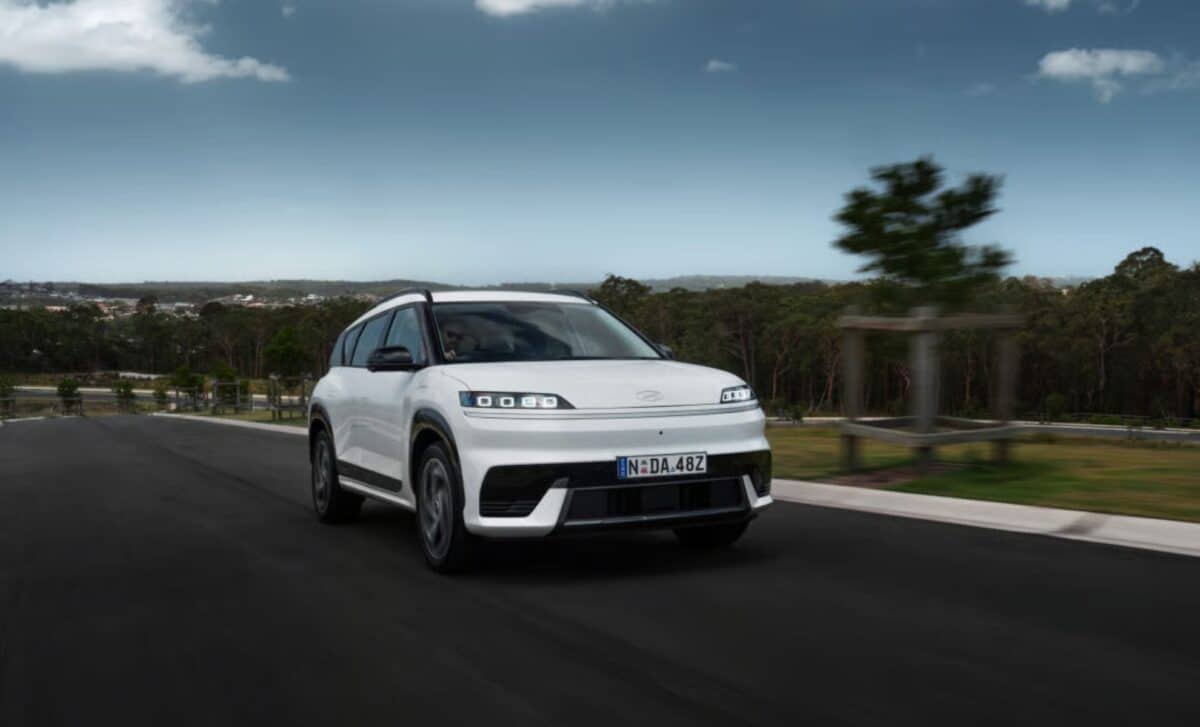
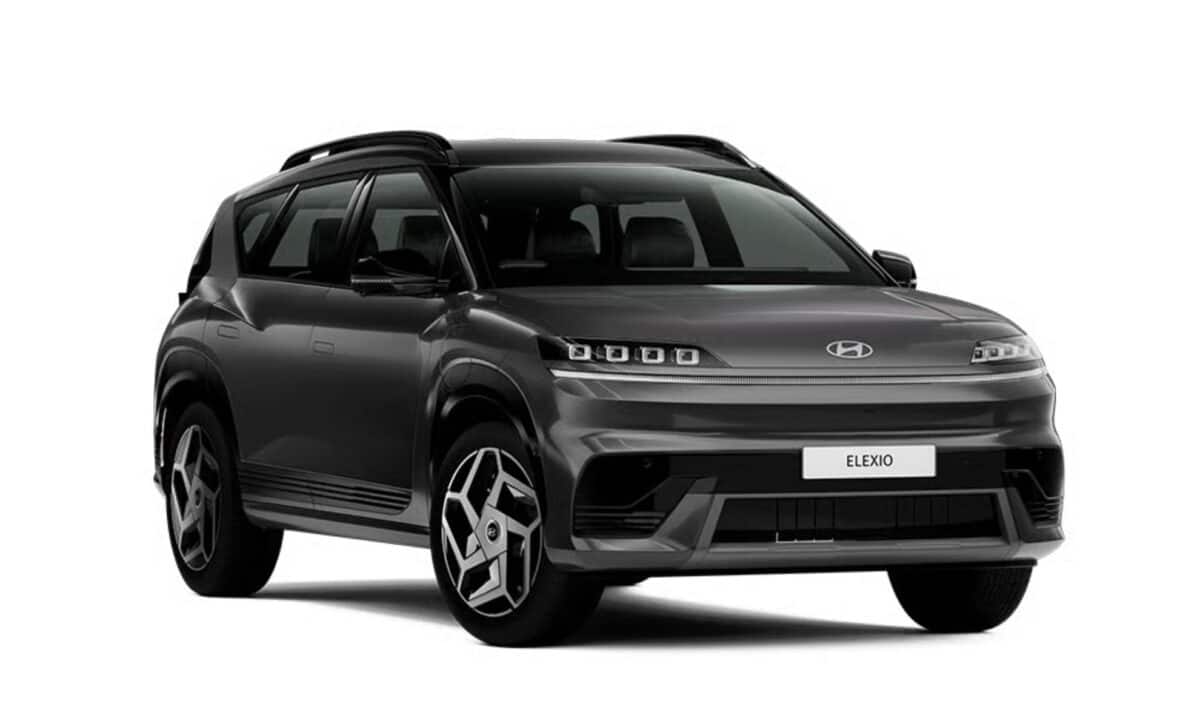
The vehicle leading this charge is the Elexio, a compact family SUV assembled by the Beijing-Hyundai joint venture. Originally created for the Chinese domestic market, it is now leaving its home turf to land on Australian soil, where it will go up against the Tesla Model Y and the BYD Sealion 7.
A Strategic Pivot Originating in Beijing
Sentiment is no longer a luxury traditional carmakers can afford. Watching Chinese models at aggressive price points roll out across global markets has forced Hyundai to completely rethink its approach. The group’s answer is the Elexio, a midsize electric SUV built not in the South Korean industrial hub of Ulsan, but in the facilities of its Chinese joint venture.
Australia has been chosen as the testing ground for this commercial counteroffensive. The country has transformed into a fierce battleground where Asian brands are competing intensely. According to Auto Plus, the BYD Sealion 7 secured the top spot in Australian electric vehicle sales last month, pushing the Tesla Model Y down to sixth place. To stand a chance in this price war, Hyundai is adopting the same method as its sister brand Kia did with the EV5: producing in China to keep manufacturing costs low.
The launch price for the well-equipped Elite version is set at 59,990 Australian dollars, approximately 38,500 US dollars at current exchange rates. To maintain the perception of an affordable vehicle, the lineup will later include a stripped-down entry-level model without leather seats or a powered tailgate, priced at 58,990 Australian dollars, or roughly 37,900 US dollars. The objective is to align closely with the pricing strategy set by Elon Musk’s company.
Technical Compromises and a Key Supplier
When the goal is to lower a vehicle’s selling price, cuts have to be made somewhere. The Elexio is built on Hyundai’s E-GMP platform, but it uses a simplified version operating on 400-volt architecture, a step down from the 800-volt system found in the Ioniq models. This means the ultra-fast charging times seen in other Hyundai EVs are not available. Charging from 10 to 80 percent on a fast terminal takes nearly forty minutes. The manufacturer aims to offset this technical drawback with a generous driving range.
Powering the 160 kW front motor is a lithium-iron-phosphate battery with an 88.1 kWh capacity. This component is supplied by BYD, a direct competitor to Hyundai. This less expensive battery technology guarantees a homologated range of 562 kilometers on the WLTP cycle for the standard version, and 546 kilometers for the Elite trim, which rides on 20-inch wheels.
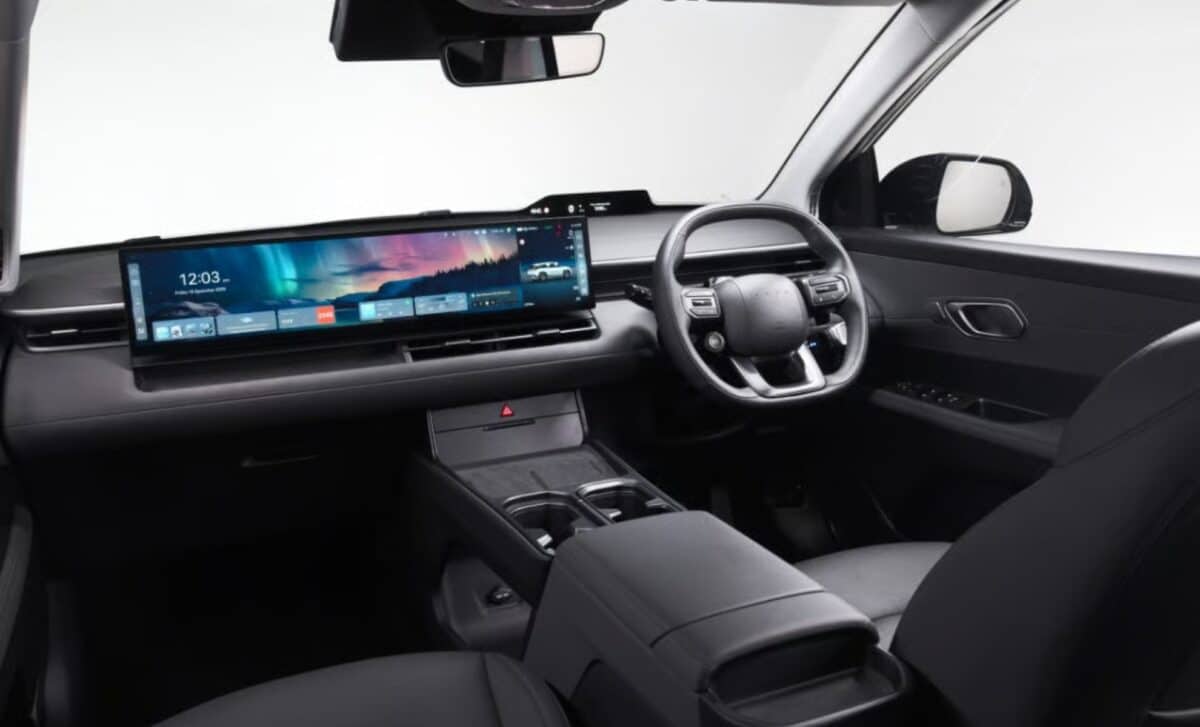
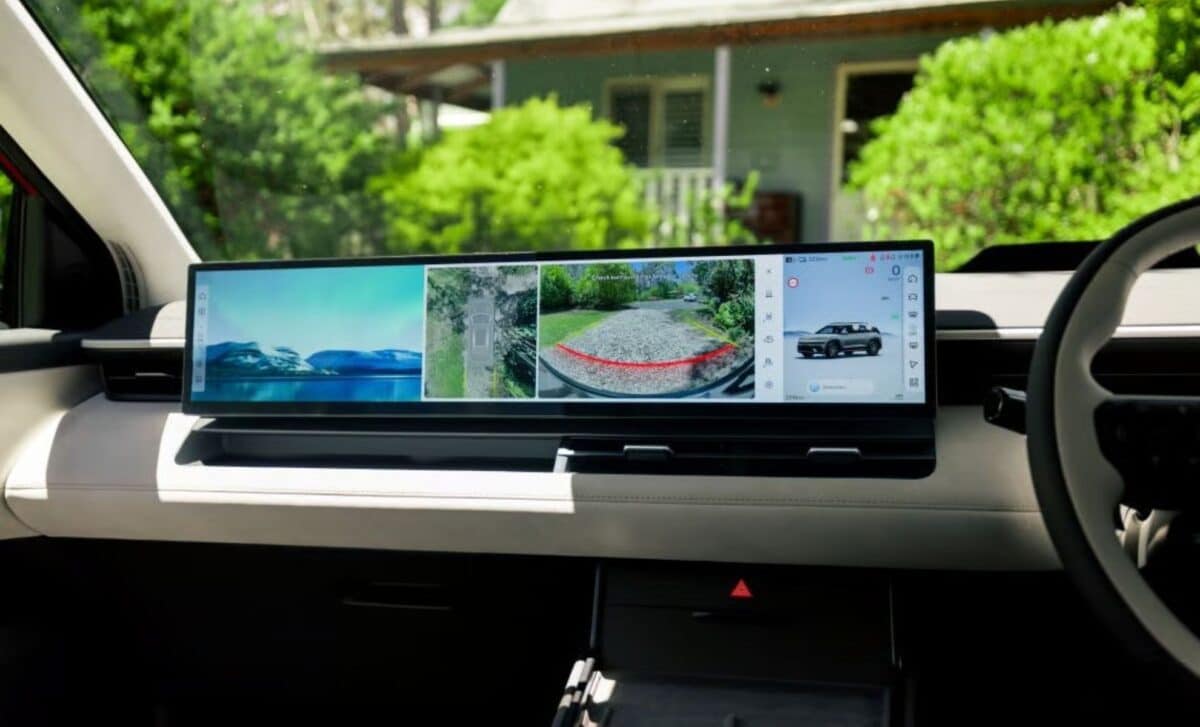
Inside the cabin, the departure from conventional Hyundai design is evident. The layout embraces aesthetics popular with Chinese buyers. A massive 27-inch digital display dominates the dashboard, powered by a Qualcomm processor. A head-up display is also integrated into the driver’s field of vision. The assembly quality holds up, the list of comfort features includes options such as ventilated seats and bidirectional charging, and safety testing has resulted in the maximum five-star rating from ANCAP.
Ultimately, the South Korean group is offering a Chinese-built vehicle with a Hyundai badge. Whether consumers will pay a similar price for this Asian-market clone as they would for the American original remains an open question.