
The rapid expansion of electric vehicles has placed increasing pressure on charging infrastructure. As more drivers rely on fast charging for long journeys, large-scale stations are becoming a key component of the transition to electric mobility.
Tesla has spent more than a decade building one of the largest charging networks globally. The company is now preparing a new step in that strategy with a project designed to handle very high traffic volumes along one of the most traveled highway routes in the western United States.
A Strategic Charging Site Between Los Angeles and Las Vegas
The future charging hub will expand the existing Supercharger station at Eddie World, located along Interstate 15 roughly halfway between Los Angeles and Las Vegas. This highway is heavily used, particularly during weekends and holiday periods, which frequently leads to congestion at charging stations in the area.
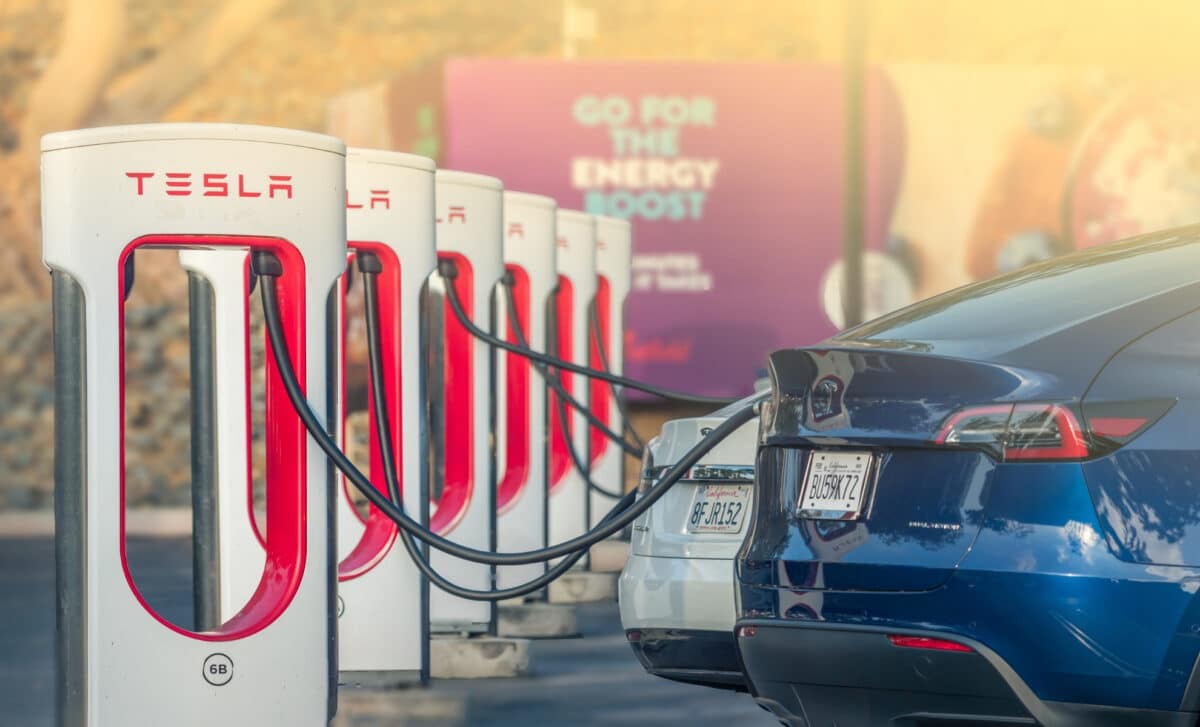
At present, the site includes 22 Superchargers from the V2 and V3 generations, each limited to 150 kW. According to Automobile Magazine, Tesla plans to expand the station in six phases that will gradually increase the total capacity to more than 400 charging points.
The first phase of construction is expected to begin later this year and will add 72 new charging stalls. Future phases will introduce several hundred additional chargers along Calico Boulevard, although the final layout of the sixth phase has not yet been defined.
The choice of location reflects the intense charging demand along this corridor. Within a radius of around 30 kilometers, the region already contains more than 200 fast chargers, including 40 stations delivering up to 250 kW and 120 capable of 325 kW, as well as 96 additional chargers in the nearby town of Baker. Despite this density, charging queues are still common during peak travel periods.
Supercharger V4 Technology and Higher Power Output
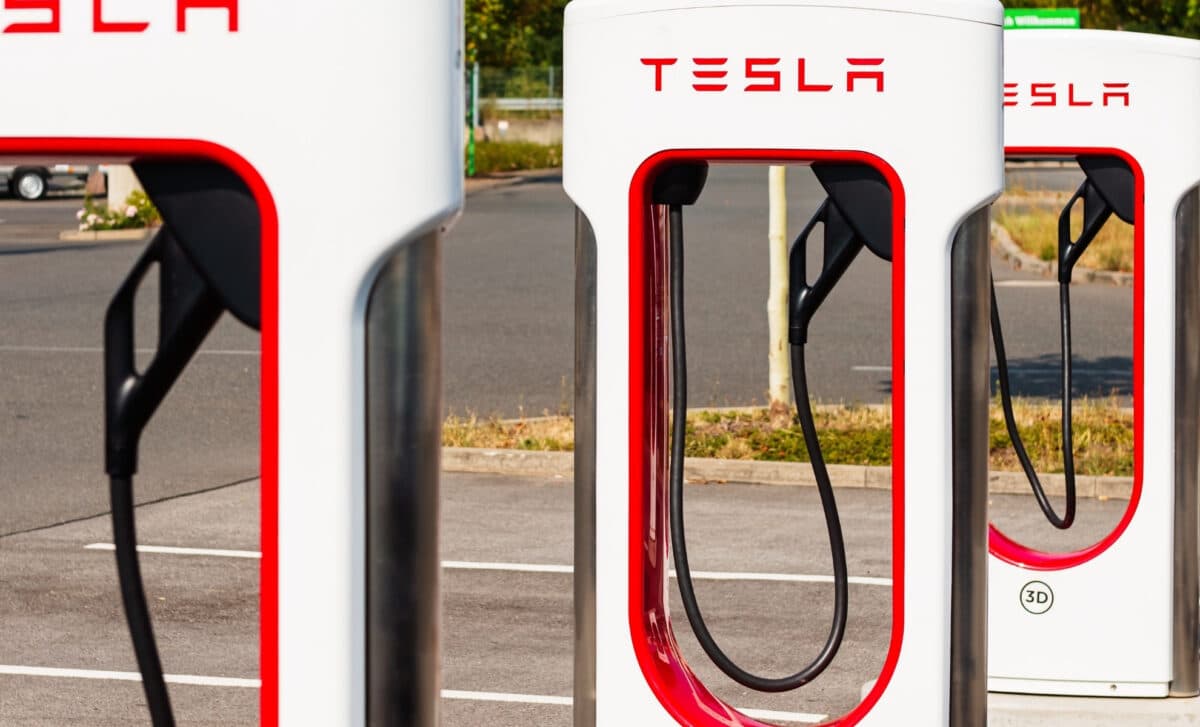
The expansion will rely on Tesla’s latest generation of charging hardware, the Supercharger V4 system. These chargers are paired with new power cabinets introduced in November 2024 and designed to operate on electrical architectures ranging from 400 to 1,000 volts.
The system can deliver up to 500 kW per charging stall for vehicles capable of handling such power levels. While few models currently support this capability, the technology is designed to accommodate high-voltage platforms used by vehicles such as Tesla’s Cybertruck as well as certain models from Hyundai, Kia, and Porsche.
The V4 architecture also changes the way charging stations are organized. Each power cabinet can now supply up to eight charging stalls simultaneously, compared with four on earlier installations. This design reduces the amount of technical infrastructure required and helps optimize space at large charging sites.
Such changes in power distribution and equipment layout are among the technical factors enabling Tesla to consider building stations at this scale.
Tesla is planning an absolutely massive Supercharger expansion in Yermo, California!!
— MarcoRP (@MarcoRPi1) March 6, 2026
Over the course of 6 phases, Tesla is set to add over 400 V4 stalls in a commercial development known as Eddie World 2.
The first phase, which should begin construction sometime this year,… pic.twitter.com/ks5Y5dE8lR
A Highway Stop Designed as a Full Service Hub
The project goes beyond simply installing charging equipment. Planning documents indicate that the site is intended to function as a full roadside hub with multiple services for drivers.
According to the urban planning plans, the development will include a 940-square-meter Cracker Barrel restaurant, a 400-square-meter McDonald’s, and a convenience store covering approximately 350 square meters. Additional retail spaces, outdoor dining areas, and several drive-in style service points are also part of the proposal.
The layout will also include charging spaces adapted for larger vehicles. Plans mention pull-through charging stalls that allow vehicles towing trailers to connect without unhitching.
Tesla has already experimented with large-scale charging hubs. In July 2025, the company opened a 168-stall station in Lost Hills, California, equipped with solar panels and Megapack battery storage systems to help stabilize energy supply.
The continued growth of electric vehicle adoption and the gradual opening of Tesla’s network to other manufacturers have increased traffic at charging stations. In this context, projects such as the proposed Yermo site illustrate how charging infrastructure is evolving to accommodate rising demand.
At the same time, competition in ultra-fast charging technology continues to intensify. Some Chinese manufacturers, including BYD, have recently introduced charging systems capable of reaching 1,500 kW, enabling certain vehicles to recharge from 10 percent to 80 percent in under ten minutes. If Tesla completes its California project as planned, the Yermo site could become the largest electric vehicle charging station in the world.