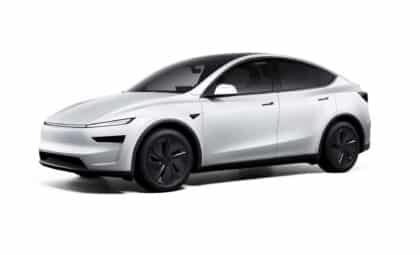

This surprising result comes at a time when China’s EV industry is pushing hard to dominate both local and global markets. Yet, in the very heart of its production system, it’s a foreign electric SUV that occupies the most factory hours, defying expectations and revealing the complex nature of today’s global car industry.
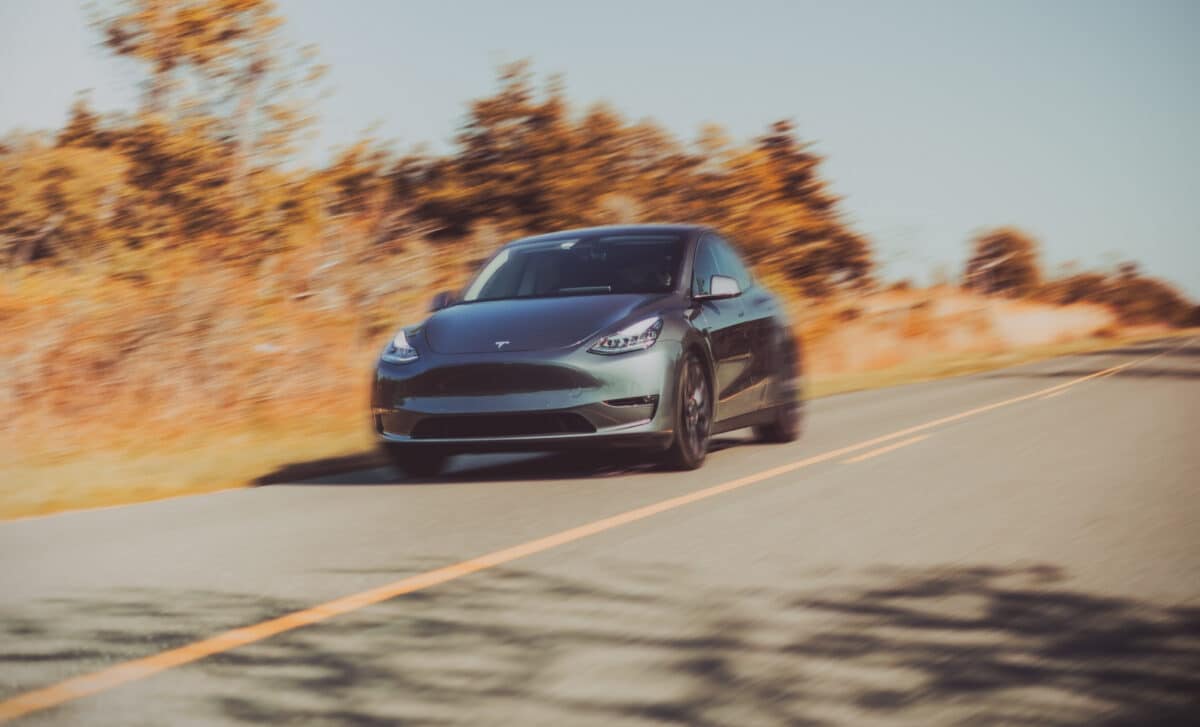
With 92 million light vehicles (cars and light commercial vehicles) built globally in 2025, slightly more than in 2024, China remains the world’s largest manufacturer. But production data released by Inovev, shows that high output doesn’t always mean domestic dominance. Even with Chinese brands like BYD and Geely surging in popularity, it was the Tesla Model Y that saw the highest number of units assembled in China last year.
This marks a notable moment in the evolution of the global EV market. It reflects not only Tesla’s aggressive localization strategy in China, but also the shifting balance between national and international players within the manufacturing ecosystem.
Model Y Edges Out Chinese Rivals in Home Territory
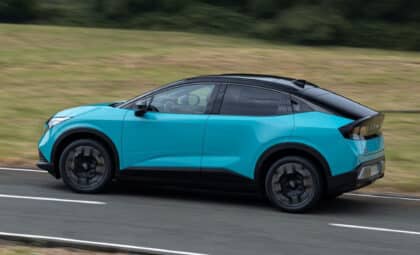
Tesla’s Model Y narrowly beat two Chinese competitors in production volume: the BYD Seagull and the new Geely Xingyuan. The Xingyuan, a compact city EV, made an impressive debut by taking third place in its first year on the market. Still, the Tesla Model Y managed to stay just ahead, making it the most assembled car in China in 2025.
Despite the growing influence of local EV manufacturers, Tesla’s success shows the effectiveness of its Shanghai-based Gigafactory. The Model Y also ranked second in production volume in the US, behind Ford’s F-Series pickup range, although pickups aren’t counted among light vehicles. With pickup trucks excluded, the Model Y claims the title of most produced vehicle worldwide in 2025, ahead of the Toyota RAV4, Toyota Corolla, and Hyundai Tucson.
This dominance in both the Chinese and global context signals how Tesla has positioned itself at the intersection of two worlds: the global EV boom and China’s massive manufacturing base.
European Production Favors International Models
The unexpected trends in China are echoed across Europe. In France, the Toyota Yaris Cross was again the most produced car in 2025. Built in the Onnaing factory, the Japanese crossover continues to benefit from nearly full production capacity, in contrast to the average 50–60% utilization seen in most other European plants.
Meanwhile, Spain, one of Europe’s key auto manufacturing hubs, produced more Opel Corsa units than any other model last year. The Corsa outpaced the Peugeot 2008 and Renault Captur, with the first Spanish brand, the Seat/Cupra Leon, coming only in fourth. The Captur, in particular, saw a notable decline in European production, becoming the only one among Spain’s top models to lose ground between 2024 and 2025.
These figures illustrate how deeply integrated European factories have become with multinational groups like Stellantis, Renault, and Volkswagen, leading to a complex interplay between local manufacturing and global brand strategies.
Italy and Japan Remain Strongholds for National Brands
Amid this international reshuffling, Italy and Japan stand out as exceptions, places where domestic brands continue to dominate production. Italy’s top three most produced cars in 2025 were all Fiats: the Panda, the Grande Panda, and the 500. The original Panda, still marketed as the “Pandina,” remains in production even as the new generation ramps up output.
Japan followed a similar pattern. Its top models in 2025 were the Toyota RAV4, the Mazda CX-5, and the Subaru Forester. The consistency of these rankings highlights the sustained strength of Japanese manufacturers in their domestic market.
While some countries have embraced a more globalized production model, others have preserved their industrial identity. These contrasts underscore how geography, policy, and corporate structure shape automotive output in very different ways around the world.