
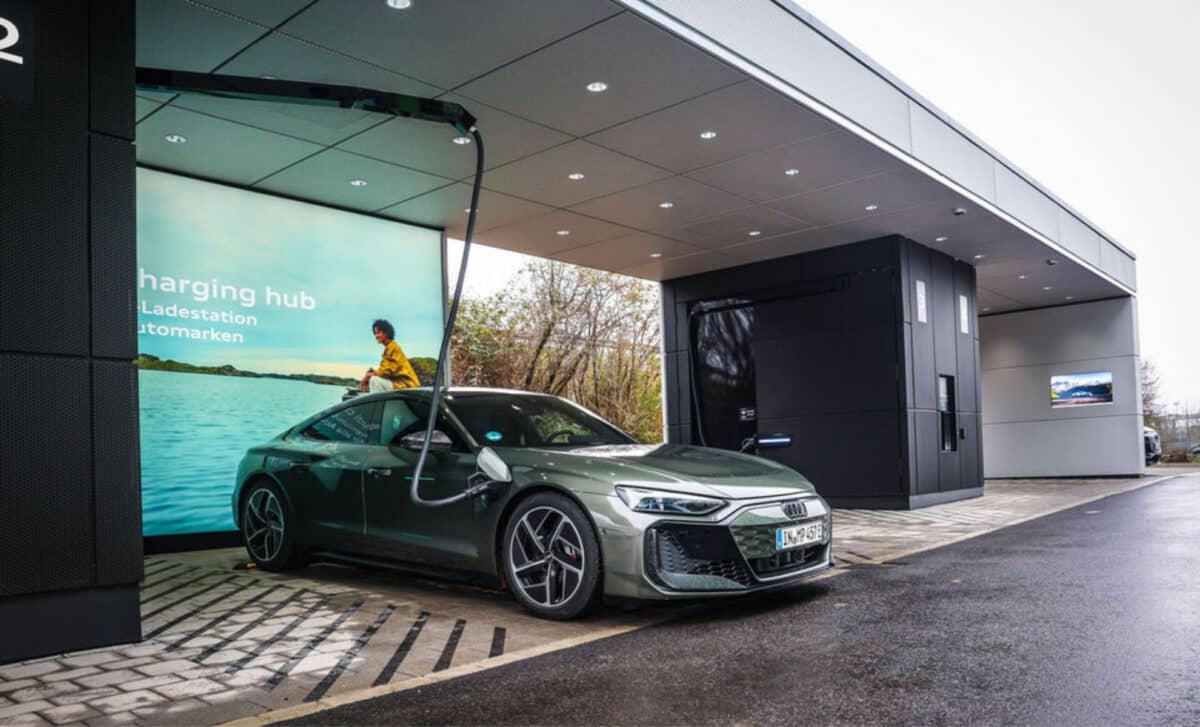
The new Audi charging hub, located at the EUREF Campus near Düsseldorf’s airport, offers high-powered charging with a capacity of up to 400 kW per station. This site not only serves as a quick stop for recharging but also integrates several features designed to enhance the user experience, from food and beverage offerings to comfortable lounge areas.
By incorporating second-life batteries for energy storage, Audi seeks to reduce grid strain and promote the use of renewable energy, reflecting the company’s broader push for sustainable mobility.
Sustainability at the Core: Second-Life Batteries
Audi’s latest charging hub represents a significant step forward in the company’s sustainability goals. The hub in Düsseldorf uses second-life batteries—batteries that have been repurposed after their initial use in vehicles.
According to Audi, these batteries act as buffer storage, reducing the load on the grid and storing excess energy. This energy storage can then be used to charge up to 60 vehicles without interruption. By utilizing second-life batteries, Audi is not only ensuring more sustainable use of resources but also helping to make EV charging more efficient and eco-friendly.
A Premium Charging Experience for All EV Owners
While Audi’s charging hubs are primarily aimed at Audi owners, the company’s vision extends beyond brand loyalty. The new hub is designed to cater to all electric vehicles, regardless of the brand. Audi wants to provide a “premium charging experience” for drivers of all EVs, making the charging process as pleasant and convenient as possible.
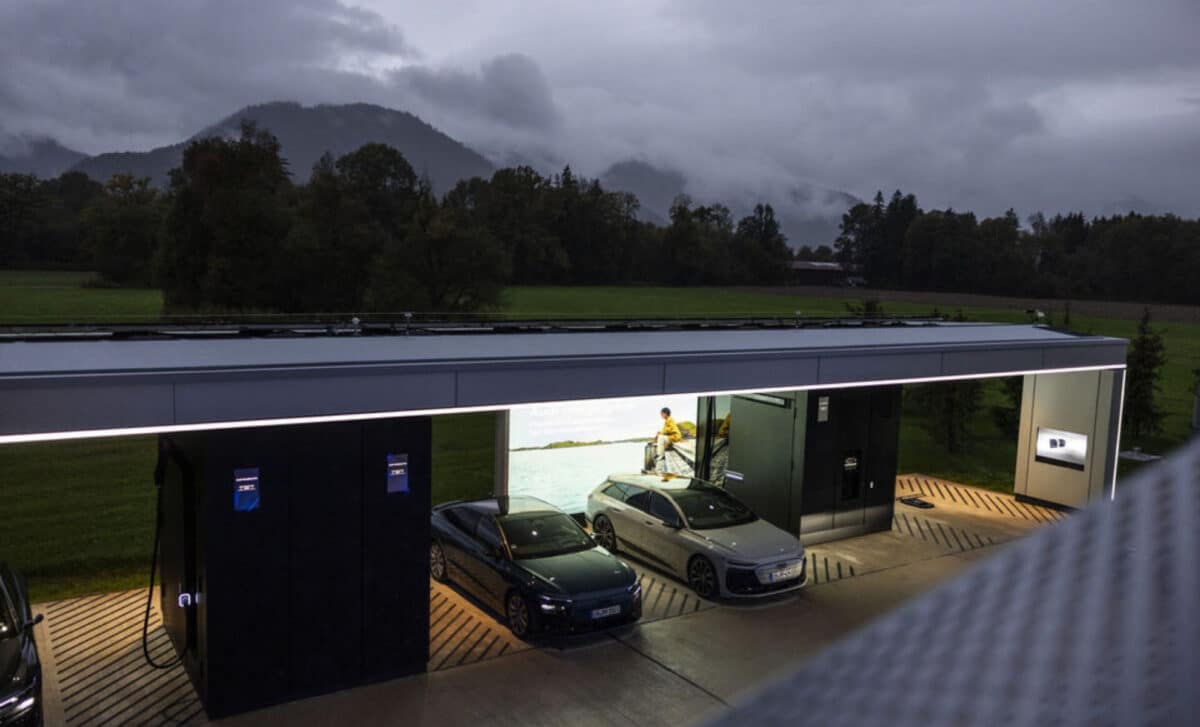
According to Hubert Link, who is responsible for the development of Audi’s charging hubs, this vision is about creating more than just a place to charge. The hubs are intended to act as “touchpoints” that bring drivers closer to the Audi brand. The Düsseldorf hub includes various amenities like food, drinks, and restrooms, as well as showrooms from companies based at the EUREF Campus, making it more than just a utility stop.
Modular Design for Flexibility and Efficiency
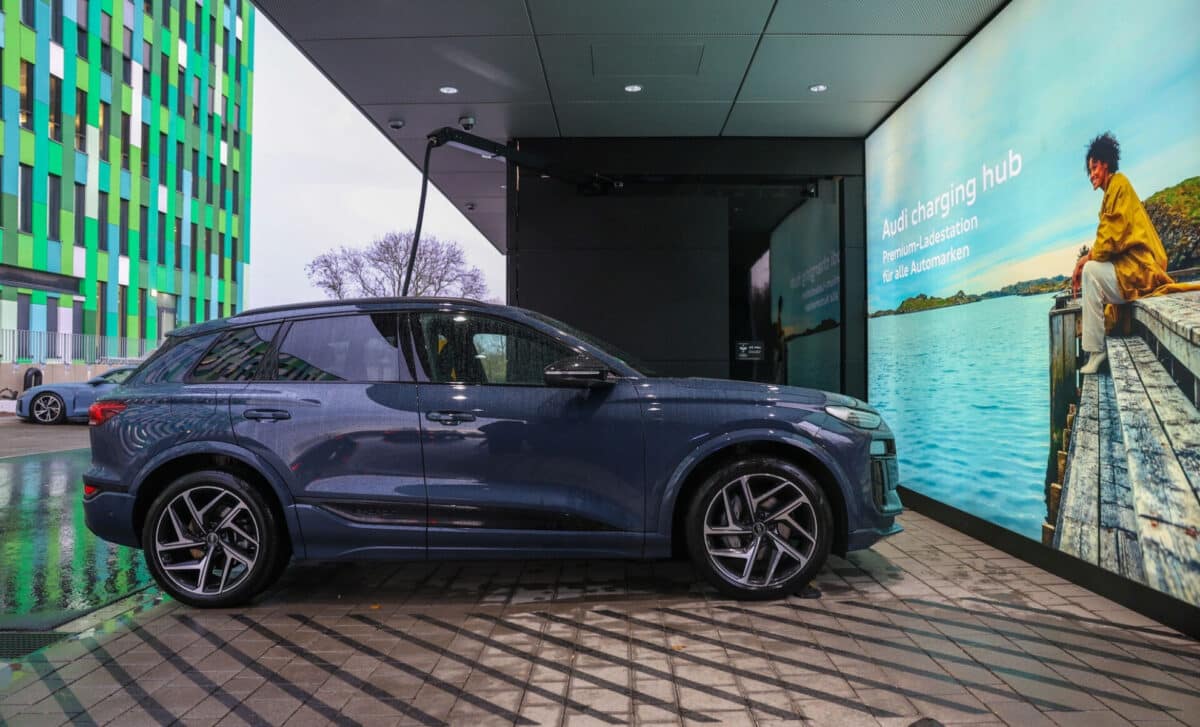
The new charging hubs are not only about advanced technology but also about smart design. Audi’s modular construction concept allows the hubs to be quickly built and adapted to different sites. The Düsseldorf hub, for instance, includes four high-power charging points, each offering up to 400 kW of power. The modular system ensures that the hubs can be moved to new locations without the need for large foundations or extensive land preparation. The use of second-life batteries as energy storage also reduces the need for high-capacity power lines and contributes to a more sustainable construction process.
In terms of accessibility, Audi has integrated several features to make the charging process easier for all users, including those with physical disabilities. The charging cables are supported by a swivel arm, which reduces their weight by around 60%, making them more manageable for users. Additionally, the charging station has height-adjustable displays and ample maneuvering space to ensure comfort for everyone. According to Audi, making these features standard is key to ensuring that every user, regardless of their needs, has a positive experience.