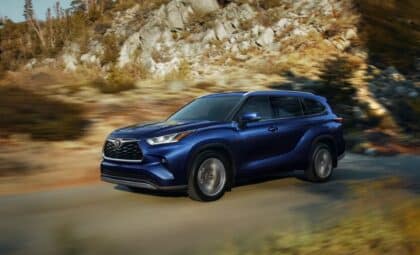

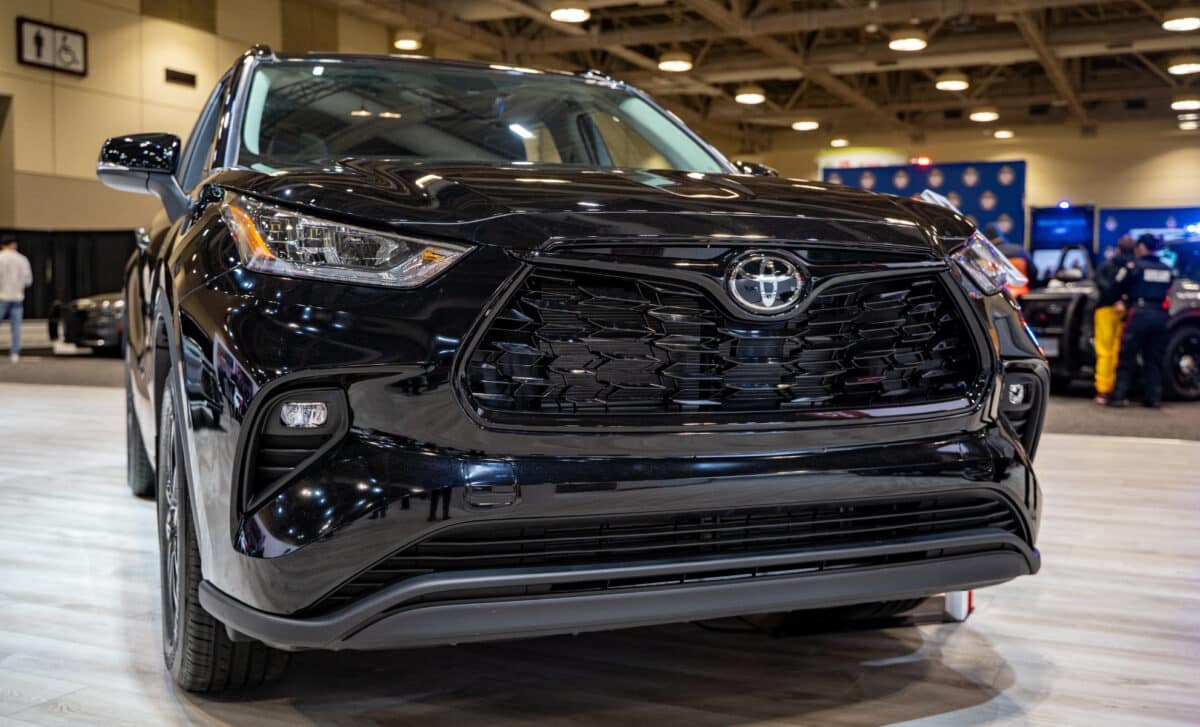
Filed with the National Highway Traffic Safety Administration (NHTSA), the recall impacts vehicles built between September 10, 2024, and February 6, 2025, at Toyota’s assembly plant in Princeton, Indiana. The manufacturing flaw may prevent the seatbelt from properly restraining passengers seated in the second row’s center position.
This action follows the discovery of loose seatbelt anchors on two vehicles during inspection, prompting Toyota to investigate further. The automaker has since received one warranty claim and three field technical reports in the U.S. potentially related to the same issue.
Third-row Seatbelt Anchor Improperly Installed
At the heart of the recall is the installation angle of the third-row center seatbelt’s roof anchor, which in certain cases was found to be incorrect. This condition can directly impair the seatbelt’s ability to perform as intended. The seatbelt’s failure to secure the occupant could increase the risk of injury in a collision involving the second-row center seat.
The concern was first identified in February 2025, during checks at a Toyota processing facility. Two Highlander units were flagged for loose seatbelt anchors, triggering the internal investigation that led to the formal recall. While there have been no reported injuries, the potential safety risk was deemed sufficient to launch corrective action.
Toyota has outlined a specific procedure to address the issue. Dealerships will remove the seatbelt anchor bolt, clean the weld nut’s threads, replace the bolt, and torque it to the specified standard. These steps are intended to ensure the anchor is correctly installed and the seatbelt functions reliably.
Affected Models Span Hybrid And Combustion Variants
The recall involves both the gasoline-powered Highlander and the Highlander Hybrid versions. All of the impacted vehicles were produced at Toyota’s Indiana facility, which opened in 1996 and currently covers 4.5 million square feet across a 1,160-acre site. The plant employs more than 7,650 people and assembles multiple Toyota and Lexus models, including the Grand Highlander, Sienna, and Lexus TX.
All affected models are built on the Toyota New Global Architecture-K (TNGA-K) platform. This modular vehicle architecture, introduced in 2017 with the XV70-series Camry, replaced the previous K platform and now also supports models such as the RAV4, Lexus NX, and Century SUV.
Toyota has confirmed that owners and lessees will be notified by mail no later than February 14, 2026. Dealerships have already received instructions on how to implement the corrective measures. Until then, drivers of affected models are advised to await formal notification before scheduling service appointments.
No Impact On Trims, Drivetrains, Or Fuel Efficiency
While the recall concerns a critical safety component, it does not affect the vehicles’ mechanical systems, trim configurations, or fuel performance. The Highlander lineup for 2026 is already available, starting at $45,270 (excluding destination charges and taxes) and includes seven different trims, beginning with the gasoline-only XLE.
The model offers seating for up to eight passengers and includes all-wheel drive as standard across all variants, including the entry-level grade. The gasoline-powered XLE trim delivers up to 21 MPG in the city and 28 MPG on the highway, with a combined rating of 24 MPG. The Hybrid XLE, meanwhile, achieves 35 MPG across city, highway, and combined driving conditions. These figures equate to approximately 9.8 and 6.7 liters per 100 kilometers for the gasoline and hybrid models, respectively, in regions where metric units are used.
Under the hood, the Highlander is offered with either a 2.4-liter turbocharged inline-four gasoline engine or a 2.5-liter naturally aspirated hybrid powertrain. The hybrid system includes two electric motors working in tandem with the gasoline engine, and a third motor dedicated to the rear axle. The first motor-generator also serves as the control element for the power-split device, while the second drives the front wheels directly. The rear motor is activated during hard acceleration or when front-wheel slip is detected.
Toyota’s decision to recall the affected models follows its standard quality control strategy and highlights its commitment to passenger safety. The automaker will handle all repairs at no cost to the vehicle owners.