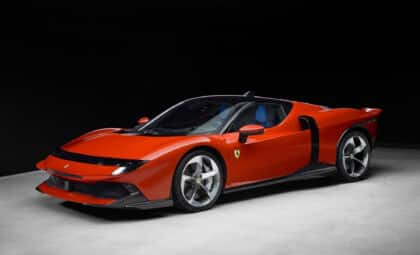
At a time when stricter emissions standards and taxation are putting pressure on high-displacement engines, Ferrari continues to develop new thermal architectures. The Italian manufacturer is not alone, Lamborghini is also maintaining its V12 with hybrid support, but Ferrari’s latest patent suggests a more radical technical direction.
The project reflects a broader effort to rethink the role of combustion engines in electrified powertrains. Ferrari has submitted this patent to the United States Patent and Trademark Office (USPTO), signaling ongoing research rather than a confirmed production plan.
A Y12 Architecture Built Around Two Independent Engines
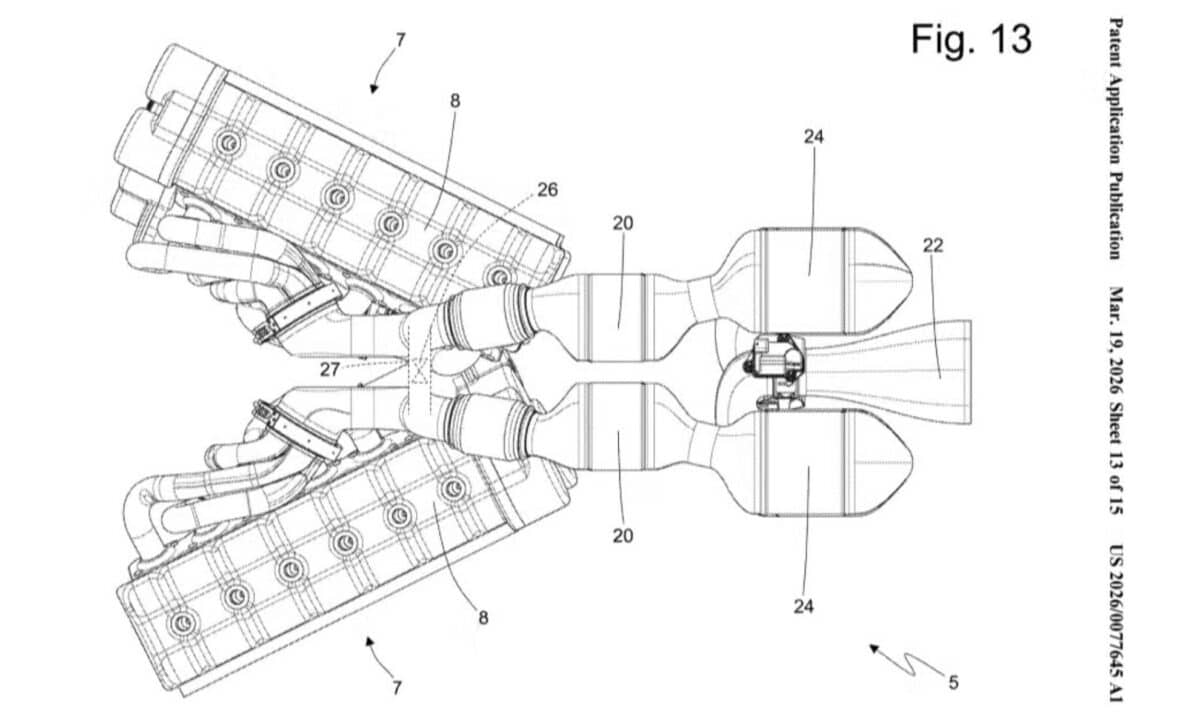
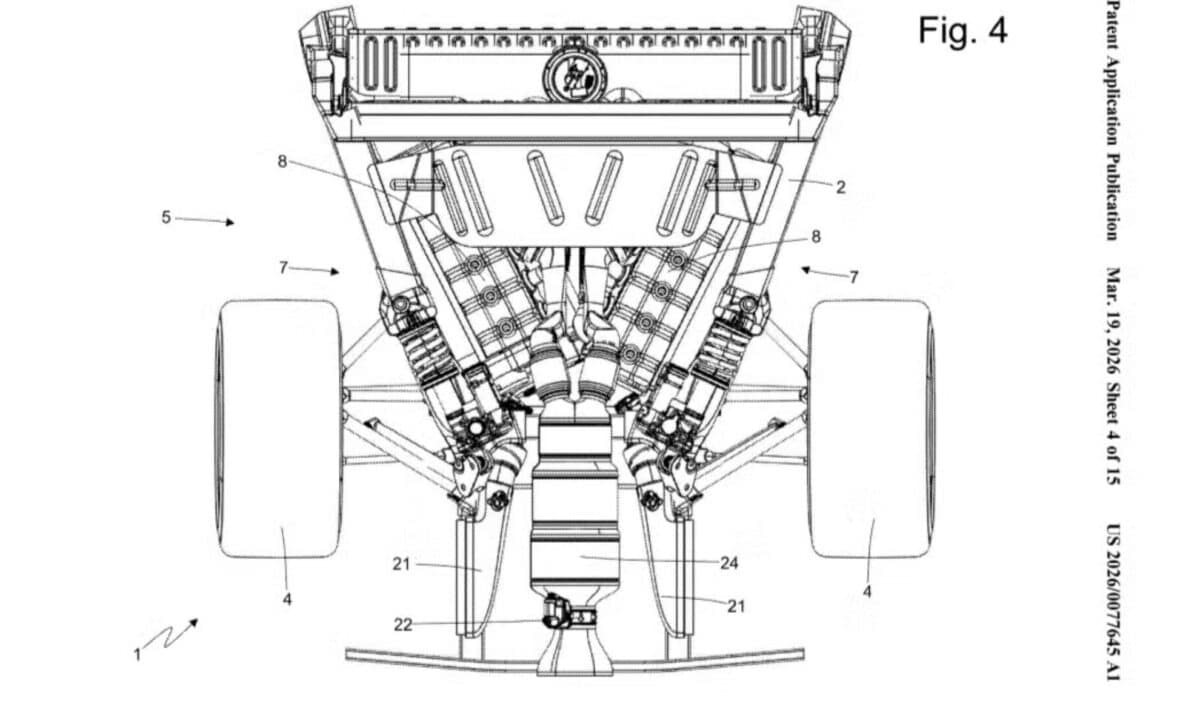
The patented design stands out for its structure: instead of a single block, the engine is composed of two separate inline six-cylinder units. Each operates with its own crankshaft, crankcase, and valve timing system, effectively functioning as two engines working together.
According to Automobile Magazine, these two units can run simultaneously but at different speeds, a feature that distinguishes the concept from conventional multi-cylinder engines. The exhaust systems are routed inward and run parallel toward the rear before merging, creating the characteristic Y shape when viewed from above.
This layout also eliminates the possibility of directly coupling the engine to a gearbox. In this configuration, the system is not intended to drive the wheels mechanically.
Designed as an Energy Generator for Hybrid Systems
Rather than serving as a traditional propulsion unit, the Y12 engine is conceived purely as a generator. Its role is to produce electricity that charges batteries, which in turn power electric motors responsible for driving the vehicle.
This approach aligns with current trends in hybridization, where combustion engines are increasingly used as range extenders or energy sources rather than primary drivetrains. The system is complemented by a virtual transmission inspired by technologies such as Honda’s S+ Shift, designed to simulate gear changes for a more engaging driving experience.
While this comparison may seem unexpected, it highlights how software is being used to replicate traditional driving sensations in electrified systems.
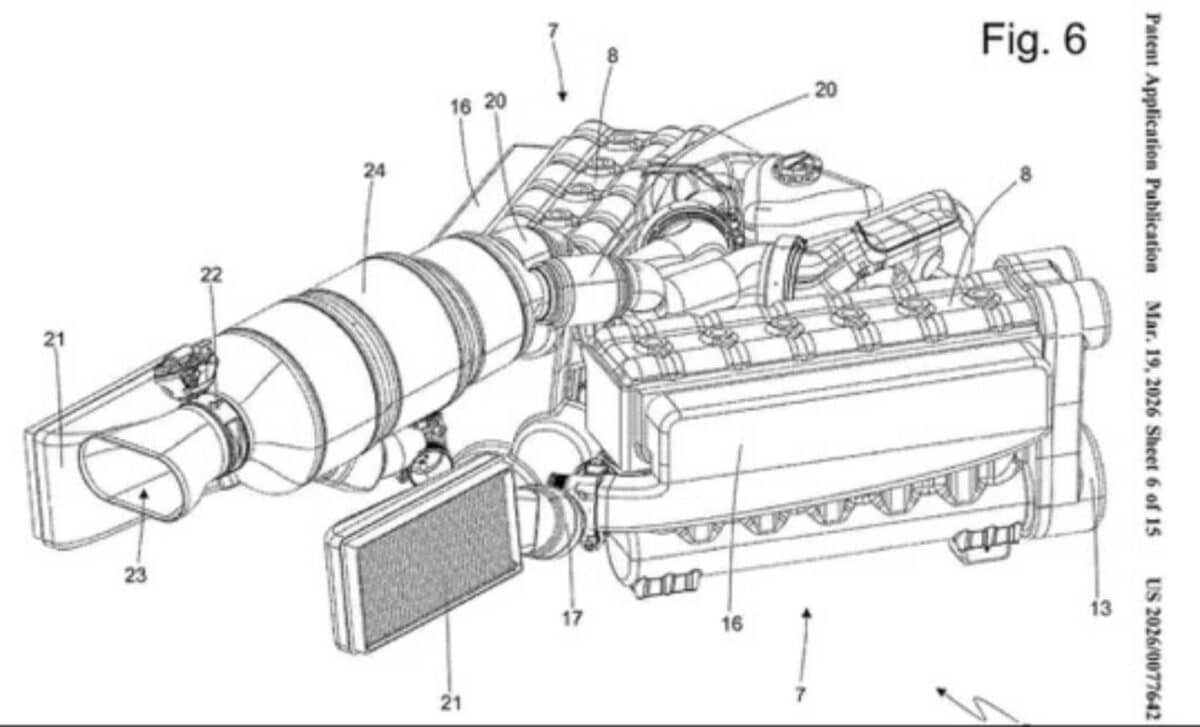
Packaging and Weight Distribution Advantages
Ferrari’s choice of a Y-shaped configuration is not only experimental but also practical in terms of vehicle integration. The layout, wider at the base and narrower toward the rear, allows for a shorter engine overall.
This compactness improves weight distribution by moving mass further forward in the chassis. It also frees up space at the rear of the vehicle, offering greater flexibility for suspension components and aerodynamic elements.
For now, it remains unclear which model could adopt this system or whether it will reach production. As the source notes, filing a patent does not guarantee industrial application, but it does reveal the direction of Ferrari’s ongoing engineering research.