
The California Highway Patrol (CHP) is highlighting a set of new public safety laws Gov. Gavin Newsom signed during the 2025 legislative session. The laws aim to improve road safety across the state, covering everything from electric bicycles to highway speed limits.
Most of the changes take effect on January 1, 2026, and are meant to address emerging traffic challenges and make roads safer for pedestrians and drivers alike.
Quick Legislative Overview and What’s Coming
The 2025 session produced several laws on topics like E-Bike rules and speed enforcement in highway work zones. The CHP is launching an online safety training program specifically for minors cited for helmet violations while riding E-Bikes (a sign the state is focusing on rider safety). Unless a law says otherwise, the changes are scheduled to begin at the start of 2026, with some provisions stretching into the next decade.
Multiple Assembly Bills (AB) and Senate Bills (SB) aim to tighten safety and operational standards. For example, AB 486, sponsored by Lackey, targets possession of burglary tools such as key programming devices, and carries penalties of up to six months in jail or a $1,000 fine, or both, if someone has them with intent to steal. And AB 544, authored by Davies, deals with E-Bikes by requiring a rear red reflector or light that must be operational at all times, regardless of visibility.
New Rules for School Zones, Work Zones, and More
The package includes measures aimed at boosting safety in school zones, work zones, and other sensitive areas. AB 382, sponsored by Berman, lets local authorities drop school zone speed limits from 25 mph to 20 mph until January 1, 2031; after that date the lower limit becomes automatic where proper signage is in place.
To improve work zone safety, AB 289, written by Haney, allows the Department of Transportation to run pilot programs using fixed, mobile, or laser systems to detect speeding and record license plates. The goal is to increase compliance and better protect workers on state highways.
Safety rules widen further under AB 390 by Wilson, which expands the “slow down and move over” law to cover any vehicle using flashing lights or warning devices, including cones and flares. Drivers must move to a non-adjacent lane or slow down if changing lanes isn’t possible.
Vehicle Safety and Speed Changes to Watch
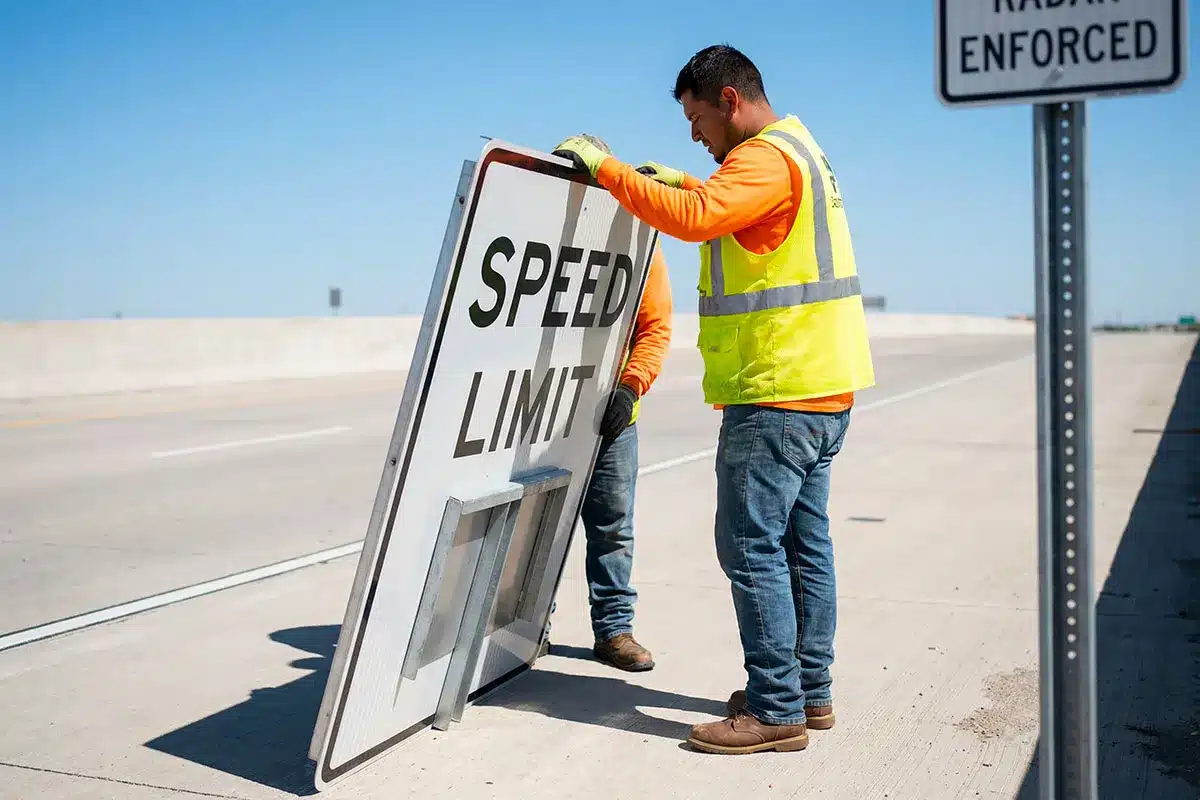
Speed management on highways gets an update with AB 1014, sponsored by Rogers, which lets the Department of Transportation cut speed limits by 5 mph. During the first 30 days of enforcement, only warning citations will be issued to give drivers time to adjust.
Other vehicle rules include AB 875, driven by Muratsuchi, which lets police impound vehicles that don’t meet certain criteria, such as having fewer than four wheels unless they qualify as an E-Bike. Impoundments must last at least 48 hours.
Rules for off-highway electric motorcycles (eMotos) appear in SB 586 by Jones. The bill classifies eMotos as Off-Highway Vehicles (OHVs), requires operators to display identification plates issued by the DMV, and enforces helmet-wearing rules.
These laws show a broad push to raise safety standards across different modes of transportation. From E-Bikes to work-zone speed enforcement, the changes are meant to tighten rules and reduce hazards on California roads.
With these laws coming into effect, Californians and commuters should get familiar with the updates to stay compliant and safe. As the rules roll out, they’re intended to create a clearer framework for dealing with modern traffic challenges.