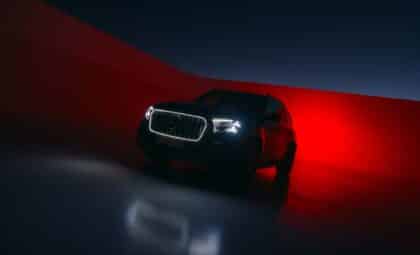

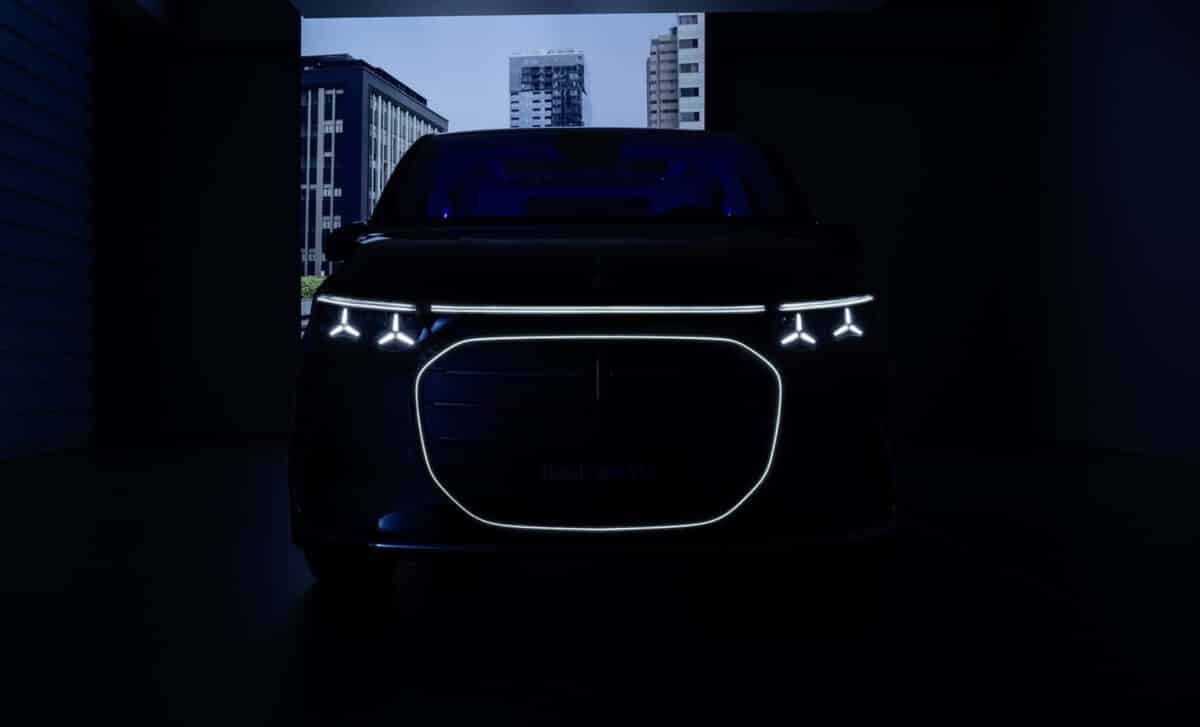
The announcement arrives at a moment when the American automotive market remains firmly in the grip of the SUV. Minivans, once a staple of family life in the U.S., have largely lost ground to crossovers and large sport utility vehicles. Mercedes is making a deliberate bet that the VLE’s combination of electric range, fast charging, and business-class comfort could convince at least some American buyers to consider a different kind of vehicle. Whether that wager pays off remains genuinely uncertain.
The company has confirmed it will keep the existing V-Class on sale alongside the VLE, saying the two vehicles are sufficiently distinct to coexist in the lineup without competing directly against each other. Multiple versions are planned, ranging from family-oriented configurations to exclusive shuttle builds. Only the long-wheelbase variant will be sold in the United States.
The Engineering Behind the Range Claims
According to Inside EVs, the VLE is built on Mercedes‘ new 800-volt Van Electric Architecture, internally referred to as VAN.EA. The platform supports charging at up to 315 kilowatts and enables the vehicle to add 154 miles of range in just 10 minutes, or 221 miles in 15 minutes. A full 10-to-80 percent charge is completed in 25 minutes. The usable battery capacity is 115 kilowatt-hours, and the WLTP-rated range exceeds 435 miles. On the stricter EPA testing cycle used in the United States, Mercedes says the figure will come in well above 300 miles.
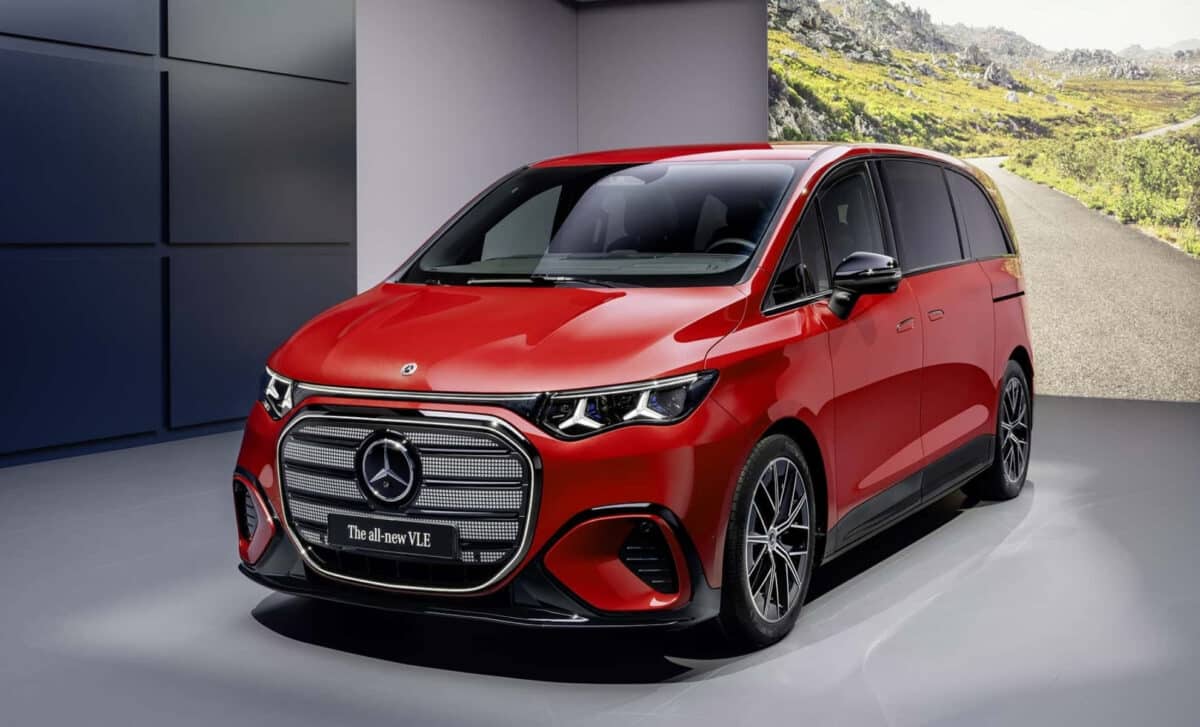
Part of what makes those range numbers possible is the vehicle’s aerodynamic efficiency. Despite being 75.8 inches tall and just under 78.8 inches wide, the VLE achieves a drag coefficient of 0.25, a remarkable result for a vehicle of its shape and size. The VLE 300, the entry-level front-wheel-drive variant, is powered by a single 268-horsepower motor, reaches 62 mph in 9.5 seconds, and tops out at 112 mph.
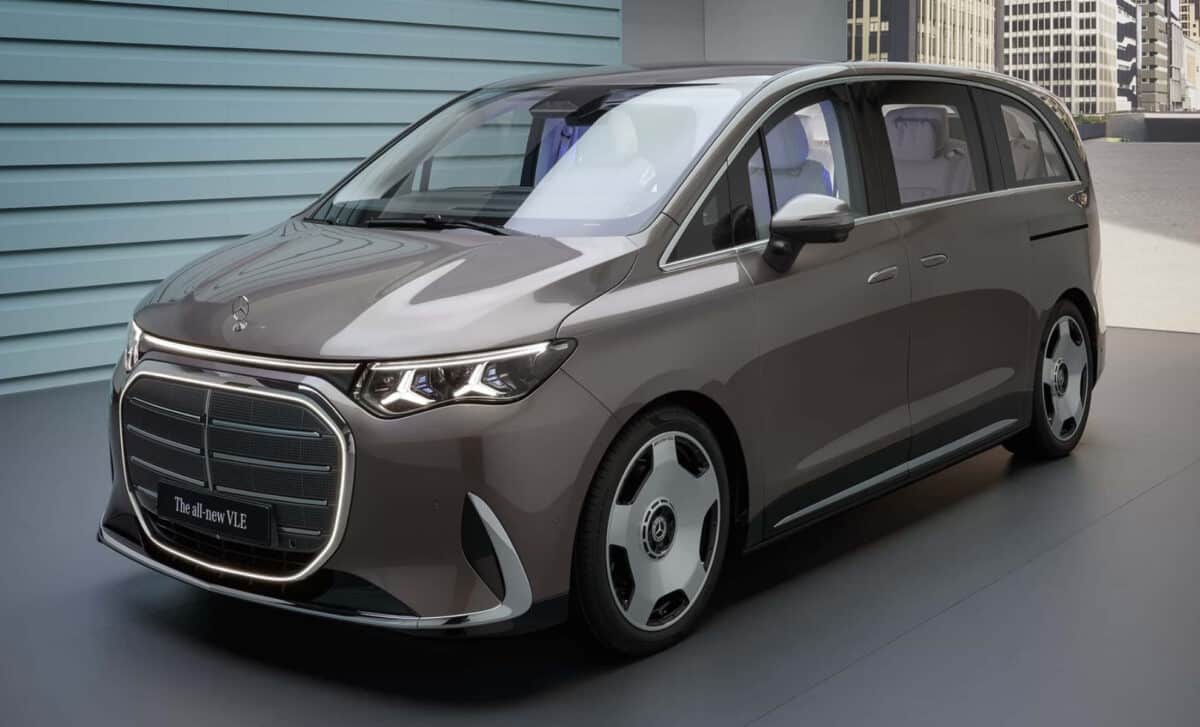
The VLE 400 4Matic adds a rear drive unit that can be mechanically decoupled to save energy, bringing combined output to 409 horsepower and cutting the 0-to-60 time to 6.4 seconds. Its WLTP range is provisionally rated at up to 391 miles, though Mercedes has noted that figure may change before launch. Charging at 400-volt stations requires an optional DC converter, as is also the case with the CLA sedan. A smaller battery version is planned for sometime in 2027.
All variants come standard with air suspension allowing up to 1.5 inches of ride-height adjustment, and rear-wheel steering that turns up to 7 degrees. That system gives the VLE a curb-to-curb turning circle of just 35.75 feet, comparable, Mercedes notes, to a compact car.
Inside: A Cabin Built Around the Rear Passenger
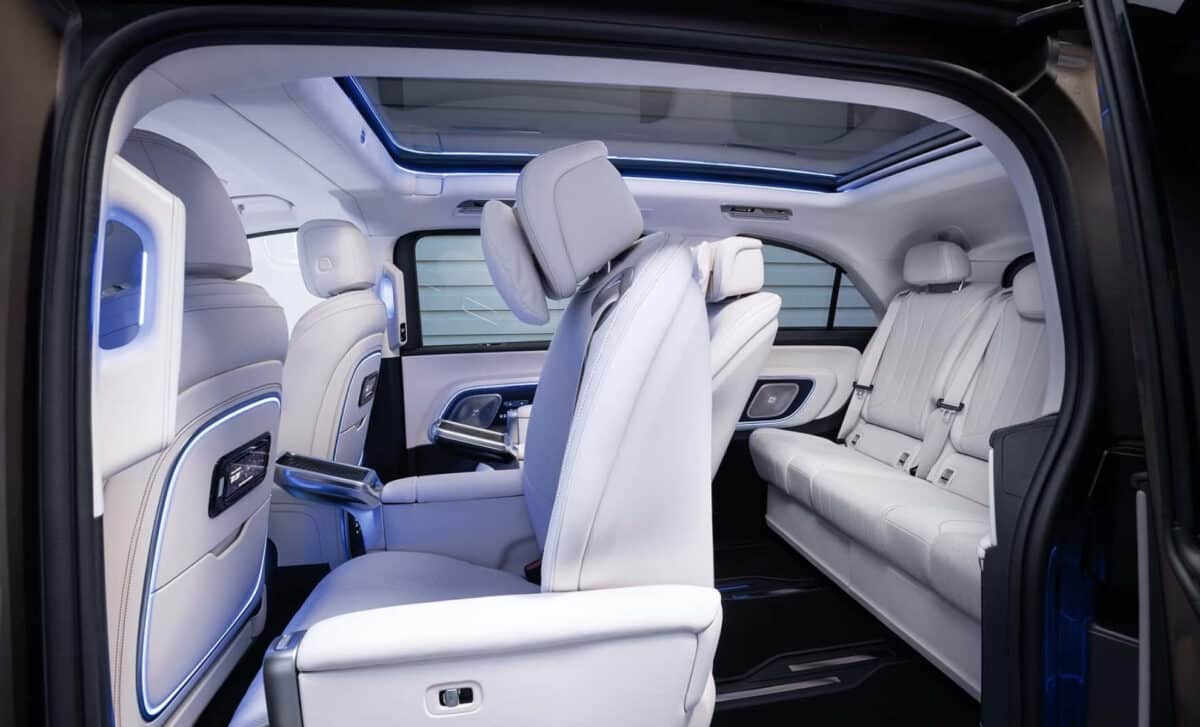
The interior is where Mercedes has focused much of its pitch. Three rear seat configurations are available, with the top-tier option called the Grand Comfort Seat. That seat includes a massage function, lumbar support, an additional pillow, and an electrically extending calf support. More premium seat options are described as being planned for the future. On vehicles equipped with optional electric rear seats, passengers can reposition them through the infotainment system or via a dedicated app, a process Mercedes compares to “almost like choreographing a ballet.”
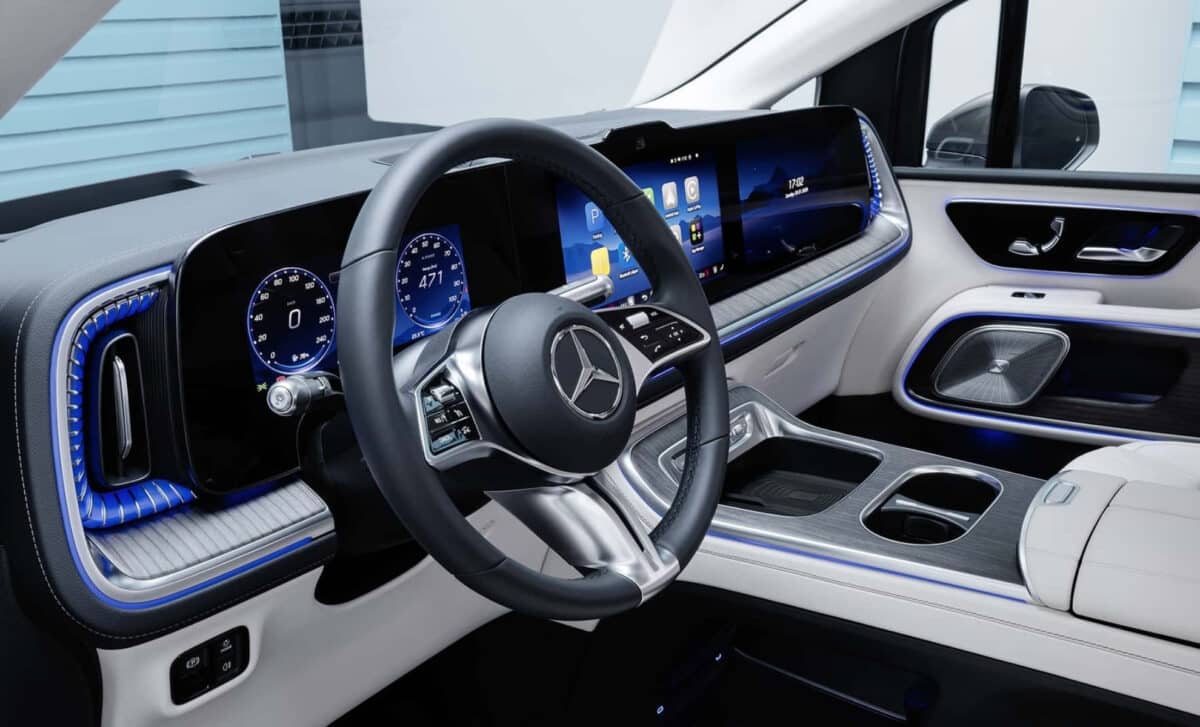
For entertainment, an optional fold-down 31.3-inch 8K display is available for rear occupants, with a split-screen function and compatibility with a 22-speaker Burmester sound system that supports Dolby Atmos. The front cabin can accommodate up to three screens: a 10.25-inch driver display, a 14-inch central touchscreen, and an additional 14-inch screen for the front passenger.
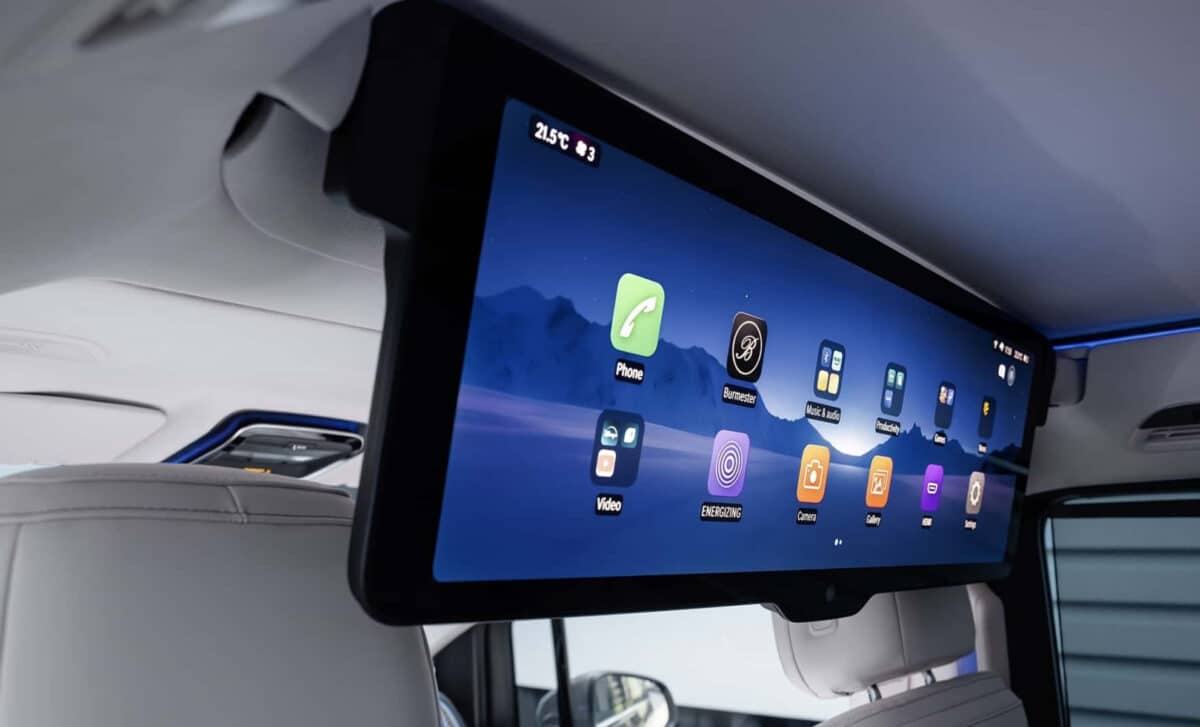
The vehicle runs on MB.OS, Mercedes’ new operating system, which uses Google Maps for navigation and includes an AI-powered virtual assistant capable of responding to complex queries. The system supports over-the-air updates and more than 40 apps. Side windows roll down electrically, and sliding rear doors can be operated electrically as well.
A Global Launch With Uneven Prospects
In Europe, the VLE is priced from around €79,000, equivalent to roughly $92,000 at current exchange rates. U.S. pricing and a firm launch timeline have not yet been announced. Mercedes is targeting buyers across several segments, from families and leisure-focused customers to operators running private shuttles.
The European market is seen as the most receptive, given that premium vans and MPV-style vehicles already have an established and understood audience there. In the United States, the picture is more complicated. The Metris, Mercedes‘ previous van in the American market, never gained meaningful traction with mainstream buyers, and that consumers who do want a minivan tend to gravitate toward familiar options like the Chrysler Pacifica. China is identified as perhaps the largest potential market, where a category of similar vehicles, including the Zeekr Mix, already sells in significant volumes, though competition from local brands is intensifying.
The VAN.EA platform also supports electrified combustion powertrains. In a roundtable discussion held on Tuesday, Mercedes representatives said that diesel versions are not off the table for the VLE. The V-Class will remain on sale alongside it.