
You would probably bet on the higher number. Fifty sounds worse than thirty-five. That is how we tend to think about speed and danger: the faster the car, the more severe the crash.
Yet real-world safety data sometimes tells a more nuanced story. Under certain conditions, an impact at 35 km/h can expose occupants to forces that are, paradoxically, more harmful than those measured at 50 km/h. The explanation lies less in raw speed and more in how modern cars are engineered to manage energy.
Crash Tests Do Not All Measure the Same Thing
The starting point is counterintuitive. Standardized crash tests, such as those conducted by Euro NCAP or the NHTSA in the United States, are usually performed at around 50 km/h (or 64 km/h for some frontal offset tests). Vehicles are specifically designed to perform well under these controlled scenarios.
As L’Automobile Magazine explained in an analysis of low-speed impacts, the structure of a car is optimized to deform in a predictable way at these benchmark speeds. Manufacturers such as Volvo and Mercedes-Benz have long emphasized the importance of programmed crumple zones: the front and rear sections of the vehicle absorb kinetic energy by deforming before it reaches the passenger cell.
In a 50 km/h crash that matches the test configuration, the energy is high, but the deformation is also substantial. The car’s structure works as intended. Sensors deploy airbags at the right moment. Seatbelt pretensioners engage. The deceleration curve, while severe, is relatively controlled.
When Lower Speed Means Stiffer Impact
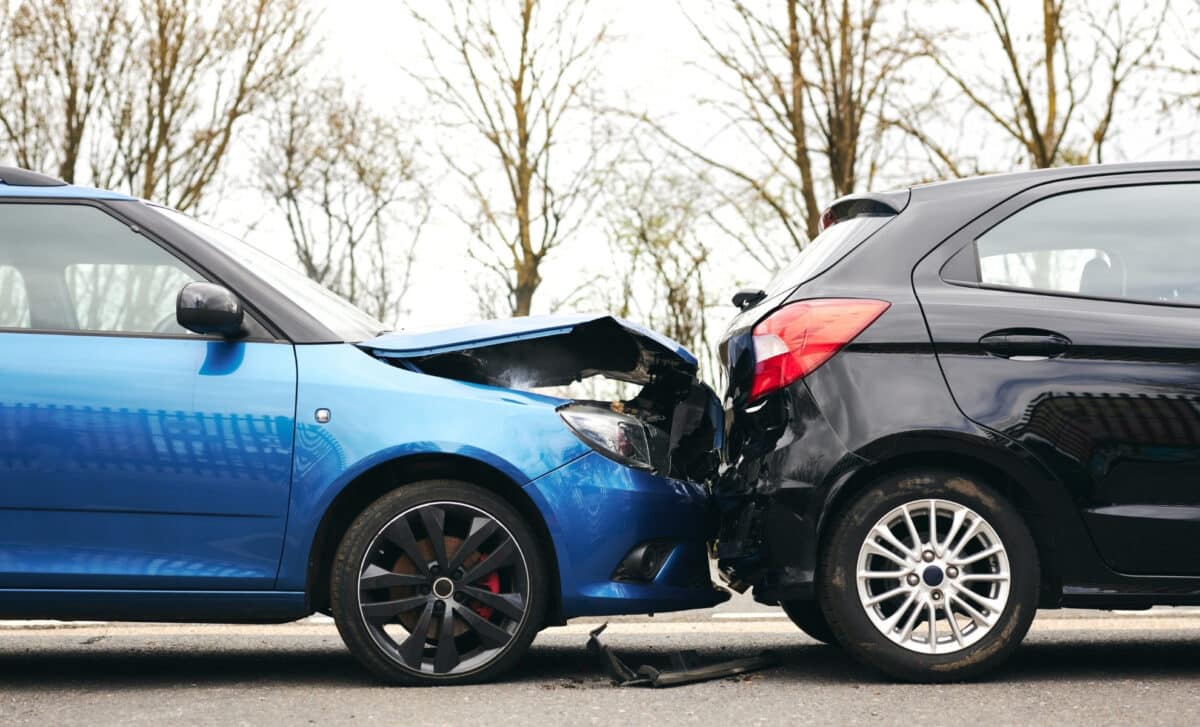
At 35 km/h, things can unfold differently. At this speed, especially in partial overlaps or collisions with rigid objects such as a pole or a tree, the car may not fully engage its crumple zones. The impact can be more localized. Instead of a long, progressive deformation of the front end, the force may travel more directly into the cabin structure.
Engineers sometimes refer to this as insufficient structural engagement. Because the impact energy is lower, the vehicle does not “use up” all of its energy-absorbing components. The deceleration can be sharper and shorter in duration, which increases the forces experienced by occupants.
According to safety analyses, some real-world accident reconstructions show higher peak deceleration values in certain 35 km/h configurations than in more evenly distributed 50 km/h crashes. The number alone, in other words, does not tell the whole story.
The Role of Vehicle Compatibility
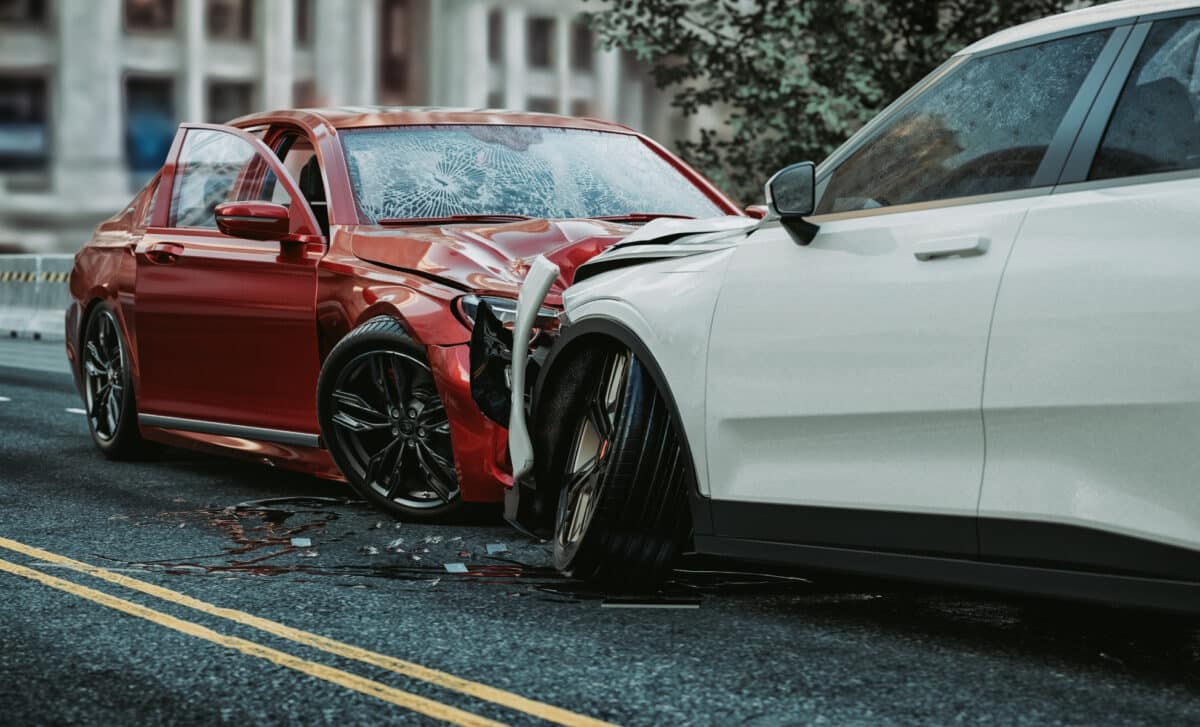
There is another layer to consider: vehicle mismatch. When a small city car collides with a heavier SUV at 35 km/h, the lighter vehicle may suffer disproportionate structural intrusion. Studies by institutions such as the IIHS in the United States have repeatedly shown that differences in ride height and mass can significantly influence injury risk.
In that scenario, the smaller car’s safety cell may be compromised more rapidly at 35 km/h than it would be in a symmetrical crash test against a barrier at 50 km/h. The protective systems are still there, but the geometry of the collision works against them.
A short digression is useful here. The same principle explains why modern crash testing has evolved toward more demanding offset and side-impact protocols. Regulators realized that laboratory conditions did not always reflect real-life crashes, particularly those involving mismatched vehicles.
Speed Still Matters, but Context Matters More
None of this suggests that 35 km/h is inherently more dangerous than 50 km/h. Kinetic energy still increases with the square of speed, and in many cases a higher speed will produce more severe outcomes.
What this discussion reveals is something subtler: safety is not only about velocity. It is about how and where energy is absorbed. It is about structural design, impact configuration, and vehicle compatibility.
Modern cars are extraordinarily sophisticated in managing crash energy. But they are optimized around certain scenarios. When reality deviates from those scenarios, the results can surprise us.
The next time we glance at a speedometer and make a quick judgment about risk, it may be worth remembering that physics is rarely linear. A number on its own does not describe the whole event. And on the road, the details often matter more than we assume.